
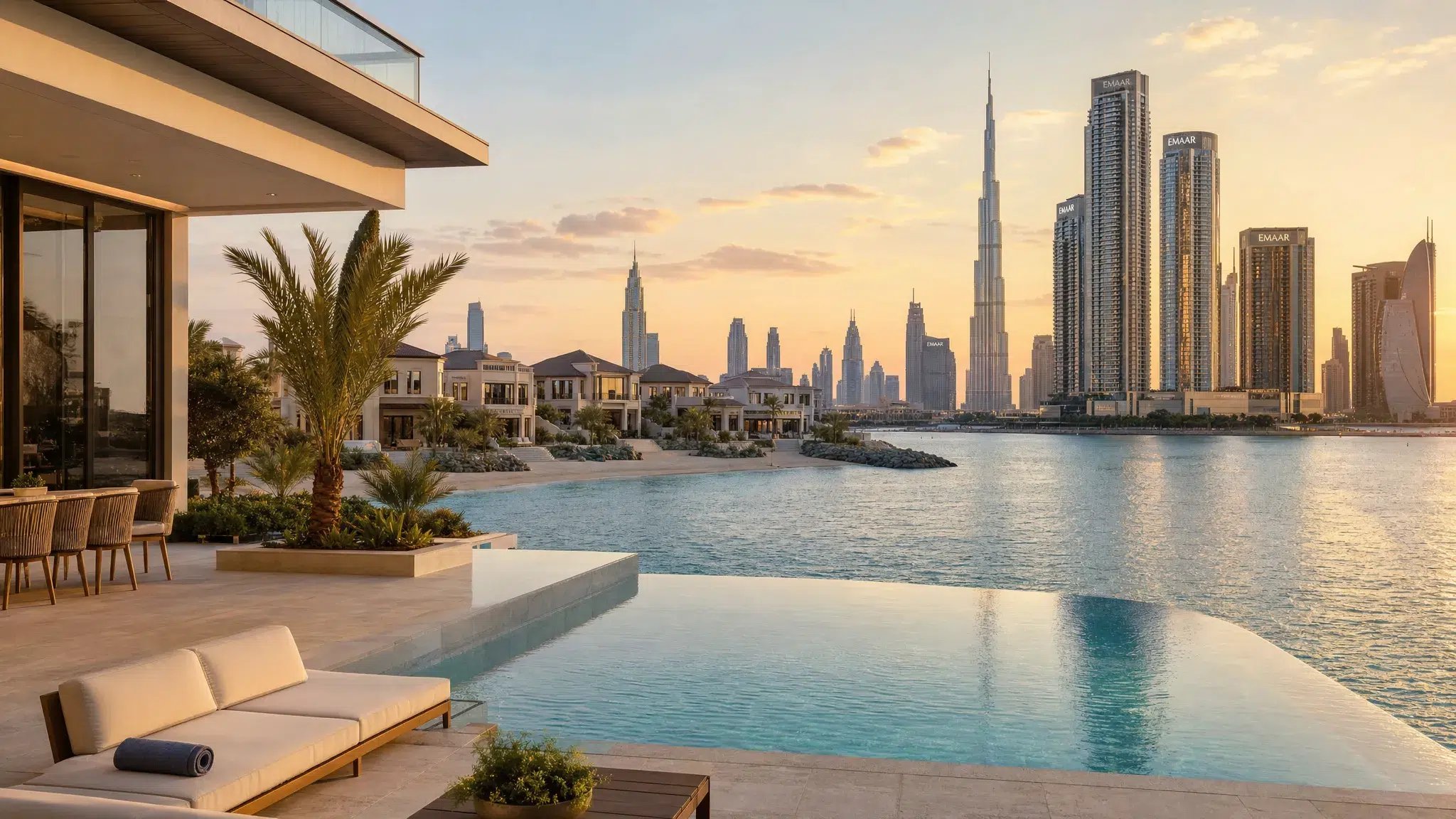
Dubai’s luxury real estate market has moved beyond simple prestige buying. In 2026, investors are not just asking which tower has the best lobby or which villa has the biggest plot. They are asking sharper questions: is the location genuinely scarce, is the tenant or resale buyer pool deep enough, are service charges justified, and will the asset still feel premium five or ten years from now?
That shift matters because luxury properties in Dubai cover very different investment profiles. A branded residence in Downtown Dubai, a beachfront apartment on Palm Jumeirah, a mansion in Emirates Hills, and a wellness-led villa in Al Barari can all be luxury assets, but they do not behave the same way financially.
Dubai also continues to attract globally mobile capital from entrepreneurs, family offices, senior executives, and alternative-asset investors. Some compare property with other UAE-based wealth-building opportunities, including Bitcoin mining in Dubai and the UAE, before deciding how much capital to allocate into real estate. For many, luxury property remains attractive because it combines lifestyle use, portfolio diversification, and potential long-term value preservation.
Below is a practical investor-focused look at the luxury property segments in Dubai worth watching in 2026, plus the due diligence points that separate a strong asset from an expensive mistake.
What makes a Dubai luxury property investment-worthy in 2026?
Luxury in Dubai is no longer defined by price alone. Investors are paying closer attention to the quality of demand behind a property. A high asking price does not automatically mean a high-quality investment, especially in a market where new launches, branded projects, and premium communities compete for attention.
The strongest luxury assets usually share several traits: limited supply, strong views or waterfront access, credible developers, high-quality building management, usable layouts, and a clear future buyer profile. They also fit into Dubai’s wider urban direction, including the city’s focus on quality of life, mobility, green space, and destination-led communities under the Dubai 2040 Urban Master Plan.
| Investment signal | Why it matters in Dubai luxury | What to verify before buying |
|---|---|---|
| True scarcity | Limited beachfront, island, golf, and skyline-view homes can hold buyer interest better than generic stock | Comparable transactions, future nearby supply, and view protection |
| End-user appeal | Homes that people genuinely want to live in often have stronger resale depth | Layout, parking, amenities, noise levels, access, and community quality |
| Service quality | Luxury buyers expect security, maintenance, concierge, and common areas to match the price | Service charges, facility management, building age, and resident reviews |
| Developer reputation | Brand trust affects resale confidence, especially for off-plan homes | Delivery record, past projects, escrow status, and handover quality |
| Liquidity | Some trophy assets can take longer to sell despite high value | Buyer pool, price band, uniqueness, and recent sales velocity |
| Rental depth | Strong rental demand can support holding costs and improve cash flow | Net yield after service charges, furnishing costs, and vacancy assumptions |
For a location-by-location view of Dubai’s most desirable high-end neighborhoods, you can also read this guide to where to find luxury property Dubai buyers love.
2026 watchlist: luxury property segments attracting investor attention
The following segments are not all suitable for the same investor. Some are better for capital preservation, some for rental income, and others for lifestyle use with long-term upside.
| Luxury segment | Areas investors are watching | Main investment logic | Best suited for |
|---|---|---|---|
| Waterfront villas and mansions | Palm Jumeirah, Jumeirah Bay Island, selected Jumeirah addresses, Dubai Islands | Scarcity, privacy, sea access, global trophy demand | Capital preservation and lifestyle buyers |
| Branded residences | Downtown Dubai, Business Bay, Palm Jumeirah, Dubai Marina, Jumeirah | International appeal, managed amenities, premium positioning | Global buyers and investors seeking differentiation |
| Prime skyline apartments | Downtown Dubai, DIFC, Business Bay, Dubai Marina | Liquidity, executive rental demand, iconic views | Income-focused investors and frequent-use buyers |
| Beachfront resort apartments | Palm Jumeirah, Emaar Beachfront, Bluewaters, JBR | Holiday demand, lifestyle use, waterfront scarcity | Short-stay and hybrid-use investors |
| Family villa communities | Dubai Hills Estate, Al Barari, Emirates Hills, Jumeirah Golf Estates, Tilal Al Ghaf | Long-term resident demand and larger living spaces | Family wealth planning and stable rental strategies |
| Ultra-prime off-plan | Select waterfront, branded, and master-planned launches | Payment flexibility and early access to premium inventory | Investors comfortable with development risk |
1. Waterfront villas and island homes with real scarcity
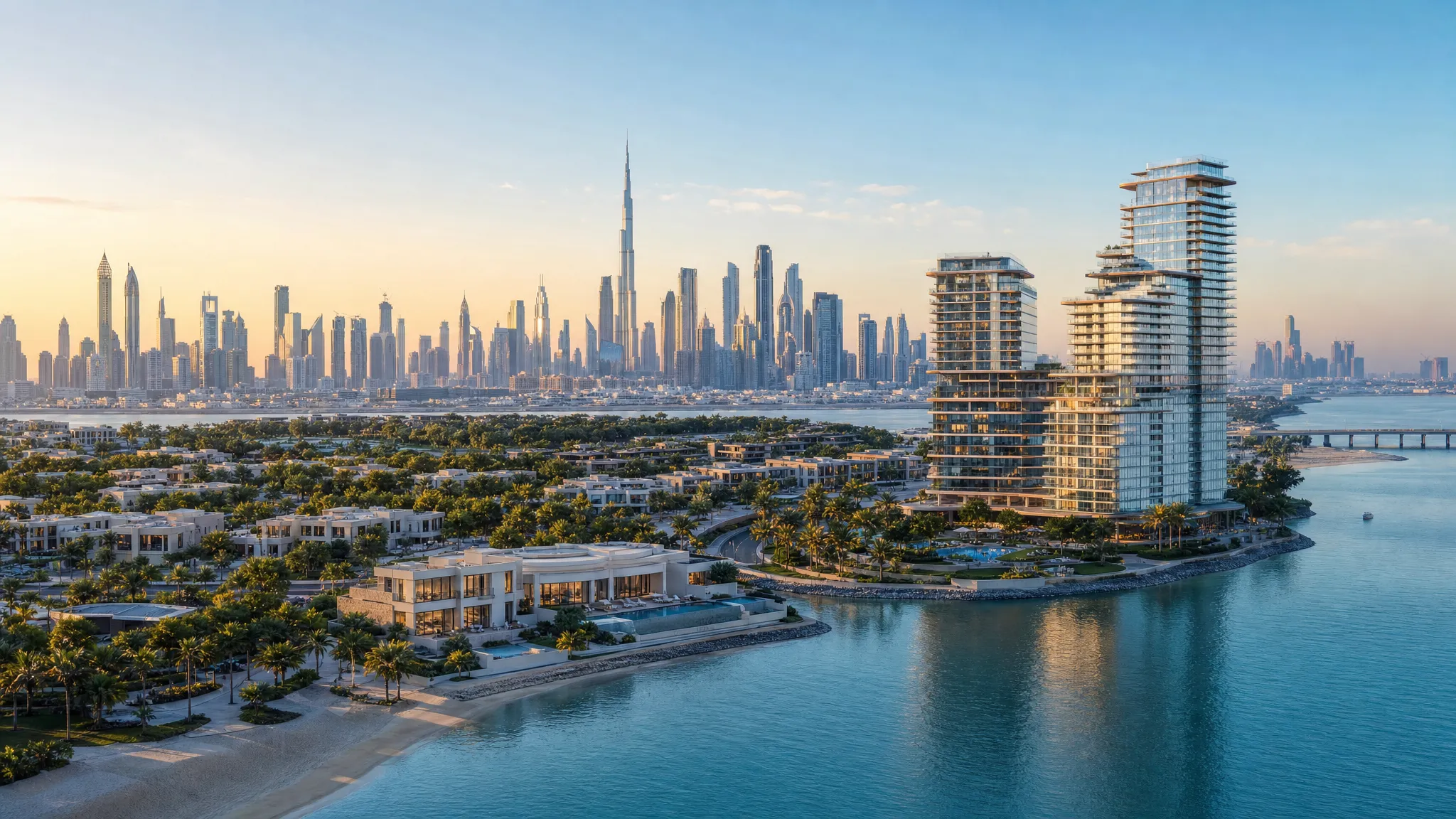
Waterfront luxury remains one of the clearest themes for 2026. In Dubai, true beachfront or island-positioned property is limited relative to demand from high-net-worth buyers. That scarcity is why investors continue to watch Palm Jumeirah, Jumeirah Bay Island, select Jumeirah beachfront addresses, and emerging island destinations with caution and interest.
The appeal is easy to understand. Waterfront homes offer privacy, views, outdoor space, and lifestyle value that cannot be replicated by every new tower launch. For ultra-high-net-worth buyers, these properties are often less about short-term rental yield and more about wealth preservation, status, family use, and long-term liquidity among a global buyer base.
The key is to separate genuinely scarce assets from properties that simply use waterfront language in the marketing. A villa with direct beach access, strong plot dimensions, privacy from neighboring homes, and a protected view is in a different category from a home that is near the water but lacks exclusivity.
Investors should pay close attention to maintenance obligations, renovation potential, community rules, marine exposure, and future construction nearby. Luxury villas can be rewarding, but they also require realistic budgeting for landscaping, air-conditioning systems, pools, smart-home upgrades, and ongoing upkeep.
2. Branded residences with strong operator credibility
Branded residences remain one of the most talked-about luxury property categories in Dubai. The appeal is not only the logo. Investors are watching branded homes because they can offer design consistency, concierge services, hospitality-grade amenities, and international recognition that may help with resale or rental positioning.
In 2026, however, investors are becoming more selective. A brand name alone is not enough. The best opportunities are usually those where the brand, developer, location, unit layout, and operating model all make sense together. A premium hospitality brand attached to a poorly located or inefficiently planned building may not perform like a true luxury asset.
Important questions include whether the residence allows short-term rentals, whether furniture packages are mandatory, how high the service charges are, and how long the brand agreement will remain in place. Investors should also review whether similar branded projects nearby are competing for the same tenant and resale buyer.
Branded residences can work particularly well for overseas buyers who want a lock-and-leave home with management support. They may also appeal to tenants who value hotel-style convenience. But buyers should calculate net returns carefully, because higher service standards often come with higher operating costs.
3. Prime apartments in Downtown Dubai, DIFC, and Business Bay
Not every luxury investor wants a villa. Many prefer apartments in highly liquid urban locations where executive tenants, business travelers, and international buyers are already active. Downtown Dubai, DIFC, and selected parts of Business Bay remain important watch areas for this reason.
Downtown Dubai offers global recognition, Burj Khalifa and fountain views, retail access, and a high level of tourist and corporate visibility. DIFC attracts finance, legal, consulting, and professional services demand. Business Bay can offer proximity to Downtown with a wider range of pricing and project quality, which makes building selection especially important.
For apartments, investors should look beyond the brochure. The strongest luxury units often have a combination of efficient floor plans, high floors, protected views, premium parking, strong lifts, good acoustic separation, and well-maintained common areas. In a competitive rental market, these details affect both occupancy and pricing power.
Service charges are critical. A beautiful apartment with excessive annual charges may look attractive on gross yield but disappoint on net yield. Investors should model realistic rental income after service fees, furnishing, maintenance, management, vacancy, and agency costs.
4. Beachfront apartments and resort-style homes
Dubai’s beachfront apartment market continues to attract investors who want a hybrid asset: something they can use personally, rent when vacant, and resell to lifestyle-driven buyers. Palm Jumeirah, Bluewaters, JBR, Dubai Marina, and Emaar Beachfront are among the locations investors often monitor for this strategy.
The strongest beachfront apartments typically offer more than a sea view. They provide direct beach access or easy waterfront access, strong building amenities, restaurants nearby, walkability, and a resort-like feeling that tenants and buyers can understand immediately.
This segment can be attractive for short-term rental strategies, but it also requires discipline. Seasonality, furnishing standards, licensing rules, management fees, and competition from hotel apartments can affect returns. Investors should not assume that every beachfront unit will perform well simply because it is near the water.
A practical approach is to compare similar units in the same building or nearby buildings, then estimate both long-term rental and short-term rental scenarios. If the investment only works under an optimistic occupancy assumption, the margin of safety may be too thin.
5. Family villa communities with long-term resident demand
The luxury villa market is not only about trophy mansions. In 2026, investors are also watching family-focused communities where long-term residents want space, privacy, parks, schools, and a community lifestyle. Areas such as Dubai Hills Estate, Al Barari, Jumeirah Golf Estates, Tilal Al Ghaf, Emirates Hills, and selected parts of Mohammed Bin Rashid City are often part of this conversation.
This segment can be attractive because the tenant profile is different from short-stay or tourist-driven demand. Families often sign longer leases, care about schools and commute times, and may renew if the property is well maintained. That can support more stable income, although maintenance costs are usually higher than for apartments.
Investors should review plot size, built-up area, bedroom configuration, maid’s room, storage, parking, garden usability, and community facilities. A villa that photographs beautifully but has awkward room sizes or poor outdoor privacy may struggle against better-designed alternatives.
Renovation potential can also matter. Some investors target older villas in premium communities, upgrade kitchens, bathrooms, flooring, landscaping, lighting, and climate systems, then reposition the home for rent or resale. This can work well, but only if acquisition price, renovation budget, approvals, and final resale value are carefully controlled.
6. Ultra-prime off-plan projects from credible developers
Off-plan luxury remains a major part of Dubai’s investment landscape. For investors, the appeal is early access to premium units, staged payment plans, and the possibility of price appreciation before or after handover. In the luxury segment, the best units in a strong launch can be difficult to access later.
That said, off-plan is not automatically safer or more profitable. In 2026, investors should be particularly careful about developer track record, project registration, escrow protections, payment milestones, handover timelines, and the quality of comparable ready properties. A premium launch price must be justified by location, design, scarcity, and expected demand at completion.
If you are comparing delivery risk, payment plans, and rental timing, this detailed guide on off-plan vs ready property in Dubai is a useful next read.
A conservative investor should ask one simple question: if the market is less enthusiastic at handover than it was at launch, would this property still be desirable to an end user? If the answer is yes, the asset has a stronger foundation.
7. True penthouses and full-floor residences
Trophy apartments are another category investors are watching, especially in prime towers with limited top-floor inventory. True penthouses, duplexes, triplexes, and full-floor residences appeal to buyers who want villa-like space with tower amenities, security, and skyline views.
This segment is highly selective. A large apartment is not automatically a penthouse in the investment sense. True trophy value usually comes from ceiling height, private outdoor space, pool or terrace features, panoramic views, private lift access, premium parking, and a layout that feels rare.
Liquidity can be thinner at the very top end, so investors should not treat trophy penthouses like standard rental apartments. The buyer pool is smaller, negotiation cycles can be longer, and the resale story must be strong. When the asset is genuinely rare, however, it can attract global attention.
The luxury investor’s due diligence framework
A luxury property purchase should be emotional enough to attract future buyers, but analytical enough to protect capital. Before committing, investors should verify the asset at building, community, and legal levels.
Dubai’s property market has strong official infrastructure, but buyers still need to check details. Use Dubai Land Department resources, work with licensed professionals, and confirm project registration, ownership documents, service charges, and transaction history wherever applicable.
| Due diligence question | Why it matters | Practical action |
|---|---|---|
| Is the view protected? | View loss can affect rent and resale value | Check surrounding plots, master plans, and planned towers |
| Are service charges reasonable? | High charges can reduce net yield | Review recent service charge statements and compare with similar buildings |
| Is demand broad or niche? | A wider buyer pool improves liquidity | Identify likely future buyers and tenants before purchase |
| Is the developer proven? | Delivery and quality affect long-term value | Review completed projects, handover reputation, and maintenance standards |
| Does the layout match luxury expectations? | Poor layouts reduce usability even in prime locations | Inspect room sizes, storage, kitchens, bathrooms, and outdoor areas |
| What is the real net return? | Gross yield can be misleading | Model service charges, vacancy, maintenance, furnishing, and management costs |
Some property investors also consider residency planning. The UAE Golden Visa may be available to property investors who meet current criteria, but rules and thresholds should always be verified through the official UAE government portal before making a decision.
Match the property type to your investment goal
A common mistake in luxury real estate is buying the asset everyone is talking about instead of the asset that fits your strategy. The right choice depends on whether you want income, personal use, capital preservation, or higher-risk growth.
| Investor goal | Property types to consider | Main caution |
|---|---|---|
| Capital preservation | Waterfront villas, rare plots, trophy homes, prime penthouses | Lower rental yield and longer resale timelines are possible |
| Rental income | Prime apartments, branded residences, executive units near business districts | Net yield depends heavily on service charges and furnishing costs |
| Lifestyle plus rental | Beachfront apartments, resort communities, serviced residences | Short-term rental performance can be seasonal |
| Family wealth planning | Large villas in established communities | Maintenance and renovation budgets must be realistic |
| Growth-focused investing | Select off-plan luxury launches | Developer, handover, and market-cycle risk must be managed |
If you are still building your overall strategy, the Dubai real estate investment guide 2026 can help you compare broader investment routes before narrowing into the luxury segment.
Pricing discipline: what smart investors are watching
Luxury buyers can overpay when they focus only on aesthetics. Smart investors compare direct transactions, not just asking prices. They look at similar units in the same building, similar villas in the same community, and recent sales rather than marketing claims.
Price per square foot is useful, but it is not enough. In luxury property, two homes with the same size can have very different values because of view, floor height, renovation quality, outdoor space, privacy, ceiling height, and building reputation. A corner unit with a protected view may justify a premium. A dark or awkward unit in the same project may not.
Investors should also avoid assuming that every luxury renovation adds value. Upgrades that improve kitchens, bathrooms, lighting, storage, outdoor usability, and climate comfort are usually easier for buyers to understand. Highly personal design choices can reduce the buyer pool, even if they are expensive.
Red flags investors should not ignore
The luxury label can hide weaknesses. Be careful with properties where the premium is based mostly on marketing, not fundamentals. Warning signs include unclear view protection, unusually high service charges, poor facility maintenance, weak parking allocation, inefficient floor plans, unrealistic rental projections, and limited resale evidence.
Another red flag is overreliance on future infrastructure or future demand. Upcoming roads, malls, beaches, and attractions can support value, but they should not be the only reason the investment works. A property should still make sense based on today’s access, quality, and comparable demand.
Finally, investors should be cautious when a deal is presented as urgent without enough documentation. A genuine luxury opportunity should stand up to verification.
How to monitor luxury properties in Dubai more effectively
The luxury market moves quickly, especially when rare units, waterfront villas, or attractive off-plan allocations become available. Investors benefit from using a platform that lets them compare listings, filter by location and property type, review photos or virtual tours, and contact agents or owners directly.
Best Property in Dubai helps buyers and investors explore residential and commercial listings across the UAE, with advanced search filters, detailed property pages, daily updated listings, favorites, comparison tools, and market guides. For luxury investors, this makes it easier to track what is available, compare competing opportunities, and act with better context.
Frequently Asked Questions
Are luxury properties in Dubai still attractive for investors in 2026? Yes, but investors are becoming more selective. The strongest opportunities are usually properties with scarcity, strong end-user appeal, credible developers, quality management, and clear resale or rental demand.
Which luxury areas in Dubai are investors watching most closely? Investors often watch Palm Jumeirah, Downtown Dubai, DIFC, Dubai Marina, Business Bay, Jumeirah Bay Island, Dubai Hills Estate, Al Barari, Emirates Hills, Jumeirah Golf Estates, and select beachfront or branded developments.
Are branded residences in Dubai a good investment? They can be, especially when the brand, location, developer, service model, and unit layout are all strong. Investors should still check service charges, rental rules, brand agreement details, and comparable resale data.
Is off-plan or ready luxury property better in Dubai? Ready property offers immediate inspection, rental potential, and clearer market evidence. Off-plan property can offer payment flexibility and early access to premium inventory, but it carries developer, handover, and market-cycle risk.
What is the biggest mistake luxury property investors make? The biggest mistake is paying for prestige without verifying fundamentals. A luxury property should be assessed through comparable transactions, net yield, service charges, view protection, maintenance quality, and future buyer demand.
Can buying luxury property in Dubai support UAE residency planning? It may support residency goals if the buyer meets current requirements, but investors should verify the latest rules through official UAE sources and qualified advisors before purchasing.
Start comparing Dubai luxury properties with confidence
Luxury real estate in Dubai can be a powerful investment, but only when the property matches your strategy, budget, and risk profile. Whether you are watching waterfront villas, branded residences, prime apartments, or family-focused villa communities, careful comparison is essential.
Explore current listings on Best Property in Dubai, use advanced filters to narrow your search, save and compare favorites, and connect directly with agents or owners when you find a property that fits your goals.


Join The Discussion