
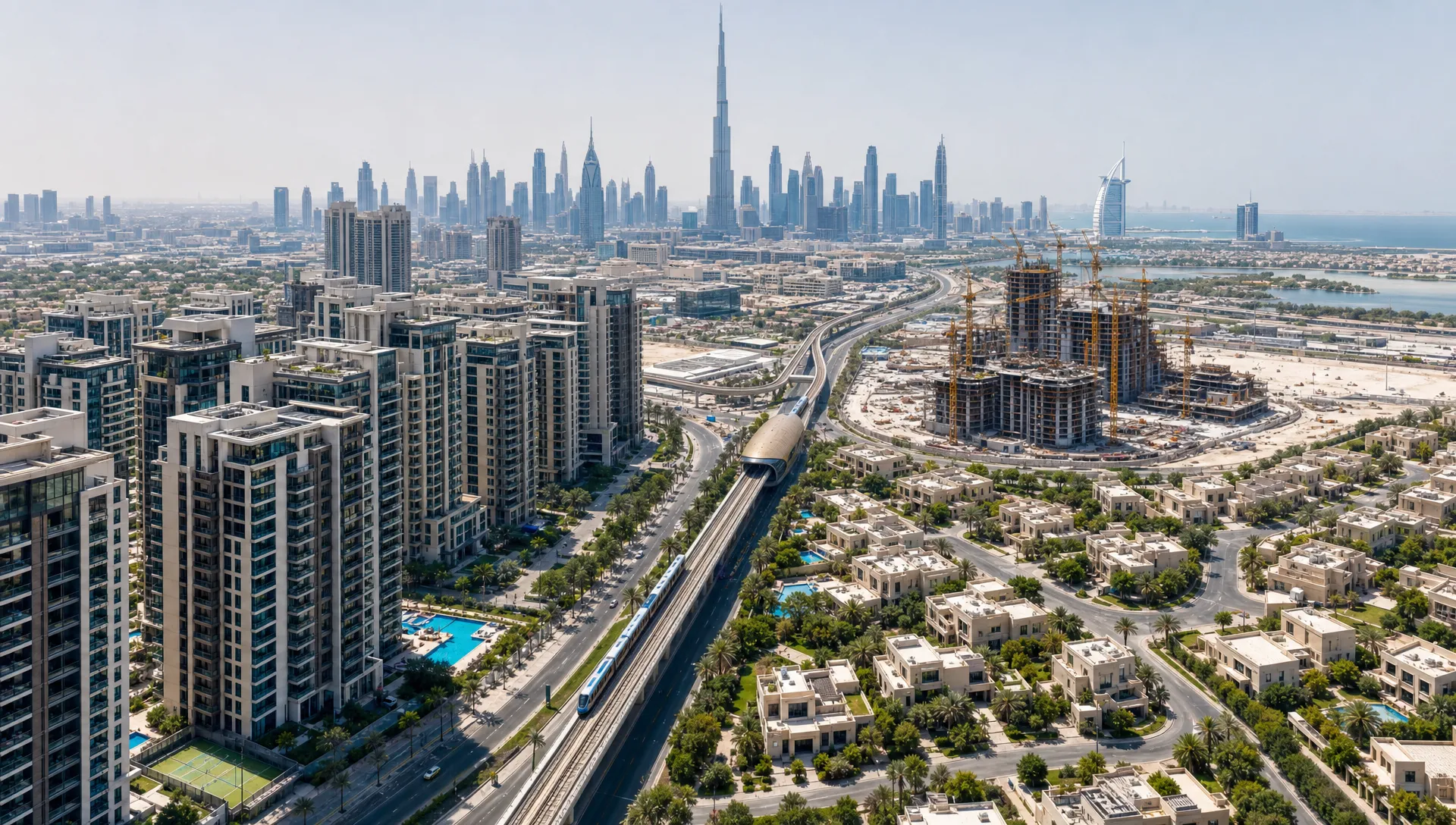
The Dubai real estate market remains one of the world’s most closely watched property stories. For buyers, that is exciting, but it also means the market can feel noisy. New launches, rising rents, branded residences, mortgage headlines, villa shortages, and off-plan payment plans all compete for attention.
The smartest buyers in 2026 are not simply asking, “Is Dubai property going up?” They are asking better questions: Which areas have real end-user demand? Which buildings justify their service charges? Which off-plan projects are priced sensibly against future supply? Which listings are realistic, and which are just testing the market?
Below are the Dubai property trends buyers should understand before making a move, whether you are purchasing your first home, upgrading to a villa, or investing for rental income.
The big picture: Dubai is active, but buyers need to be more selective
Dubai has moved from a broad recovery cycle into a more mature, more selective phase. Demand remains supported by population growth, business migration, global investor interest, tax efficiency, and Dubai’s reputation for safety and lifestyle. At the same time, more supply is entering the pipeline, especially through off-plan launches.
That combination creates opportunity, but it rewards buyers who compare real data, not just marketing claims. Official transaction information from the Dubai Land Department is a useful starting point because it helps buyers compare asking prices against actual registered sales. Listing prices matter, but completed transactions tell you what buyers are really paying.
Here is the buyer-focused trend map:
| Market trend | What it means for buyers | Smart buyer response |
|---|---|---|
| Location-specific price movement | Some communities keep outperforming while others flatten | Compare price per square foot by building, view, age, and handover status |
| Heavy off-plan activity | Future supply may affect resale prices and rents | Check developer track record, escrow status, payment plan, and handover timeline |
| Strong rental demand | Investment yields can still be attractive | Calculate net yield after service charges, maintenance, vacancy, and management |
| Prime scarcity | Waterfront, villa, and ultra-prime homes may behave differently | Do not compare luxury assets with mass-market apartments using the same metrics |
| Financing sensitivity | Mortgage costs influence affordability and negotiations | Secure pre-approval and stress-test repayments before offering |
| Service charge awareness | Building costs affect long-term returns | Review service charges and building management quality before buying |
| Infrastructure-led value | New roads, schools, and transit can change demand | Buy based on confirmed fundamentals, not only future promises |
1. Price growth is becoming more micro-market driven
A few years ago, many Dubai communities benefited from broad upward momentum. In 2026, buyers need to think more granularly. Two apartments in the same district can perform very differently depending on the tower, floor, view, layout, developer, service charges, parking, and whether the building has a strong rental history.
This is especially important in popular areas where headline prices can hide major differences. A well-maintained tower with strong amenities and low vacancy may deserve a premium. A dated building with high service charges, weak facilities, or upcoming maintenance issues may not.
When reviewing listings, avoid judging value by price alone. Look at price per square foot, unit condition, floor plan efficiency, balcony usability, furnishing quality, vacancy status, and comparable transactions. If you want a more detailed approach, this guide on how to read real estate listings like a smart buyer explains the details buyers often miss.
The key trend is simple: Dubai is not one market. It is many smaller markets moving at different speeds.
2. Off-plan supply is shaping buyer decisions
Off-plan property remains a major force in Dubai. Developers continue to launch projects with flexible payment plans, branded concepts, waterfront positioning, and lifestyle amenities. For buyers, this can be attractive because entry payments may be lower than buying a completed property, and the unit is new at handover.
But off-plan buying requires discipline. A payment plan does not automatically make a property affordable, and a glossy launch price is not always below future market value. Buyers should compare the off-plan price with similar ready properties nearby, then ask whether the premium is justified by design, location, developer reputation, or expected handover quality.
Future supply is another important factor. If several towers in the same district hand over around the same time, rents and resale prices may face temporary pressure. This does not make the area a bad investment, but it does mean your timeline matters. A buyer planning to hold for seven to ten years may think differently from someone hoping to resell before handover.
Before buying off-plan, confirm the developer’s record, project registration, escrow account, payment milestones, expected completion date, and resale restrictions. Dubai has a more regulated property environment than many global markets, but due diligence still belongs to the buyer.
3. Rental demand still supports investor math, but gross yield is not enough
Dubai’s rental market is one of the main reasons global investors study the city. Apartments in well-connected communities, family homes near schools, and properties close to employment hubs can attract strong tenant demand.
However, buyers should avoid relying only on gross yield. A listing may advertise an attractive rental return, but the real number is the net yield after annual costs. Service charges, maintenance, property management, furnishing, vacancy periods, insurance, and agency fees can all reduce the final return.
For example, a smaller apartment in a high-demand area may produce a strong gross yield, but if service charges are high or the building has frequent maintenance issues, net performance may be weaker than expected. A villa may have lower yield on paper but stronger capital preservation if the community has limited supply and steady family demand.
Investors should also choose a rental strategy early. Long-term rentals are usually more stable and easier to manage. Short-term rentals may generate higher income in the right location, but they require licensing, furnishing, active management, seasonal pricing, and higher operating attention.
For a deeper investment lens, including how to think about rental returns and area selection, see the Dubai real estate investment guide for 2026.
4. End-user demand is pushing livability higher on the checklist
More buyers are looking beyond the unit itself. They want communities that function well day to day. That means shorter commutes, reliable road access, schools, supermarkets, clinics, parks, gyms, walkability, and family-friendly public spaces.
This trend matters because livability often supports resale value. A beautiful apartment in an inconvenient location may be harder to rent or sell than a practical unit in a community where people genuinely want to live.
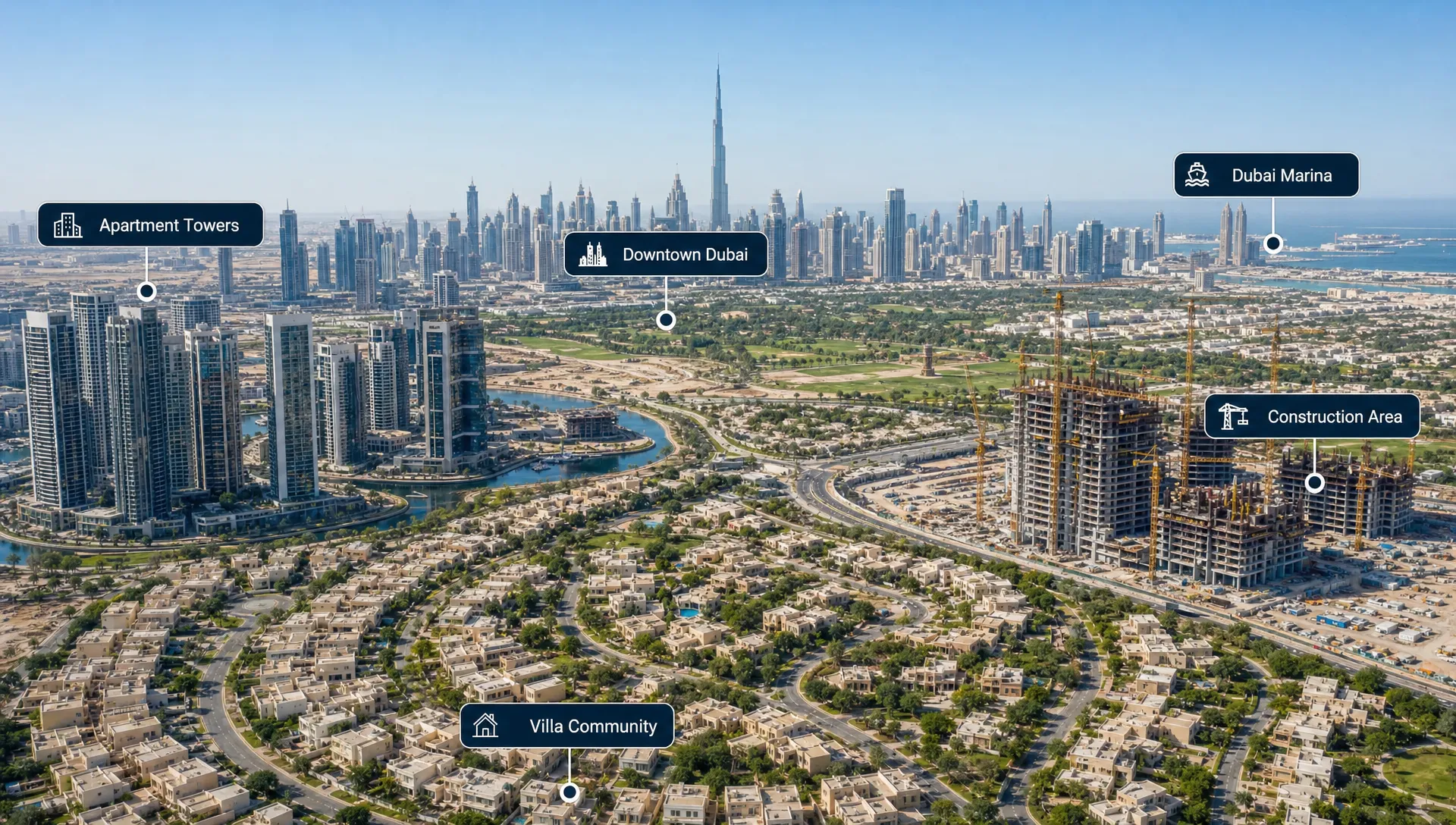
Dubai buyers are also becoming more precise about lifestyle fit. A professional working in DIFC may prioritize Downtown Dubai, Business Bay, or City Walk. A family with school-age children may compare Dubai Hills Estate, Arabian Ranches, Jumeirah Village Circle, or other villa and townhouse communities. A waterfront buyer may focus on Dubai Marina, Palm Jumeirah, Emaar Beachfront, or Dubai Creek Harbour.
If you are still narrowing your search, the guide to the best areas to buy property in Dubai can help you compare communities by lifestyle and investment profile.
5. Prime and luxury property follows different rules
The luxury segment does not always behave like the broader market. Waterfront villas, branded residences, penthouses, and rare plots can be driven by scarcity, lifestyle preference, and global wealth flows. These buyers may care less about mortgage rates and more about privacy, views, architecture, brand, service, and long-term asset preservation.
That does not mean every expensive home is a good buy. Luxury buyers still need to compare price per square foot, view premiums, build quality, service levels, and resale depth. A rare villa on a prime waterfront plot may have different fundamentals from a high-floor branded apartment in a building with many similar units.
For investors, luxury property may offer lower rental yield than smaller apartments, but it can provide stronger scarcity value if the location is genuinely prime. The mistake is applying one formula to every asset class. A studio in JVC, a townhouse in Dubai South, and a villa on Palm Jumeirah are not competing for the same buyer or tenant.
6. Mortgage conditions are influencing negotiation power
Financing remains a major trend because it changes what buyers can afford. Mortgage rates in the UAE are influenced by broader monetary conditions, and buyers should monitor updates from banks and the Central Bank of the UAE when planning a purchase.
Higher borrowing costs usually make buyers more cautious, especially in the mid-market. That can create negotiating room on ready properties where sellers are motivated. Cash buyers may also have an advantage because they can move faster and reduce completion risk for the seller.
If you are using a mortgage, get pre-approval before serious negotiations. It helps you understand your budget, monthly repayments, down payment requirement, and the bank’s valuation approach. A property may be listed at one price, but the bank valuation may come in lower, which can affect how much you need to pay upfront.
Smart buyers also stress-test their payments. Ask what happens if service charges increase, rent expectations soften, or your mortgage rate changes after a fixed-rate period. A property should still make sense under realistic conditions, not only under the most optimistic assumptions.
7. Service charges and building quality are becoming deal-breakers
As Dubai’s property market matures, buyers are paying more attention to the cost of ownership. Service charges can materially affect both investor returns and end-user affordability. They also vary widely by building type, amenities, location, and management quality.
A tower with pools, gyms, concierge, landscaping, security, and premium common areas may charge more for a reason. But high service charges should translate into visible maintenance, tenant appeal, and long-term building quality. If common areas are poorly maintained, lifts are unreliable, or facilities feel tired, the property may struggle to command the rent or resale premium you expect.
During due diligence, ask for the latest service charge information, review the building’s condition, speak with residents if possible, and check whether major maintenance works are expected. For villas and townhouses, consider community fees, landscaping costs, cooling, maintenance, and future renovation needs.
This trend is especially important for investors. A high gross rent can look impressive, but service charges and maintenance can quickly narrow the margin.
8. Infrastructure and master planning continue to influence value
Dubai’s long-term appeal is closely tied to infrastructure. Roads, metro connectivity, airport access, business districts, schools, malls, beaches, and public spaces all shape where people want to live.
Buyers should pay attention to master-planned growth areas, but with caution. Infrastructure announcements can support future value, yet not all promised benefits arrive quickly. A community may be marketed around future connectivity, but the buyer still needs to live with today’s road access, retail options, and construction activity.
The best approach is to separate confirmed fundamentals from speculative upside. Confirmed fundamentals include existing schools, functioning roads, occupied buildings, nearby supermarkets, and current tenant demand. Speculative upside includes future malls, future metro stations, future handovers, and future business districts.
Buying before an area is fully mature can produce upside, but it also requires patience. If you need immediate rental income or plan to move in soon, today’s livability matters more than a future master plan.
What each buyer type should focus on in 2026
Different buyers should interpret market trends differently. The same property can be a smart purchase for one buyer and a poor fit for another.
| Buyer type | Main priority | What to watch |
|---|---|---|
| First-time buyer | Affordability and lifestyle fit | Mortgage pre-approval, service charges, commute, building quality |
| End-user upgrader | Space and long-term comfort | Schools, layout, parking, community maturity, resale demand |
| Rental investor | Net income and tenant demand | Realistic rent, vacancy, maintenance, management costs, building reputation |
| Off-plan buyer | Future value and payment flexibility | Developer record, handover timeline, escrow, resale rules, nearby supply |
| Luxury buyer | Scarcity and asset quality | Plot, view, privacy, brand, service, architecture, long-term desirability |
The most common mistake is copying another buyer’s strategy. A yield investor may prefer a compact apartment in a high-rental-demand area. A family may pay more for a townhouse because the layout, school access, and community lifestyle justify it. A luxury buyer may prioritize irreplaceable location over short-term return.
How to apply these trends before making an offer
Market awareness is useful only if it improves your decision. Before making an offer in Dubai, slow down and pressure-test the property against the trends above.
Use this practical checklist:
- Compare the asking price with recent completed transactions in the same building or community.
- Calculate net yield, not just advertised rental return.
- Review service charges, maintenance history, and building condition.
- Confirm whether the unit is vacant, rented, owner-occupied, or short-term let.
- For off-plan property, verify the developer, escrow, payment schedule, and expected handover.
- Visit the area at different times of day to assess traffic, noise, access, and community activity.
- Ask whether future supply nearby could compete with your property.
- Get mortgage pre-approval before negotiating if you are financing the purchase.
This is where good listings and transparent comparisons matter. A buyer who understands the market can quickly spot when a property is overpriced, under-described, or genuinely compelling.
Frequently Asked Questions
Is the Dubai real estate market still good for buyers in 2026? Yes, but buyers need to be selective. Dubai still offers strong lifestyle appeal, investor demand, and rental opportunities, but value depends on the specific community, building, price, and ownership costs.
Are off-plan properties in Dubai a good idea? Off-plan can work well if the developer is reputable, the project is properly registered, the payment plan fits your budget, and the price makes sense compared with ready properties. Buyers should also consider future supply and handover risk.
Should I buy an apartment or a villa in Dubai? It depends on your goal. Apartments may offer stronger rental yield and lower entry prices in many areas. Villas and townhouses may appeal more to families and can benefit from limited supply in established communities.
How do I know if a Dubai property is overpriced? Compare it with recent transactions, similar listings, price per square foot, floor level, view, condition, service charges, and rental history. A low headline price is not always a bargain if ownership costs are high or the building is weak.
Can foreign buyers purchase property in Dubai? Foreign buyers can purchase property in designated freehold areas in Dubai. Before buying, confirm the title status, ownership structure, fees, and legal process with qualified professionals.
Make your Dubai property search more informed
The Dubai real estate market still offers strong opportunities, but the best buyers are no longer chasing hype. They compare communities, study ownership costs, verify data, and choose properties that match a clear lifestyle or investment strategy.
Use Best Property in Dubai to explore current UAE listings, compare apartments and villas, review photos and virtual tours, save favorites, and connect directly with agents or owners. The more informed your shortlist is, the stronger your buying decision will be.


Join The Discussion