
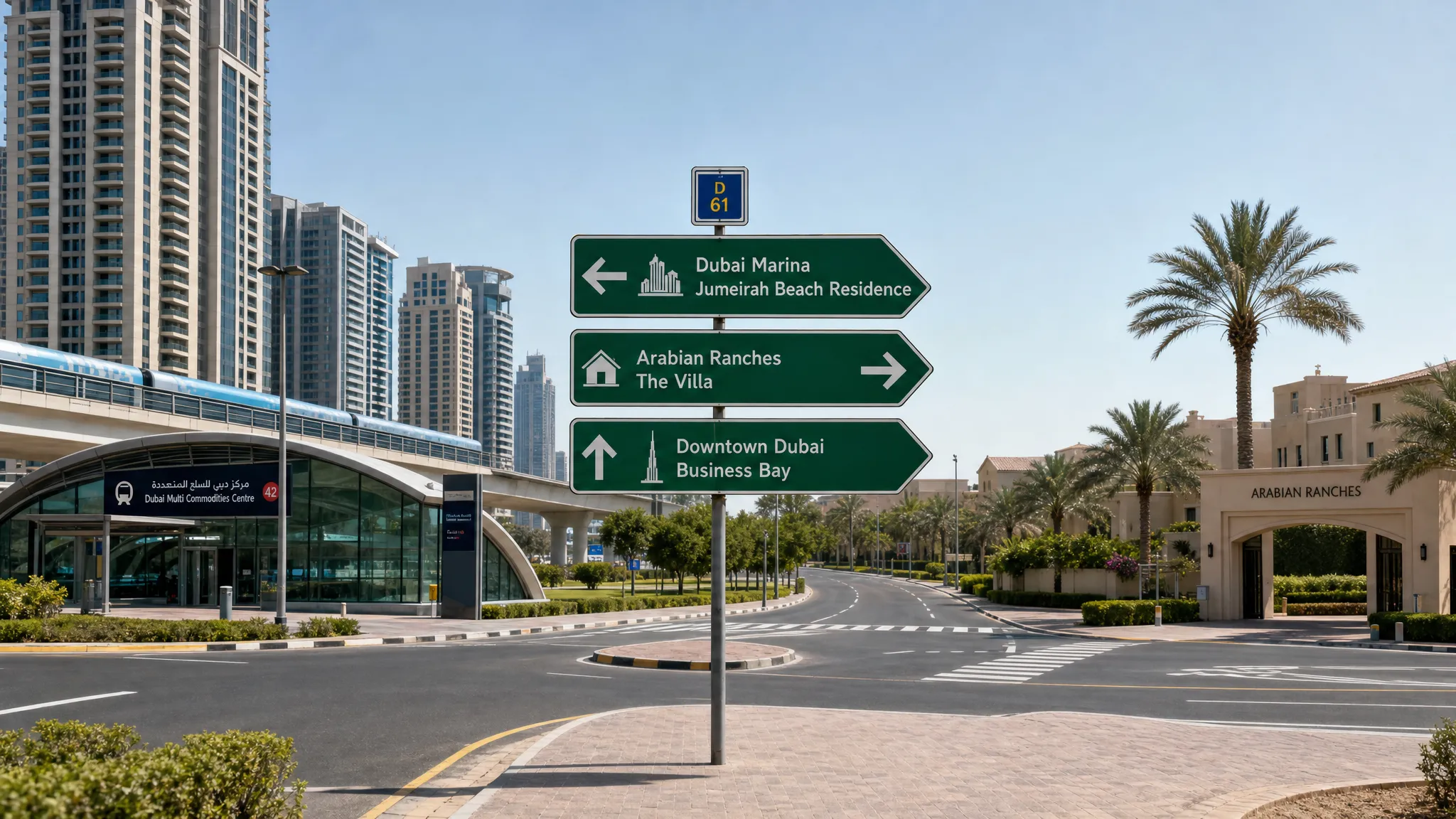
Buying a home in Dubai is not only about finding an attractive apartment, villa, or townhouse. The area you choose will shape your commute, monthly costs, resale potential, rental demand, and everyday quality of life. A search like 'home buy near me' may show nearby options, but in Dubai the smarter question is: which community fits the way you plan to live or invest over the next five to ten years?
Dubai gives buyers a rare range of choices, from waterfront apartments and central business districts to family villa communities and emerging suburban neighborhoods. That variety is exciting, but it can also make shortlisting difficult. The right area is not always the most famous one. It is the place where your budget, lifestyle, property type, and long-term plan line up.
This guide walks you through the practical checks that matter before you choose where to buy a home in Dubai.
Start with your reason for buying
Before comparing communities, define the main purpose of the purchase. A home for your own family has different priorities from a unit bought mainly for rental yield or capital appreciation.
If you are buying to live in the property, daily convenience should lead the decision. Think about school runs, travel time to work, access to supermarkets, noise levels, parking, parks, healthcare, and how the community feels at night and on weekends. The best area is the one that makes your routine easier, not just the one with the most impressive skyline.
If you are buying as an investor, you need to look more closely at liquidity, tenant demand, service charges, occupancy patterns, and future supply. A lower entry price can be attractive, but only if the area has enough demand to support rent and resale when you need an exit.
Many buyers fall somewhere in between. You may want a home you can live in now, then rent out later. In that case, prioritize areas with broad appeal, practical layouts, good transport links, and community infrastructure that can serve both residents and tenants.
Set your true budget before choosing a community
Dubai property prices vary widely by location, but the listing price is only one part of your budget. Two homes with similar purchase prices can have very different total ownership costs depending on service charges, cooling, maintenance, building age, and mortgage structure.
When comparing areas, calculate the full cost of ownership instead of focusing only on the advertised price.
| Cost factor | Why it affects your area choice |
|---|---|
| Purchase price | Prime waterfront and central areas usually require a higher entry budget than emerging communities. |
| Dubai Land Department transfer fee | The transfer fee is commonly 4% of the property price, so a higher priced area increases upfront cash needs. |
| Service charges | Apartment buildings and communities with extensive amenities can have higher recurring costs. |
| Mortgage costs | Your approved loan amount and down payment will determine which areas are realistic. |
| Maintenance and cooling | Larger villas, older buildings, and district cooling arrangements can change monthly expenses. |
| Furnishing or renovation | Some lower priced properties may need upgrades before move-in or rental. |
A common mistake is stretching the budget for a prestigious address while underestimating monthly costs. It is usually better to buy confidently in a suitable community than to overextend in an area that leaves little room for maintenance, family expenses, or market changes.
If you are still learning the transaction process, review the full steps in our guide on how to buy a property in Dubai before you start making offers.
Match the area to your daily life
Dubai is well connected, but a short distance on the map does not always mean a short commute. Traffic patterns, bridge access, metro connectivity, parking availability, and school locations can make two similar communities feel completely different.
Start by mapping your non-negotiable journeys. For most buyers, these include work, school, the airport, family or friends, medical facilities, and the places you visit every week. If public transport matters, check metro, tram, bus, and taxi access using the RTA journey planner. If schools are a priority, compare locations and inspection information through the KHDA school directory.
Then test the area in real conditions. A community that feels calm at noon may be congested at 6 p.m. A tower with stunning views may also sit near construction, nightlife, or a busy highway. A villa community may offer space and privacy, but require longer driving times for daily errands.
The right Dubai area should support your real routine, not your idealized weekend version of city life.
Understand the main community types in Dubai
Dubai neighborhoods often fall into a few broad lifestyle categories. This does not mean every building or street is the same, but the framework helps you compare options faster.
| Buyer priority | Areas often considered | What to check before deciding |
|---|---|---|
| Central business access | Downtown Dubai, Business Bay, DIFC nearby areas | Traffic, parking, service charges, building quality, noise. |
| Waterfront lifestyle | Dubai Marina, JBR, Palm Jumeirah, Dubai Creek Harbour | View premiums, tourist activity, access during peak hours, maintenance costs. |
| Family villa living | Arabian Ranches, Dubai Hills Estate, Mudon, The Springs, DAMAC Hills | School access, community facilities, garden maintenance, commute time. |
| Value-focused apartments | JVC, Arjan, Dubai Sports City, Dubai Silicon Oasis | Future supply, handover quality, transport links, rental demand. |
| Luxury and prestige | Palm Jumeirah, Emirates Hills, Jumeirah Bay Island, Downtown Dubai | Privacy, exclusivity, resale liquidity, property management standards. |
| More space for budget | Dubailand communities, Town Square, Remraam, Dubai South | Infrastructure maturity, driving times, future development plans. |
This table is a starting point, not a final recommendation. Within the same area, one building may be excellent and another may be poorly managed. For a deeper community-by-community overview, compare this guide with our 2026 guide to the best areas to buy property in Dubai.
Look beyond today and study long-term demand
A good area should work now and still make sense when you sell or rent in the future. This is where many buyers focus too much on current price and too little on future liquidity.
Look for signals of durable demand. Areas close to employment hubs, transport links, schools, beaches, business districts, and established lifestyle amenities usually attract a wider pool of buyers and tenants. Communities with limited supply and strong identity may also hold value well, although entry prices can be higher.
Use official and market sources to validate your assumptions. The Dubai Land Department provides access to transaction information that can help buyers understand recent activity. Compare achieved transaction prices, not only asking prices. A listing can ask for anything, but completed transactions show what buyers actually paid.
Also pay attention to future supply. If many similar units are being handed over nearby, rents and resale prices may face pressure in the short term. That does not automatically make an area bad, especially if it is improving quickly, but it should affect your negotiation and holding period.
Choose the property type that fits the area
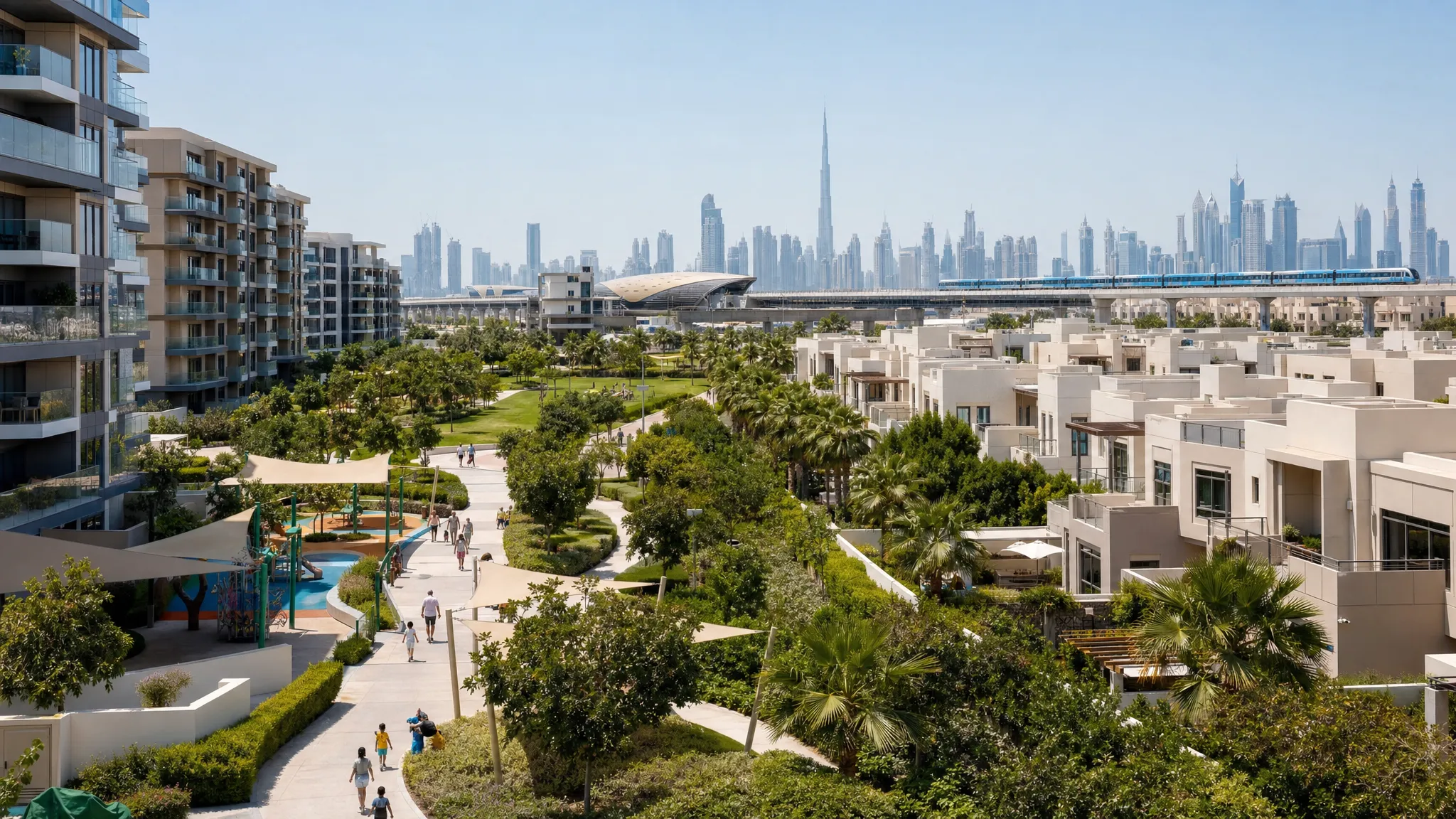
The same area can behave differently depending on whether you buy an apartment, townhouse, or villa. A one-bedroom apartment in a high-demand rental zone may be easy to lease, while a large villa in the same broad district may appeal to a narrower buyer pool.
Apartments often make sense for buyers who prioritize central access, lower maintenance responsibility, building amenities, and rental demand from singles or couples. However, service charges, building management, elevator capacity, parking, and short-term rental activity can affect the experience.
Townhouses are popular with families who want more space without the full cost of a standalone villa. They often perform well in master-planned communities, especially when schools, parks, and retail are nearby. Check plot size, privacy, road access, and community fees.
Villas offer the most privacy and space, but they require more maintenance and usually work best for longer holding periods. If you are considering villas as an investment asset, it is worth studying renovation potential, plot value, and buyer demand in each community.
| Property type | Best suited for | Area factors to prioritize |
|---|---|---|
| Apartment | Professionals, couples, investors, frequent travelers | Transport, building quality, service charges, rental demand. |
| Townhouse | Young families and end users seeking space | Schools, parks, road access, community maturity. |
| Villa | Larger families and long-term buyers | Plot size, privacy, maintenance, resale demand. |
| Off-plan home | Buyers with flexible timelines | Developer track record, payment plan, handover schedule, surrounding supply. |
Check community maturity and infrastructure
Dubai has both mature communities and fast-growing new districts. Each can be a good choice, but they come with different tradeoffs.
Mature communities usually offer completed roads, established retail, proven rental demand, schools, clinics, landscaping, and clearer resale comparisons. You can inspect the area as it is, rather than relying on future promises. The downside is that prices may already reflect that convenience.
Emerging communities can offer better entry prices, newer buildings, modern layouts, and room for growth as infrastructure improves. The tradeoff is uncertainty. Retail, schools, parks, and road networks may still be developing. Construction nearby can also affect comfort and rentability in the early years.
When viewing an emerging area, ask practical questions. Are supermarkets open or only planned? How many schools are within a realistic drive? Is public transport available? Are neighboring plots empty, under construction, or already delivered? How many similar buildings will hand over soon?
A future-focused buyer does not avoid developing areas. They simply price the risk correctly.
Visit the area like a resident, not a tourist
A polished sales brochure cannot tell you how a community feels on a Monday morning. Before committing, spend time there at different times of day.
Visit during weekday rush hour, late evening, and the weekend. Walk from the property to the nearest supermarket, pharmacy, gym, park, or metro station if those amenities matter to you. Check whether pavements are comfortable, whether there is shade, and whether the area feels safe and active after dark.
If you drive, test parking and building access. In high-rise districts, visitor parking can be limited. In villa communities, internal roads and gate access can affect daily convenience. If you have children or pets, observe noise, green space, traffic speed, and how easy it is to move around without always using a car.
It is also worth speaking with residents when possible. Ask about maintenance, building management, cooling costs, traffic, noise, and how responsive the owners association or management company is. A five-minute conversation can reveal issues that never appear in a listing.
Read listings with an area-first mindset
Once you have a shortlist of communities, listings become much easier to evaluate. Instead of scrolling randomly, you can compare similar properties in the same micro-market.
Look beyond the headline price. Check price per square foot, floor level, view, layout efficiency, balcony size, parking, service charges, occupancy status, title status, and whether the photos accurately reflect the unit. A cheaper home may be a better deal, or it may have a poor view, awkward layout, high fees, or a motivated seller because of building issues.
This is where organized searching helps. On Best Property, buyers can use advanced filters, view detailed listings, compare options, save favorites, and contact agents or owners directly. That makes it easier to move from broad area research to a focused shortlist of real homes.
If you want to sharpen your due diligence, our guide on how to read real estate listings like a smart buyer explains what to check before you arrange a viewing or submit an offer.
Use a simple scorecard before you decide
Emotions are part of buying a home, especially in Dubai where views, amenities, and design can be impressive. Still, the final choice should be disciplined. A scorecard helps you compare areas fairly.
Score each area from 1 to 5 on the criteria that matter most to you. Then compare totals, but also pay attention to deal breakers. A high overall score does not help if the commute is impossible or the service charges are outside your budget.
| Area decision factor | Score from 1 to 5 | Notes to add |
|---|---|---|
| Fits total budget | Include fees, service charges, maintenance, and mortgage costs. | |
| Commute and access | Test real travel times, not only map distance. | |
| Lifestyle fit | Consider parks, dining, beaches, schools, gyms, and daily errands. | |
| Community maturity | Check roads, retail, landscaping, nearby construction, and facilities. | |
| Resale and rental demand | Compare transactions, rents, and buyer or tenant appeal. | |
| Property quality | Assess developer, building management, layout, views, and condition. | |
| Future growth potential | Review planned infrastructure and upcoming supply. |
The best area is rarely perfect in every category. Your goal is to choose the community where the compromises are acceptable and the long-term logic is strong.
Frequently Asked Questions
Which area is best to buy a home in Dubai? There is no single best area for every buyer. Downtown Dubai, Dubai Marina, Dubai Hills Estate, Palm Jumeirah, JVC, Arabian Ranches, and Dubai Creek Harbour can all make sense depending on budget, lifestyle, property type, and investment goals.
Should I buy in a mature Dubai community or an emerging area? Mature communities usually offer more certainty, completed amenities, and clearer resale data. Emerging areas may offer lower entry prices and growth potential, but buyers should check infrastructure, handover timelines, and future supply carefully.
How important is commute when choosing where to buy in Dubai? Commute is one of the most important factors for end users. Always test travel times during rush hour and consider school runs, airport access, parking, and public transport rather than relying only on distance.
What should investors look for when choosing an area in Dubai? Investors should focus on tenant demand, transaction activity, service charges, future supply, building quality, and exit liquidity. The lowest purchase price is not always the best investment if demand is weak.
Can foreigners buy homes in Dubai? Foreign buyers can generally buy property in designated freehold areas in Dubai. Buyers should confirm title type, ownership rules, fees, and transaction requirements with a qualified agent or conveyancing professional before proceeding.
Ready to compare Dubai areas with confidence?
Choosing the right area is the foundation of a smart property purchase. Once you know your budget, lifestyle needs, commute limits, and investment goals, the search becomes clearer and less stressful.
Use Best Property to explore updated Dubai listings, filter by your preferred criteria, compare properties, save favorites, and contact agents or owners directly. The right home is not just about the unit itself. It is about the community that will support your life, your finances, and your future plans.


Join The Discussion