
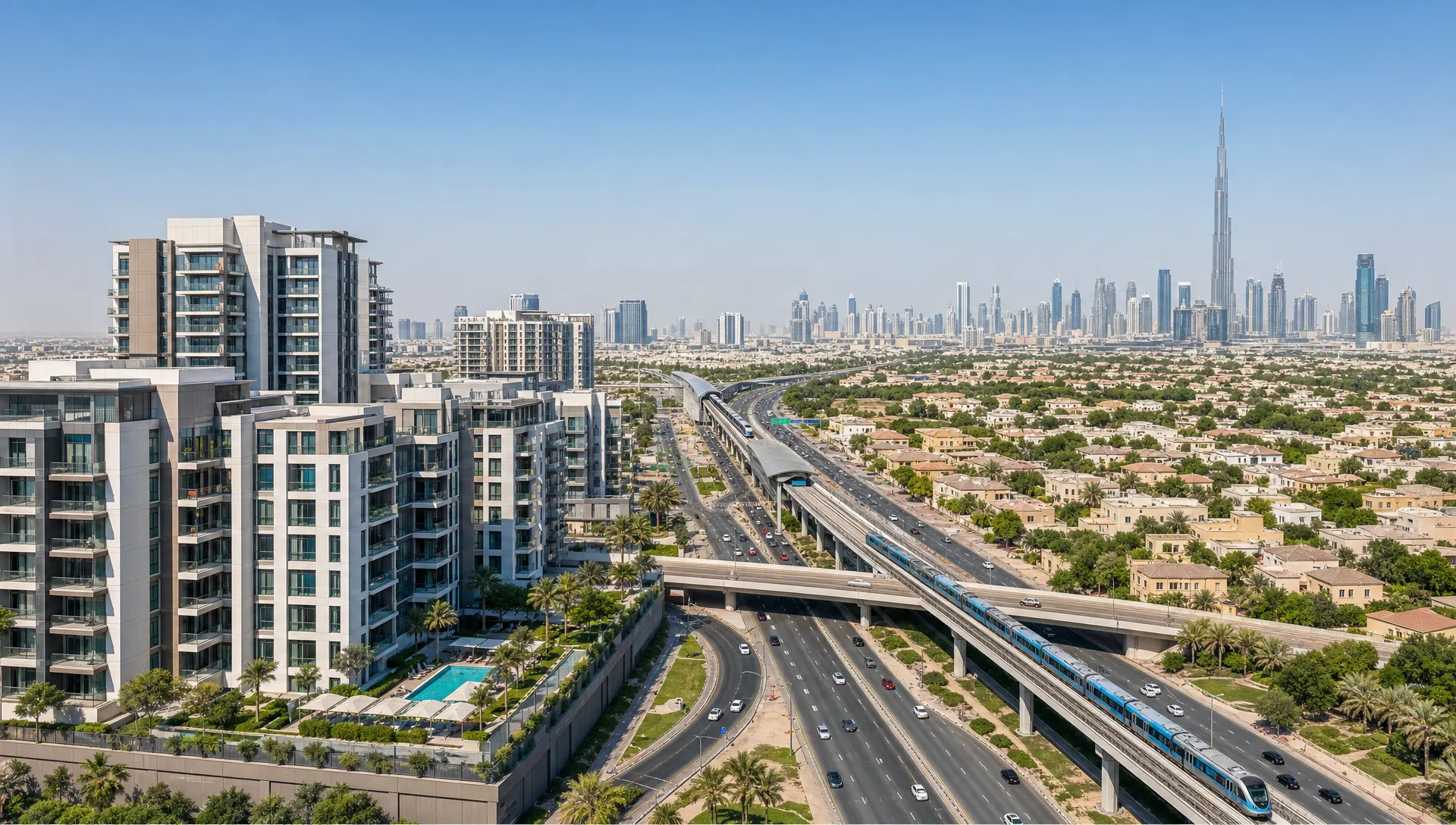
Dubai property headlines often focus on record sales, landmark launches, and luxury deals. Smart buyers look deeper. A successful Dubai real estate investment is rarely about chasing the loudest launch or the highest advertised yield. It is about reading the market signals that show where demand is durable, where supply is tightening, and where the numbers still work after costs.
In 2026, Dubai remains one of the world’s most watched real estate markets because it combines global connectivity, lifestyle appeal, business-friendly regulation, strong rental demand, and a broad range of freehold options for international buyers. But the market is also more competitive than it was a few years ago. That means investors need a sharper trend filter.
Below are the Dubai real estate investment trends smart buyers follow before they commit capital, whether they are comparing a studio in Business Bay, a villa in Dubai Hills, an off-plan apartment near a future transport corridor, or a luxury waterfront home.
Smart buyers follow data, not noise
The first trend is not a location or property type. It is behavior. Serious buyers now rely more on transaction data, rental comparables, developer track records, service charge estimates, and exit liquidity than on social media hype.
Dubai has become more transparent over time, with official data from the Dubai Land Department helping buyers understand transaction activity across communities. Asking prices still matter, but completed transactions are usually more useful because they show what buyers actually paid.
This is especially important in fast-moving areas where listings can be ambitious. A property may look attractive at first glance, but the real investment question is whether similar units have sold, rented, and resold at levels that support your plan.
When you compare options, do not stop at photos and headline rent. Learning how to read real estate listings like a smart buyer helps you connect price, layout, occupancy status, floor level, view, service charges, and likely demand into one clearer decision.
Trend 1: Net yield matters more than advertised yield
Gross rental yield is one of the most quoted numbers in Dubai property marketing. It is easy to calculate, but it can also be misleading. Smart buyers are shifting from gross yield to net yield because the difference can change the entire investment case.
A gross yield calculation usually divides annual rent by purchase price. A net yield calculation considers the money that actually remains after ongoing costs and realistic vacancy assumptions.
A practical net yield estimate should account for:
- Service charges and building fees
- Property management fees, if outsourced
- Maintenance and repairs
- Vacancy periods between tenants
- Furnishing costs for short-term rentals
- Mortgage costs, if financed
- Transaction costs, including the Dubai Land Department transfer fee and typical brokerage costs
This trend favors buyers who build a full cash flow model before making an offer. For example, a smaller apartment may show a strong advertised yield, but high service charges, frequent tenant turnover, or furnishing costs can reduce the real return. A villa may show a lower gross yield, but stronger capital preservation and longer tenant stays may make it more attractive for some investors.
The smartest question is not simply, what will it rent for? It is, what will I keep after all costs, and how confident am I in that income over the next three to five years?
Trend 2: End-user demand is becoming the anchor
Dubai has strong investor participation, but end-user demand is increasingly important. Communities that attract residents for daily life, not only speculative buyers, often have stronger long-term resilience.
Smart buyers look for evidence that people genuinely want to live in the area. That includes access to schools, supermarkets, clinics, parks, gyms, restaurants, public transport, beaches, offices, and major roads. It also includes practical details such as parking, traffic flow, community management, building quality, and walkability.
This trend explains why established master communities often remain attractive even when new launches offer aggressive payment plans. A polished brochure can create interest, but daily convenience keeps tenants and end users in place.
For investors, end-user depth supports two exits. You may rent to stable long-term tenants, or you may later sell to someone who wants to live there. That second buyer pool is valuable because it is less dependent on short-term investor sentiment.
If location is your first filter, a current guide to the best areas to buy property in Dubai can help you compare communities by lifestyle, rental demand, and investment profile.
Trend 3: Infrastructure-led growth is shaping buyer attention
Dubai’s property market often moves ahead of infrastructure, but smart buyers separate confirmed growth from vague promises. They track master plans, transport upgrades, road access, airport connectivity, and the pace of community delivery.
The Dubai 2040 Urban Master Plan gives long-term context for how the city intends to grow, with emphasis on sustainable urban development, quality of life, mobility, and key urban centers. For property investors, this matters because infrastructure can change the convenience and desirability of a location.
Still, smart buyers avoid paying today’s price for tomorrow’s unbuilt promise unless the discount justifies the risk. A future metro station, road link, mall, school, or business district can strengthen a location, but the timing, final route, and actual delivery quality matter.
A practical way to evaluate this trend is to ask whether the property already works without the future upgrade. If the answer is yes, infrastructure improvement can become upside. If the answer is no, the investment may depend too heavily on a delayed or uncertain catalyst.
Trend 4: Off-plan buyers are more selective about developers and delivery
Off-plan property remains a major part of Dubai real estate investment. The appeal is clear: lower entry payments, staged payment plans, new layouts, modern amenities, and the possibility of capital growth before handover. But the smarter trend in 2026 is more disciplined off-plan selection.
Buyers are paying closer attention to developer reputation, construction progress, escrow protection, comparable ready property prices, handover timelines, and the resale market for similar projects. They also examine whether the payment plan is genuinely useful or simply shifts risk into the future.
The key comparison is not off-plan versus ready in general. It is this specific off-plan unit versus realistic ready alternatives in the same area. If a ready property with proven rent can be bought near the same all-in price, the off-plan discount or upside should be strong enough to justify waiting.
Off-plan can still be compelling, but smart buyers do not buy only because a launch is popular. They ask whether the project will be desirable after completion, not just during the sales campaign.
For the full legal, financial, and process context, pair this trend lens with a Dubai real estate investment guide for 2026 before shortlisting projects.
| Trend smart buyers follow | What to check before buying | Why it matters |
|---|---|---|
| Net yield over gross yield | Service charges, vacancy, management, maintenance, financing | Shows the real return after costs |
| End-user demand | Schools, roads, retail, daily convenience, community maturity | Supports rental stability and resale liquidity |
| Infrastructure growth | Confirmed transport, roads, master-plan delivery, access times | Creates upside when improvements are real and timed well |
| Off-plan discipline | Developer history, escrow, construction progress, comparable ready prices | Reduces delivery and overpayment risk |
| Resale liquidity | Transaction volume, buyer pool, unit uniqueness, realistic exit price | Helps avoid being trapped in a difficult-to-sell asset |
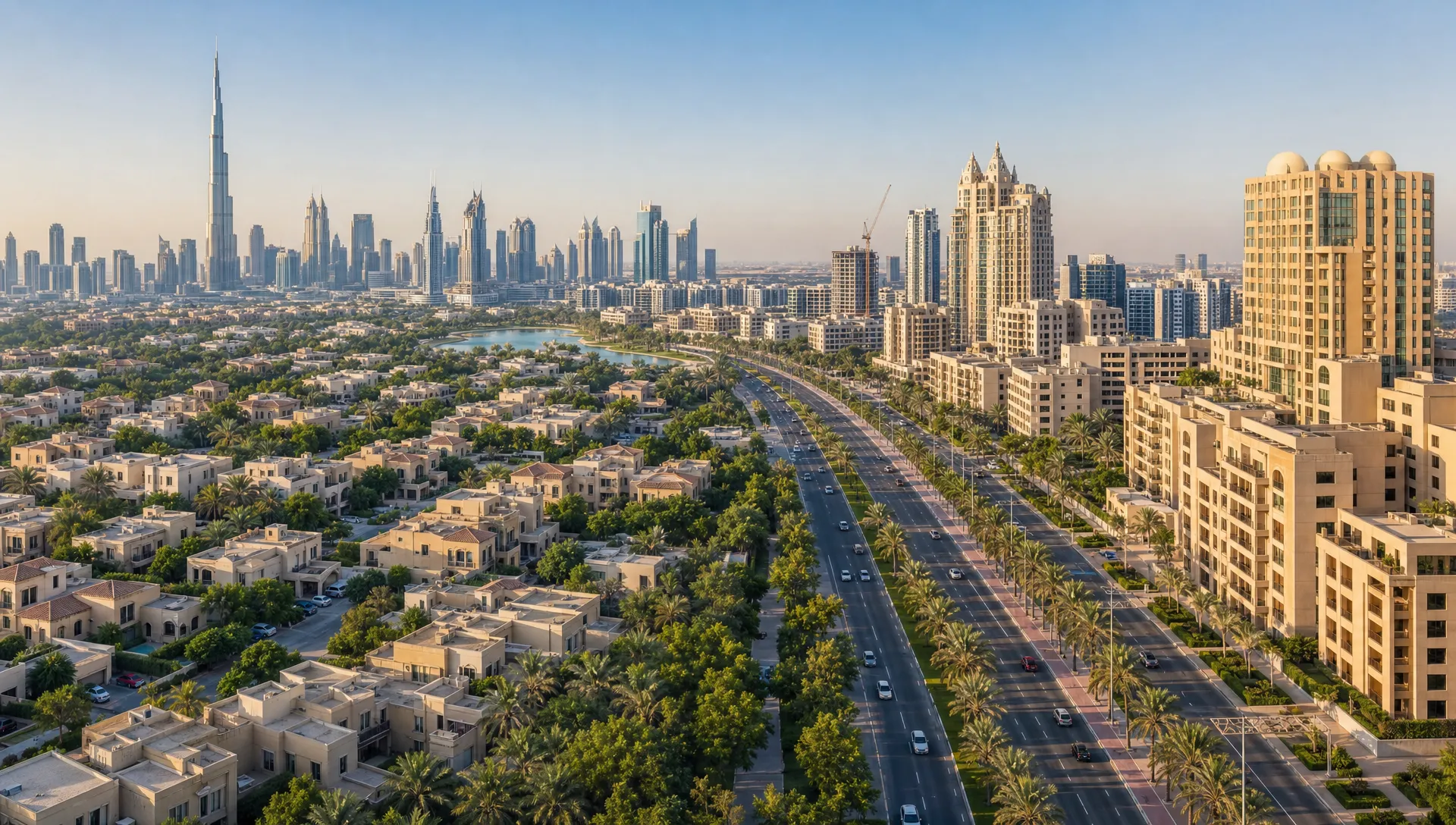
Trend 5: Short-term rental returns are becoming more operational
Short-term rentals can be attractive in Dubai, especially in tourist-friendly locations, waterfront areas, business districts, and neighborhoods close to major attractions. But smart buyers increasingly treat short-term rental investment as an operating business, not passive income.
The difference matters. A long-term rental usually depends on annual rent, tenant quality, maintenance, and renewal terms. A short-term rental depends on occupancy, nightly rates, guest reviews, furnishing quality, cleaning, platform fees, permit requirements, management fees, seasonality, and building rules.
A unit that looks profitable on peak-season rates may underperform once quieter months and operating costs are included. Buyers also need to confirm that the building and community allow holiday home activity and that the unit can be licensed appropriately.
The smart trend is to compare both scenarios before buying. If the numbers only work as a short-term rental under optimistic occupancy assumptions, the investment carries more execution risk. If the property also works as a long-term rental, the buyer has a backup strategy.
Trend 6: Luxury demand is favoring scarcity, not just size
Dubai’s luxury market continues to attract global attention, supported by wealth migration, business formation, lifestyle demand, and residency incentives. The UAE’s Golden Visa program is one factor international buyers often consider, although eligibility rules should always be verified through official channels and professional advisers.
But smart luxury buyers are not simply buying the biggest unit available. They are prioritizing scarcity and defensibility. In high-end real estate, long-term value is often linked to what cannot be easily replicated.
That can include direct waterfront access, protected views, low-density villa plots, branded residences with genuine service quality, limited inventory in established addresses, or architecture and finishes that stand out from generic supply.
The risk in luxury property is overpaying for a label, a view that may later be obstructed, or a floor plan that does not match how buyers in that price segment actually live. Smart investors study the future competing supply and ask a direct exit question: who will buy this from me later, and why would they choose it over the next premium launch?
Trend 7: Resale liquidity is becoming a core investment metric
Many investors focus on buying well, but smart buyers also plan the exit before they enter. Resale liquidity is the ability to sell a property within a reasonable time frame at a realistic market price. It depends on demand depth, unit type, price band, building reputation, financing accessibility, and the number of comparable alternatives.
A rare penthouse may have strong prestige, but the buyer pool is small. A well-priced one-bedroom apartment in a high-demand rental district may have a much wider resale audience. A townhouse in a family community may appeal to both tenants and end users. None of these is automatically better. The right choice depends on your timeline and risk tolerance.
Smart buyers pay attention to transaction frequency in the building or community. If similar units rarely sell, the asset may be harder to price and exit. If many similar units are listed at once, competition may limit resale upside. The best opportunities often sit between those extremes: enough liquidity to prove demand, but not so much identical supply that your unit becomes a commodity.
Trend 8: Running costs and building quality are influencing value
As Dubai matures, buyers are paying more attention to what happens after handover. Building quality, maintenance standards, cooling efficiency, service charges, lift capacity, parking, noise insulation, amenities, and owners association management can all influence rental demand and resale value.
Two properties in the same district can perform differently because one building is better managed. Tenants notice clean common areas, responsive maintenance, reliable air conditioning, easy parking, and practical layouts. End users notice the same details, plus long-term repair risk.
This trend is especially important for investors comparing older buildings with newer projects. Older properties can offer larger layouts and better locations, but buyers should budget for renovation and maintenance. Newer properties may offer modern amenities, but service charges and long-term build quality should still be reviewed.
Smart buyers do not treat service charges as a minor line item. High recurring costs can reduce yield and make resale less attractive, particularly if buyers do not believe the building quality justifies the fees.
How smart buyers turn trends into a decision framework
Following trends only helps if it leads to better decisions. Before making an offer, investors should translate market signals into a simple buying framework.
Start with strategy. Are you buying for rental income, capital appreciation, personal use, wealth preservation, or a future relocation plan? Each goal changes the ideal property type.
Then define your acceptable risk. Ready properties usually offer clearer rental evidence and immediate income, while off-plan properties may offer staged payments and future upside. Luxury properties may protect capital well in scarce locations, but they can require longer exit timelines. Short-term rental units can generate attractive income, but only if managed professionally.
Next, model the numbers conservatively. Use realistic rent, vacancy, service charges, maintenance, management fees, financing costs, and transaction costs. A deal that only works with perfect assumptions is not a strong deal.
Finally, assess exit liquidity. Even if you plan to hold long term, life changes. A smart investment should have a clear future buyer or tenant profile.
| Buyer goal | Trend to prioritize | Useful property types to compare | Main risk to watch |
|---|---|---|---|
| Stable rental income | Net yield and tenant demand | Ready apartments, townhouses, well-located family units | Overestimating rent or ignoring service charges |
| Capital growth | Infrastructure and supply timing | Off-plan in credible master communities, scarce ready assets | Paying too much for future promises |
| Wealth preservation | Scarcity and location quality | Prime villas, waterfront homes, premium apartments | Limited resale buyer pool if overpriced |
| Flexible personal use | Livability and community maturity | End-user communities with schools, retail, parks, and road access | Choosing amenities over daily practicality |
| Short-term rental income | Operations and tourism demand | Furnished apartments in visitor-friendly locations | Seasonality, licensing, management, and platform costs |
Common red flags smart buyers avoid
Even in a strong market, not every property is a strong investment. Smart buyers slow down when they see vague rental promises, unusually high guaranteed returns, unclear service charges, limited transaction history, poor building reviews, unrealistic resale assumptions, or aggressive pressure to reserve immediately.
They also avoid comparing properties only by price per square foot. Price per square foot is useful, but it does not capture view, layout efficiency, floor level, building management, furnishing quality, parking, or tenant demand. A cheaper unit can be more expensive in the long run if it rents poorly or takes longer to sell.
The best investors are rarely the fastest buyers. They are the buyers who know what they are looking for, understand the numbers, and can move quickly only when the evidence supports the decision.
Frequently Asked Questions
Is Dubai real estate still a good investment in 2026? Dubai can still be a strong investment market, but results depend heavily on location, entry price, property type, costs, and holding strategy. Smart buyers focus on net yield, liquidity, and demand drivers instead of assuming every property will rise.
What is the most important Dubai real estate investment trend to follow? Net yield and end-user demand are two of the most important trends. A property that produces realistic income and appeals to real residents is usually better positioned than one relying only on speculative appreciation.
Are off-plan properties better than ready properties in Dubai? Neither is automatically better. Off-plan properties can offer payment flexibility and future upside, while ready properties offer clearer rental evidence and immediate use. Smart buyers compare the specific off-plan opportunity against ready alternatives in the same area.
How do I estimate ROI on a Dubai property? Start with expected annual rent, then subtract service charges, maintenance, vacancy, management, financing, and other ongoing costs. Compare the result with your total acquisition cost, including transfer fees and transaction expenses. Use conservative assumptions rather than best-case projections.
Which areas are best for Dubai property investment? The best area depends on your goal. Investors seeking rental income may prioritize established apartment districts, while families and end users may prefer mature villa communities. Buyers seeking long-term appreciation may look for areas supported by infrastructure, limited supply, and strong community planning.
Compare Dubai investment properties with a smarter lens
Dubai offers opportunities across apartments, villas, townhouses, luxury homes, commercial property, and off-plan projects, but the best choice depends on your numbers and strategy. Use the trends above to compare properties beyond the brochure: net yield, demand depth, infrastructure, developer credibility, running costs, and exit liquidity.
On Best Property, you can explore daily updated listings across the UAE, use advanced filters, review detailed property information, compare options, and connect directly with agents or owners. The smarter your shortlist, the stronger your investment decision becomes.


Join The Discussion