
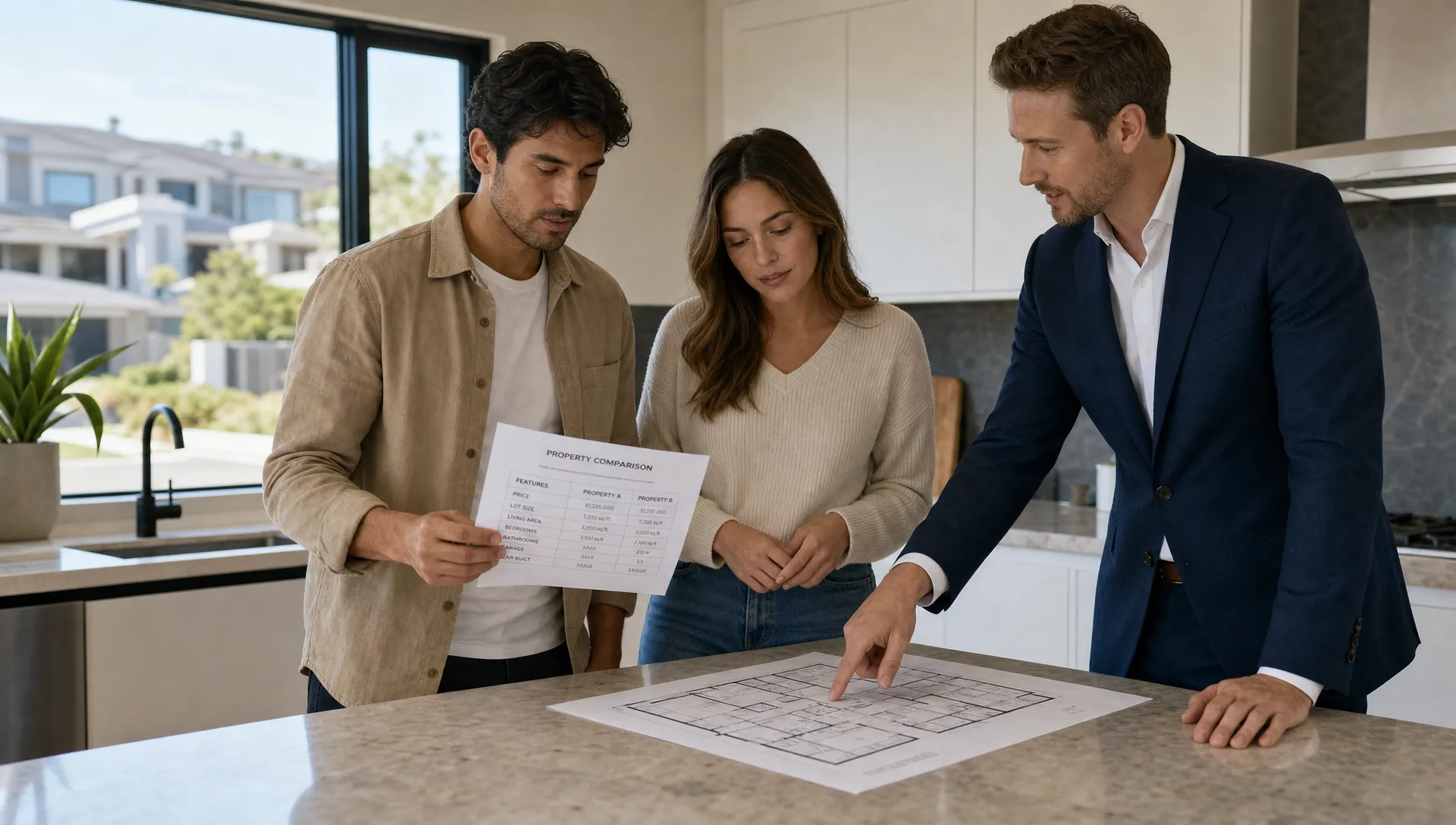
When buyers search for property houses for sale in Dubai or anywhere in the UAE, the first comparison is often the asking price. That is understandable, but it is also where many poor decisions begin. A cheaper villa can become expensive if it has high service charges, weak resale demand, poor maintenance history or a layout that limits future buyers.
Smart buyers compare houses in layers. They look at the property itself, the community around it, the total cost of ownership and the long-term flexibility of the purchase. This matters whether you are buying a family home, a townhouse for rental income or a villa you may resell after a few years.
Below is a practical comparison framework you can use before shortlisting viewings, negotiating with sellers or making an offer.
Start With a Like-for-Like Comparison
A strong comparison begins with a clean search set. Comparing a ready villa in Arabian Ranches with an off-plan townhouse in a newer corridor may tell you something about budget, but it will not tell you which one is better value. They serve different buyer profiles and carry different risks.
Try to compare properties that share the same core features:
| Comparison point | Why it matters |
|---|---|
| Property type | Villas, townhouses and semi-detached homes can differ in privacy, maintenance and community fees |
| Built-up area | A lower price can hide a smaller usable living area |
| Plot size | Outdoor space affects lifestyle, privacy and resale appeal |
| Completion status | Ready homes and off-plan homes have different payment timelines and risks |
| Community maturity | Established areas often offer clearer rental and resale evidence |
| Occupancy status | Vacant, rented and owner-occupied homes affect timing and negotiation |
If your search feels too broad, narrow the brief before comparing. The guide on how to search for houses without wasting time is useful if you need a cleaner shortlist before you begin viewings.
Compare Location by Daily Life, Not Just the Map Pin
Location is not only about prestige. It is about what daily life will feel like after the purchase. A villa that looks affordable can lose appeal if school runs are long, weekend traffic is frustrating or essential services are not yet built out.
For end-users, compare commute time at the hours you actually travel, access to schools, healthcare, supermarkets, parks, public transport and main roads. For investors, compare tenant demand, vacancy risk, future supply and the type of renters the area attracts.
In Dubai, communities can perform very differently even when they sit close together on a map. A family-focused villa district may have stronger long-term occupancy, while a newer area may offer lower entry prices but more uncertainty around future handover schedules, infrastructure and competing supply. If your decision depends heavily on area selection, use a structured process to compare areas when buying property in Dubai before focusing on individual houses.
Compare the Full Cost, Not Only the Asking Price
The advertised price is only one part of the purchase. Smart buyers compare the total cost to buy and the ongoing cost to own. This is especially important for houses, since villas and townhouses can carry different maintenance responsibilities than apartments.
Your comparison should include purchase-related costs such as land department fees, registration charges, mortgage-related fees if you finance, agency commission, valuation costs and conveyancing support. Costs vary by emirate, property type and transaction structure, so always confirm current requirements with the relevant authority, your bank or a qualified conveyancer. For Dubai transactions, the Dubai Land Department is the official source for property registration services and regulations.
Ongoing costs deserve the same attention. Compare service or community charges, garden and pool upkeep, cooling costs, insurance, repairs, pest control and utility deposits. A large villa with a private pool may suit your lifestyle perfectly, but the annual running cost should be part of the decision before you commit.
A simple way to avoid budget surprises is to compare homes using an annual ownership estimate, not only the purchase price.
| Cost category | What to check before buying |
|---|---|
| Transaction costs | Registration, trustee or admin fees, agency commission and conveyancing |
| Financing costs | Down payment, bank fees, valuation and mortgage insurance if applicable |
| Community costs | Service charges, homeowners association fees or district-level fees |
| Maintenance | AC, plumbing, roof, landscaping, pool and general repairs |
| Utilities | Electricity, water, cooling, internet and municipality-related charges |
Compare Plot Quality and Usable Space
For houses, the land can be as important as the building. Two villas may have the same bedroom count, but one may sit on a better plot with more privacy, more usable outdoor space and better orientation.
Look beyond the built-up area. Compare plot size, garden usability, parking, setbacks, road position and whether neighboring homes overlook the property. Corner plots, single-row positions and park-facing locations often command stronger interest, but only if the premium makes sense against recent comparable sales.
Inside the house, focus on usable space rather than headline square footage. A good layout supports the way people actually live. Large corridors, awkward stair placement or poorly sized bedrooms can reduce practical value even when the total area looks generous. Storage, maid's room placement, laundry space, kitchen size and natural light all affect long-term satisfaction.
Compare Condition Like an Owner, Not a Viewer
Viewings can make cosmetic upgrades feel more important than structural condition. Fresh paint and staged furniture are easy to notice. AC performance, waterproofing, electrical systems, drainage, roof condition and hidden leaks are harder to assess.
For older villas and townhouses, ask for maintenance records where available. Check the age of major systems, including air conditioning units and water heaters. Look for signs of dampness, cracks, uneven flooring, poor drainage outside, pest issues or repeated patch repairs.
A professional inspection can be worthwhile before final negotiations, especially for higher-value villas. The goal is not only to find defects. It is to price risk correctly. If a property needs significant work, that cost should be reflected in your offer or included in your renovation budget.
Compare Legal Status and Ownership Clarity
Before falling in love with a house, confirm what you are actually allowed to buy and what rights come with the property. In the UAE, ownership rules can vary by emirate, nationality, community and property status. Freehold, leasehold and usufruct arrangements are not the same, and each can affect financing, resale and inheritance planning.
Ask whether the property has a clear title, whether there is an existing mortgage, whether any payments are outstanding and whether the seller has authority to sell. If the home is off-plan or recently handed over, check the developer, project registration and expected completion or handover obligations.
For rented properties, compare the tenancy situation carefully. A rented villa may offer immediate income for an investor, but it can delay move-in plans for an end-user. Review lease terms, notice requirements and whether the rent is below or near current market levels. Local tenancy rules matter, so do not rely only on a verbal summary.

Compare Resale Strength Before You Buy
Even if you plan to live in the home for years, resale potential matters. Life changes, financing conditions change and investment priorities change. A property that is easy to sell later gives you more flexibility.
Strong resale homes usually share a few traits: practical layouts, good natural light, sensible plot position, accessible community facilities, reasonable ownership costs and a location with proven demand. Highly personalized renovations can be attractive to one buyer but off-putting to another, so consider how broad the future buyer pool will be.
Investors should also compare rental demand. A house may look appealing, but if the likely tenant pool is narrow, vacancy risk can reduce returns. Compare nearby listings, expected rent ranges, competing supply and the type of tenant the community attracts. For a deeper look at value over time, the article on for-sale houses that offer better long-term value expands on the factors that tend to hold up beyond the initial purchase.
Compare Listing Quality and Seller Transparency
A strong listing does not guarantee a strong property, but weak information can slow your decision. Smart buyers compare how clearly each listing answers basic questions.
Look for accurate location details, clear photos, floor plans where available, plot and built-up area, occupancy status, service charges, payment terms, community features and whether the property is vacant or rented. If a listing avoids key details or uses vague claims, ask direct questions before arranging a viewing.
Photos also need context. Wide-angle images can make rooms appear larger. A garden photo may hide proximity to a busy road. A community pool photo may not be close to the actual home. The best approach is to compare the listing, the map, the viewing and the documents together. If you want to sharpen this skill, learn how to read real estate listings like a smart buyer before making a shortlist.
Use a Buyer Scorecard Before Making an Offer
A scorecard keeps your decision grounded when multiple homes look attractive. It also makes trade-offs visible. For example, one villa may score higher on location, while another offers a better plot and lower running costs.
| Factor | Weight for end-users | Weight for investors | What a strong score looks like |
|---|---|---|---|
| Location convenience | High | Medium | Easy commute, nearby schools, services and main roads |
| Purchase price | High | High | Fair against similar recent listings and sales evidence |
| Running costs | High | High | Predictable fees, manageable maintenance and no obvious hidden burden |
| Layout | High | Medium | Practical rooms, storage, light and flexible living areas |
| Plot and privacy | High | Medium | Usable outdoor space, good orientation and limited overlooking |
| Rental demand | Medium | High | Strong tenant pool and realistic expected rent |
| Resale appeal | High | High | Broad buyer demand and limited deal-breakers |
You do not need a complex model. Give each property a score from 1 to 5 for the factors that matter most to you. The final number is less important than the discussion it creates. If a house scores poorly on a factor you cannot change, such as location or plot position, be careful about justifying the purchase only because the asking price is lower.
Red Flags Smart Buyers Do Not Ignore
Some issues do not automatically mean you should walk away, but they should slow the process until you have better information.
- The price is far below similar homes with no clear explanation.
- The seller or agent avoids document-related questions.
- The listing details change repeatedly during discussions.
- The property has visible water damage, AC issues or poor maintenance history.
- The home is advertised as vacant but has unclear occupancy status.
- Major community facilities are promised but not yet delivered.
- The layout, plot position or access road creates a resale concern.
A smart buyer does not look for a perfect property. Few homes have everything. The aim is to understand which compromises are acceptable and which ones will cost you later.
Frequently Asked Questions
What should I compare first when looking at property houses for sale? Start with location, total budget and property type. Once those are clear, compare plot size, built-up area, layout, condition, ownership costs and resale potential.
Is a villa always a better investment than a townhouse? Not always. Villas may offer more privacy and land, but townhouses can have lower entry prices and easier maintenance. The better investment depends on location, demand, costs, layout and future resale appeal.
How do I know if a house for sale is priced fairly? Compare it with similar homes in the same community, including property type, size, plot position, condition, occupancy status and upgrade level. Asking prices alone are not enough, so use market evidence and professional advice where needed.
Should I buy a rented house or a vacant house? A rented house may suit investors seeking income, but it can be inconvenient for buyers who want to move in quickly. Review the tenancy terms, notice requirements and rent level before deciding.
Are off-plan houses riskier than ready houses? Off-plan homes carry different risks, including construction timing, payment schedules and future market conditions. Ready homes let you inspect the actual property and community, but they may require more upfront capital.
Compare With Better Information
The best purchase is rarely the one with the lowest headline price. It is the one that fits your budget, lifestyle or investment goal after all key factors are compared.
On Best Property in Dubai, you can explore updated UAE property listings, use search filters, review detailed property information, compare options and contact agents or owners directly. Build a shortlist, ask better questions and compare each house before you make your next move.


Join The Discussion