
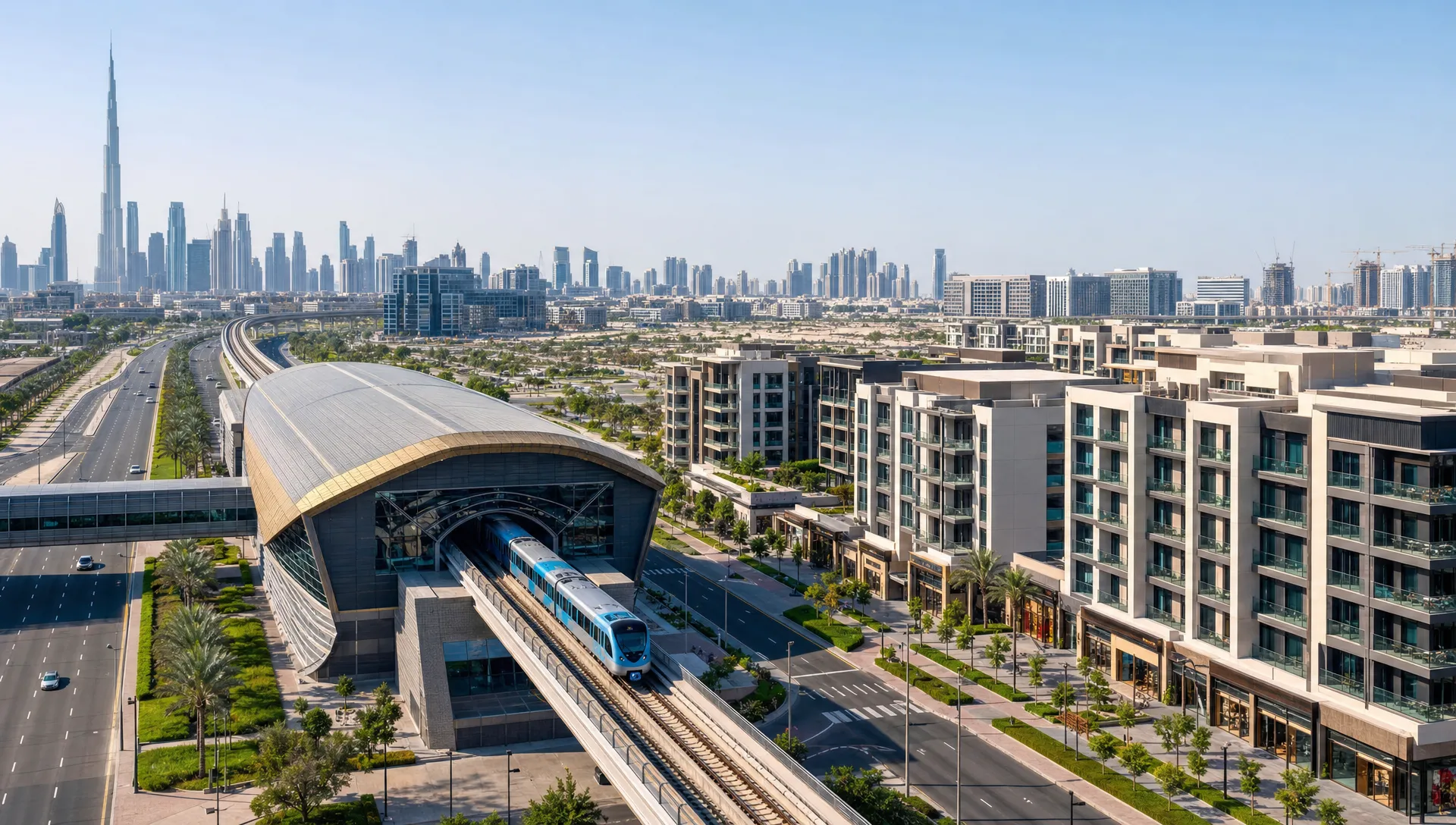
Dubai’s real estate market is entering 2026 with a more mature demand pattern. Buyers are no longer looking only at the most famous addresses. They are comparing commute times, handover risk, school access, rental depth, service charges, and long-term infrastructure plans before choosing where to buy.
That matters because demand for Dubai properties is not rising evenly. Some districts are benefiting from population growth and new transport links. Others are seeing stronger interest because families want more space, professionals want shorter commutes, and international investors want assets with clearer exit liquidity.
For buyers and investors, the opportunity in 2026 is not simply to ask, “Which area is popular?” A better question is, “Where is demand becoming deeper, more durable, and supported by real usage?”
What is pushing demand for Dubai properties in 2026?
Dubai’s demand story is supported by several long-term forces. The Dubai 2040 Urban Master Plan sets out a vision for a larger, better-connected city, including growth in residential communities, green space, mobility, and economic activity. That gives investors a useful lens: areas aligned with infrastructure and livability goals often attract stronger long-term demand.
The city’s economy is also expanding beyond tourism and trade. The Dubai Economic Agenda D33 targets major growth in Dubai’s global business role, which supports demand from entrepreneurs, executives, skilled workers, and relocating companies. More business activity usually translates into more housing demand, especially in locations with strong access to commercial centers.
Transport is another major driver. The Dubai Metro Blue Line, announced by the Roads and Transport Authority, is expected to improve connectivity across several growing districts. Areas that were once seen as car-dependent can become more attractive when future transit access improves. Investors should not buy purely on a future promise, but transport upgrades can shift rental demand and resale perception over time.
In short, 2026 demand is being shaped by three practical questions: where people work, where families can live comfortably, and where infrastructure is making the city easier to navigate.
The strongest demand themes to watch
Not every rising area serves the same buyer. Some locations are driven by rental yields, others by end-user demand, and others by scarcity. Understanding the demand source helps you avoid paying a premium for the wrong reason.
| Demand theme | Where it is most visible | Why it matters in 2026 |
|---|---|---|
| Infrastructure-led growth | Dubai South, Expo City corridor, Blue Line-linked districts | Future connectivity can widen the tenant and buyer pool |
| Mid-market apartment demand | JVC, Arjan, JVT, Dubai Silicon Oasis | More residents want value, amenities, and reasonable commutes |
| Family space demand | Dubai Hills Estate, MBR City, Tilal Al Ghaf, Arabian Ranches areas | Families prioritize schools, parks, villas, townhouses, and community life |
| Business and short-commute demand | Business Bay, Downtown edge, DIFC-adjacent areas | Professionals and corporate tenants value central access |
| Scarce lifestyle demand | Palm Jumeirah, Dubai Marina, Dubai Creek Harbour, beachfront districts | Waterfront and branded assets remain attractive when supply is limited |
If you are still building your shortlist, it can help to compare this demand-focused view with a broader neighborhood breakdown in the Best Areas to Buy Property in Dubai guide.
1. Dubai South and the Expo City corridor
Dubai South is one of the clearest long-term growth stories in the city. Demand is rising because the area sits near two major anchors: Expo City Dubai and Al Maktoum International Airport. The airport expansion plan has strengthened investor attention on the wider southern corridor, especially among buyers with a longer holding period.
This is not the same demand profile as Downtown Dubai or Dubai Marina. Dubai South is more about affordability, future infrastructure, logistics-related employment, and community formation. Buyers looking for lower entry prices than prime central areas often see it as a way to access future growth before the area fully matures.
The strongest demand is likely to come from practical residential stock: apartments for working professionals, townhouses for young families, and properties near key roads and community facilities. Investors should pay close attention to handover timelines, developer track records, and the pace at which retail, schools, and everyday services are delivered.
Dubai South can be compelling, but it requires patience. The best purchases are typically those where the price already reflects the area’s current stage, rather than assuming every project will benefit equally from the long-term airport and Expo City story.
2. Dubai Creek Harbour and the eastern growth corridor
Dubai Creek Harbour continues to attract demand because it combines waterfront living with proximity to central Dubai. It is not as established as Dubai Marina, but that is part of its appeal for buyers who want a newer master-planned environment.
The wider eastern corridor is also benefiting from attention around the Dubai Metro Blue Line. Districts such as Dubai Festival City, Dubai Creek Harbour, International City, Dubai Silicon Oasis, and Academic City are all part of the future connectivity conversation. Better transit access can make these areas more attractive to students, professionals, families, and renters who want lower total living costs than the most central districts.
For Dubai Creek Harbour specifically, the demand story is lifestyle-led. Buyers are drawn to waterfront views, modern buildings, promenades, and access to Downtown Dubai and the airport. Investors should compare price per square foot carefully across towers, as view quality, floor height, handover status, and service charges can create very different investment outcomes within the same area.
For more affordable Blue Line-linked districts, the demand story is different. Here, the opportunity is often rental depth. Areas with universities, offices, retail centers, and improved transport can build a larger tenant base over time.
3. JVC, Arjan, and Dubai’s mid-market apartment belt
Jumeirah Village Circle, Arjan, Jumeirah Village Triangle, and similar mid-market communities remain important in 2026 because they serve a large and practical segment of Dubai’s population. Not every buyer wants a trophy asset. Many residents want a modern apartment, building amenities, access to main roads, nearby retail, and a price point that still feels reasonable.
JVC in particular has become one of Dubai’s most active residential districts because it offers a wide range of unit sizes and price levels. Its appeal is broad: first-time buyers, young professionals, small families, and investors seeking rental demand all look at the area. Arjan has a similar value-driven profile, with growing interest from residents who want newer buildings and access to areas such as Dubai Hills, Motor City, and Al Barsha South.
The opportunity in these communities is selectivity. Demand may be strong, but building quality can vary. Two apartments in the same district can perform differently depending on layout efficiency, parking, developer reputation, amenities, maintenance, and whether the surrounding roads and retail are already convenient.
In 2026, investors should be careful not to buy only because a community is active. The better question is whether a specific building can compete when tenants compare multiple listings on price, condition, commute, and amenities.
4. Dubai Hills Estate, MBR City, and family-focused communities
Family demand is one of the most durable forces in Dubai real estate. As more residents view Dubai as a long-term base rather than a temporary posting, demand for villas, townhouses, larger apartments, parks, schools, and community amenities has strengthened.
Dubai Hills Estate is a leading example. It offers a master-planned lifestyle with green space, retail, schools, healthcare access, and relatively strong connectivity to central Dubai. Mohammed Bin Rashid City also attracts buyers looking for newer residential stock, larger layouts, and access to Downtown Dubai and Business Bay without being directly inside those dense urban cores.
Other family-led communities, including established villa districts and newer townhouse clusters, are benefiting from the same shift. The appeal is not just square footage. Families often care about school runs, weekend amenities, safety, walking paths, community retail, and whether the area feels complete.
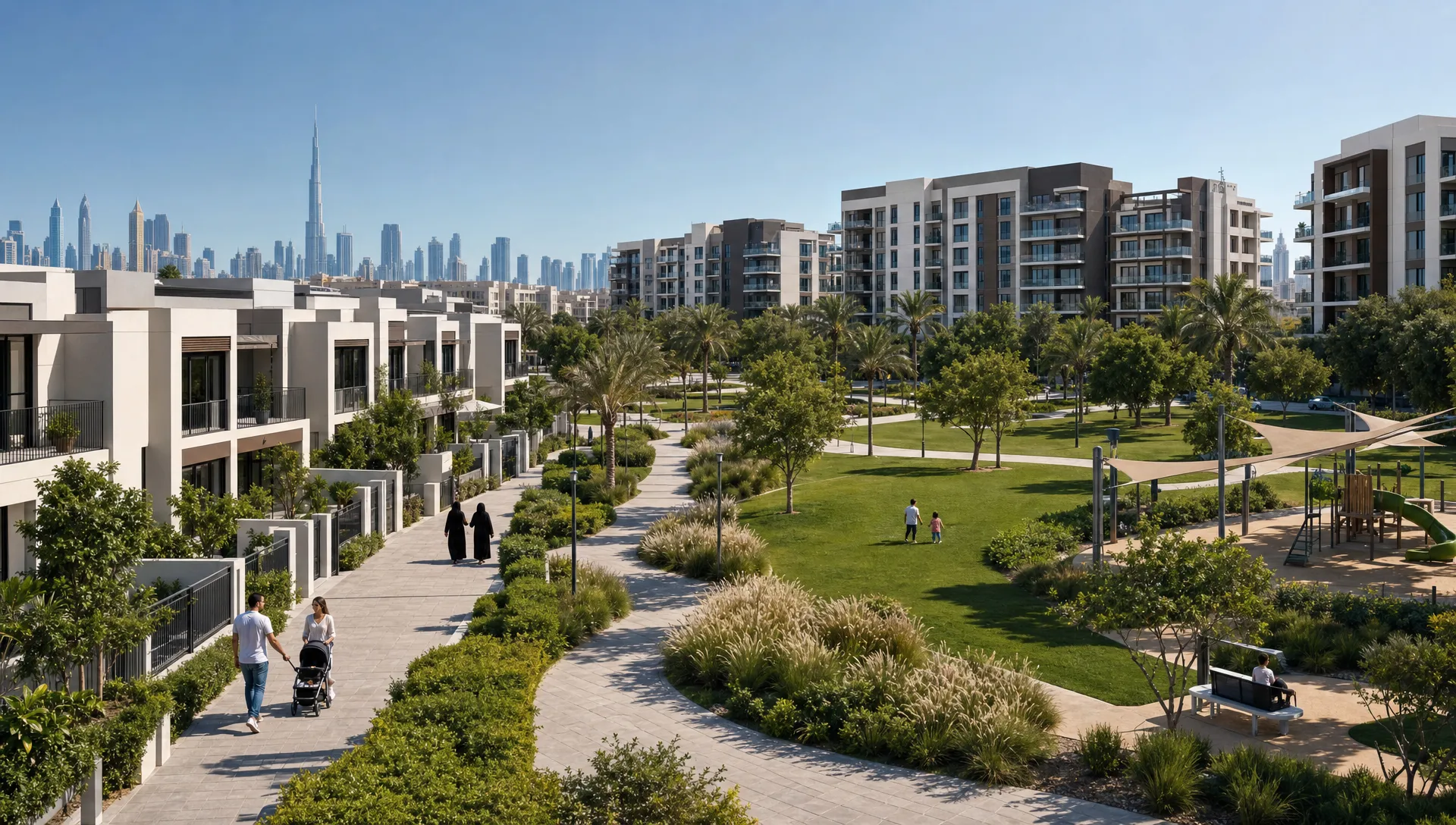
For investors, family demand can support longer tenancies and lower turnover when the property is well located and properly maintained. However, service charges, maintenance costs, and community fees matter more for larger properties. A villa or townhouse with strong rent may still underperform if ongoing costs are not accounted for.
5. Business Bay, Downtown edge, and DIFC-adjacent districts
Central Dubai remains a demand magnet, but the most interesting 2026 trend is not only in the trophy zones. It is also in the areas around them. Business Bay, Downtown fringe locations, DIFC-adjacent buildings, and Sheikh Zayed Road-connected neighborhoods continue to attract professionals who want short commutes and access to restaurants, offices, hotels, and entertainment.
Business Bay is especially relevant because it serves multiple demand groups. Corporate tenants, short-stay visitors, young professionals, and investors all pay attention to the area. Some buildings perform well for long-term rentals, while others are positioned more toward furnished or flexible-use demand, subject to regulations and building rules.
The key issue is competition. Central locations can command strong rents, but tenants are selective. They compare views, tower reputation, traffic access, parking, elevator wait times, gym quality, and building management. Investors should not assume that every unit in a central district will perform equally.
In 2026, the best central Dubai properties are likely to be those that combine location with livability. A well-laid-out one-bedroom in a properly maintained tower can outperform a larger unit in a building with weak management or difficult access.
6. Waterfront, branded, and scarce luxury assets
At the higher end of the market, demand is being driven by scarcity, lifestyle, and global wealth mobility. Waterfront villas, beachfront apartments, branded residences, and prime views continue to attract buyers who are less sensitive to short-term mortgage movements and more focused on asset quality.
Palm Jumeirah, Jumeirah Bay Island, Dubai Marina, Bluewaters, Dubai Harbour, and select creek or beachfront locations remain prominent. However, luxury demand in 2026 is more discerning than speculative. Buyers are comparing design, privacy, hotel services, marina access, beach access, developer reputation, and long-term neighborhood prestige.
This segment can be powerful, but it is not uniform. A branded residence with strong service standards may hold value differently from a generic luxury tower. A waterfront villa with privacy and limited supply may behave differently from a high-floor apartment in a district with many similar units.
If you are focused on the top end of the market, it is worth studying the luxury segment separately rather than treating it as a simple extension of the broader market. Demand can be strong, but liquidity depends heavily on uniqueness and pricing discipline.
Off-plan or ready property: where is demand stronger?
Both off-plan and ready properties can benefit from rising demand, but they serve different investor goals.
Off-plan demand is strongest in growth corridors, master-planned communities, and areas where buyers expect infrastructure or lifestyle improvements before handover. It can offer flexible payment structures and access to newer stock, but it also carries handover and market-cycle risk. If you are comparing launches, you can explore current new off-plan real estate projects in the UAE to understand locations, developers, and project positioning.
Ready property demand is strongest where tenants already exist and rents can be assessed with more confidence. This is especially useful for investors who want income quickly or buyers who need to move in. Ready units also allow you to inspect the building, view, maintenance condition, parking, noise levels, and surrounding community before committing.
| Buyer goal | Better fit in many cases | Why |
|---|---|---|
| Immediate rental income | Ready property | Existing rent evidence and faster occupancy |
| Long-term capital growth in emerging corridors | Off-plan property | Potential to enter before infrastructure and community maturity |
| Lower uncertainty | Ready property | You can inspect the asset and building condition |
| Flexible staged payments | Off-plan property | Payment plans may reduce upfront cash pressure |
| End-user move-in needs | Ready property | No handover wait or construction delay risk |
For a deeper comparison, the Off-Plan vs Ready Property Dubai guide explains the trade-offs in more detail.
How to identify real demand, not just hype
Fast-rising demand can attract aggressive marketing. That is why investors should separate genuine usage from short-term excitement. A district can be popular on social media while still having weak tenant depth, oversupply risk, or poor building-level fundamentals.
The most reliable demand indicators are practical. Look at whether people are actually moving in, whether rents are supported by comparable transactions, whether amenities are open, and whether the area has multiple tenant profiles. A community that appeals only to one narrow buyer group may be more vulnerable if market conditions change.
| Signal to check | What it can tell you | Why it matters |
|---|---|---|
| Rental listings and achieved rents | Whether tenants are paying the advertised level | Asking prices can be optimistic |
| Transaction history | Whether buyers are active at similar price points | Resale liquidity matters when you exit |
| Handover pipeline | Whether new supply may compete with your unit | Oversupply can pressure rents |
| Building maintenance | Whether tenants will renew or negotiate down | Poor upkeep reduces long-term performance |
| Transport and road access | Whether the location works for daily life | Commute convenience drives tenant demand |
| Unit layout efficiency | Whether the space feels usable | Better layouts often lease faster |
A useful rule for 2026 is to assess demand at three levels: the district, the building, and the individual unit. A strong district cannot fully compensate for a weak building. A good building cannot fully compensate for an awkward layout or inflated purchase price.
Which areas look best for different investor profiles?
The right location depends on your budget, time horizon, and risk tolerance. A yield-focused buyer may prefer a mid-market apartment in an active rental district. A long-term investor may look more closely at Dubai South or Blue Line-linked communities. A wealth-preservation buyer may prioritize scarce waterfront assets.
| Investor profile | Areas to research | Main reason |
|---|---|---|
| First-time investor | JVC, Arjan, Dubai Silicon Oasis | Lower entry points and broad tenant demand |
| Long-term growth investor | Dubai South, Expo City corridor, Dubai Creek Harbour | Infrastructure and master-plan upside |
| Family end-user | Dubai Hills Estate, MBR City, established villa communities | Livability, schools, parks, and larger homes |
| Central rental investor | Business Bay, Downtown edge, DIFC-adjacent areas | Professional tenant base and short commutes |
| Luxury buyer | Palm Jumeirah, Dubai Marina, beachfront and branded projects | Scarcity, lifestyle, and global buyer appeal |
This does not mean every property in these areas is a good buy. It means these are the demand stories worth investigating carefully. In 2026, the best results are likely to come from matching a strong location thesis with disciplined property selection.
Frequently Asked Questions
Are Dubai properties still in demand in 2026? Yes, demand remains strong in many segments, especially in infrastructure-led corridors, family communities, central business locations, and scarce waterfront areas. However, demand is more selective than before, so building quality, pricing, and rental evidence matter.
Which Dubai areas are seeing the fastest demand growth? Dubai South, the Expo City corridor, Dubai Creek Harbour, JVC, Arjan, Dubai Hills Estate, MBR City, Business Bay, and select waterfront districts are among the areas investors are watching closely in 2026.
Is Dubai South a good area to buy property in 2026? Dubai South can be attractive for long-term investors because of its connection to Expo City and the Al Maktoum airport growth story. Buyers should still evaluate developer quality, handover timelines, community maturity, and current rental demand.
Are villas or apartments in higher demand in Dubai? Both are in demand, but for different reasons. Apartments are popular with professionals and yield-focused investors, while villas and townhouses benefit from family demand and the desire for more space.
How can I reduce risk when buying in a rising area? Compare recent transactions, verify rental demand, study future supply, inspect building quality, and avoid paying a premium based only on marketing claims. Strong demand should be supported by real occupancy, usable amenities, and clear resale appeal.
Find Dubai properties where demand is building
The strongest opportunities in 2026 are not always the loudest launches or the most famous addresses. They are the properties where location, livability, infrastructure, and tenant demand come together.
On Best Property in Dubai, you can explore updated listings across the UAE, compare property options, review photos and details, and connect directly with agents or owners. Whether you are looking for an apartment, villa, commercial property, ready home, or off-plan opportunity, a demand-led search can help you make a more confident decision.


Join The Discussion