
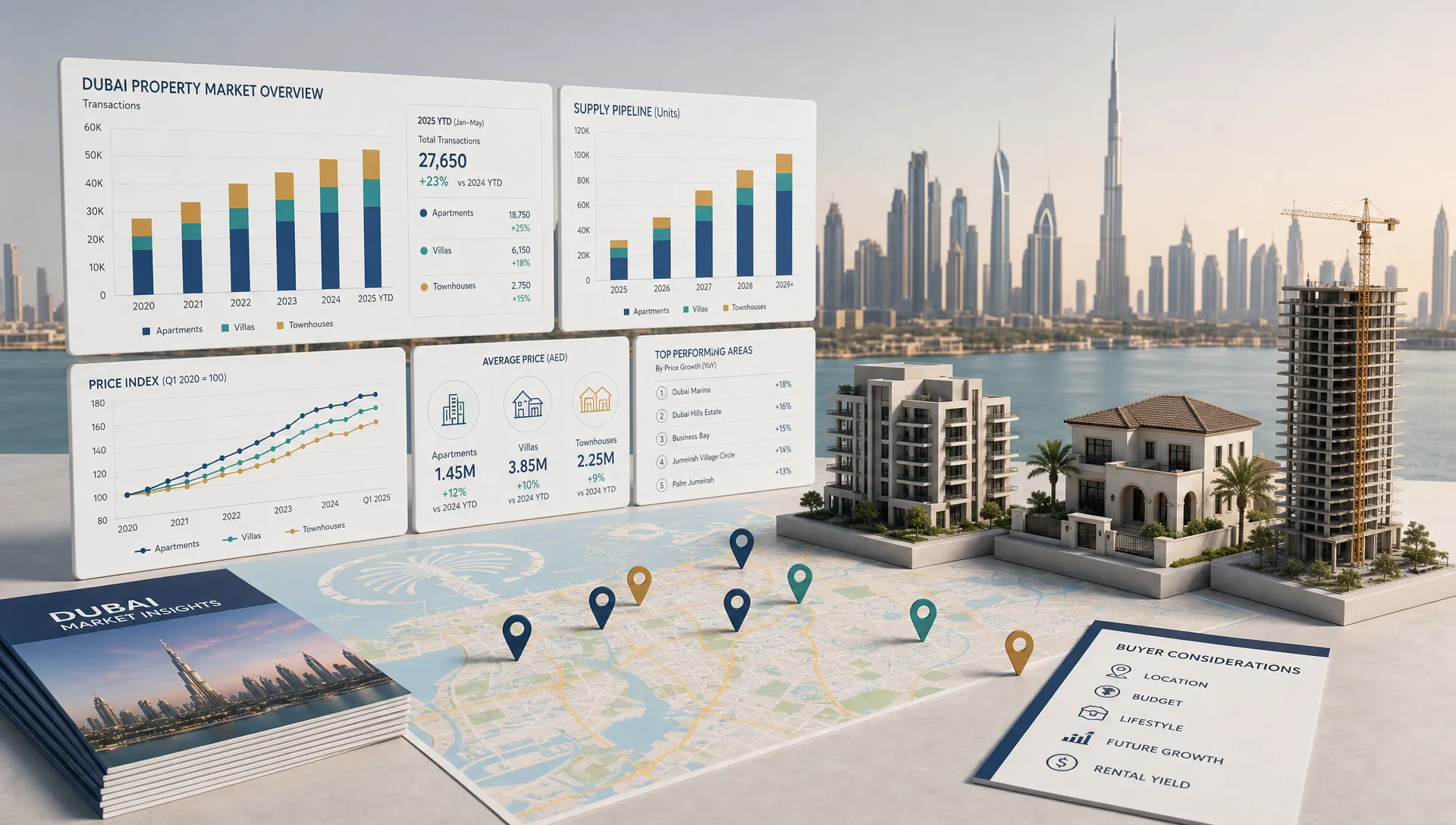
Dubai’s property market has matured from a fast-moving opportunity story into a more data-driven buyer’s market, where timing, location quality, payment structure, and exit strategy matter as much as headline price. For buyers watching real estate sales in Dubai, the key question is no longer simply “Is Dubai growing?” It is “Which parts of the market are still priced sensibly, and which trends could affect my returns or lifestyle over the next few years?”
The answer depends on whether you are buying to live, rent out, resell, or diversify your wealth. Dubai remains attractive because of its tax environment, global connectivity, infrastructure, safety, and strong international demand. But as more supply enters the market and buyer expectations become more sophisticated, smart purchasers need to read the signals behind the listings.
Below are the major trends buyers should watch before committing to a Dubai property purchase in 2026.
1. Sales activity is strong, but buyers should focus on quality, not market hype
Dubai has recorded high transaction volumes in recent years, with official activity tracked by the Dubai Land Department. This transparency is a major advantage for buyers because it allows the market to be evaluated through real transactions, not only agent claims or promotional headlines.
However, strong transaction activity does not mean every property is a good buy. In a rising or highly active market, listings can move quickly, and buyers may feel pressured to act before doing enough due diligence. That is especially risky when two units in the same district can differ widely in value because of view, floor height, building age, service charges, layout efficiency, and handover quality.
A buyer-friendly approach is to compare three layers of information before making an offer:
- Recent transaction prices for similar units in the same building or community
- Current competing listings, including how long they have been available
- Future supply nearby, especially if buying off-plan or in an emerging district
If you are comparing properties online, it helps to understand how listing details are framed. Best Property’s guide on reading real estate listings like a smart buyer explains how to interpret price, location, photos, status, and investment language more critically.
2. Off-plan sales remain popular, but handover discipline is becoming more important
Off-plan properties continue to be a major driver of real estate sales in Dubai. Buyers are attracted to new communities, modern amenities, flexible payment plans, and the possibility of capital appreciation before handover. Developers have also become more creative with branded residences, waterfront projects, wellness-focused communities, and family-oriented master plans.
The opportunity is real, but so is the need for discipline. Buyers should not evaluate an off-plan project only by its launch price or brochure images. The stronger question is whether the project fits a realistic future demand profile.
Important off-plan checks include:
- Developer track record and previous handover quality
- Escrow registration and project approvals
- Payment plan structure, especially post-handover obligations
- Expected completion date and realistic delay risk
- Nearby future supply that could affect resale or rental value
- Service charge expectations after completion
The trend to watch is not just “more off-plan launches.” It is the gap between high-quality, well-located projects and speculative inventory in areas where many similar units may complete around the same time. If many buyers plan to resell before handover, liquidity can become tighter when market sentiment changes.
3. End-user demand is reshaping what sells well
For years, Dubai was often viewed mainly as an investor market. That has changed. More buyers now want homes for long-term living, especially families, professionals, entrepreneurs, and international residents seeking stability. This is influencing which properties perform well.
End users usually care about different factors than short-term investors. They look closely at school access, commute time, storage, parking, community facilities, noise, walkability, maintenance, and long-term livability. As a result, functional layouts and established communities are becoming more valuable.
This trend supports demand for:
- Larger apartments with usable floor plans
- Townhouses in family communities
- Villas with outdoor space and privacy
- Buildings with strong maintenance records
- Communities near schools, parks, clinics, and retail
For investors, this matters because properties that appeal to real residents tend to have deeper tenant demand and stronger resale liquidity. A unit that looks impressive in photos but has a poor layout, awkward access, or limited daily convenience may underperform.
4. Prime and luxury property demand is becoming more selective
Dubai’s luxury property market has attracted global attention, particularly in waterfront communities, branded residences, trophy villas, and ultra-prime neighborhoods. International buyers continue to see Dubai as a lifestyle and wealth preservation destination, supported by safety, connectivity, and comparatively attractive ownership conditions.
Still, luxury demand is not uniform. Buyers in the high-end segment are increasingly selective. They are looking for scarcity, brand credibility, architectural quality, privacy, and a clear lifestyle advantage. A premium price is easier to justify when the asset is hard to replace.
The strongest luxury properties often share several traits: limited supply, exceptional views, high-quality finishing, strong property management, and access to lifestyle infrastructure. Waterfront villas, branded residences in proven locations, and large family homes in established communities may continue to attract attention, but buyers should be cautious about paying luxury prices for projects where the premium is based mostly on marketing.
For a deeper look at this segment, Best Property has covered luxury properties Dubai investors are watching in 2026, including the types of assets drawing high-net-worth buyer interest.
5. Supply growth will separate strong locations from weaker ones
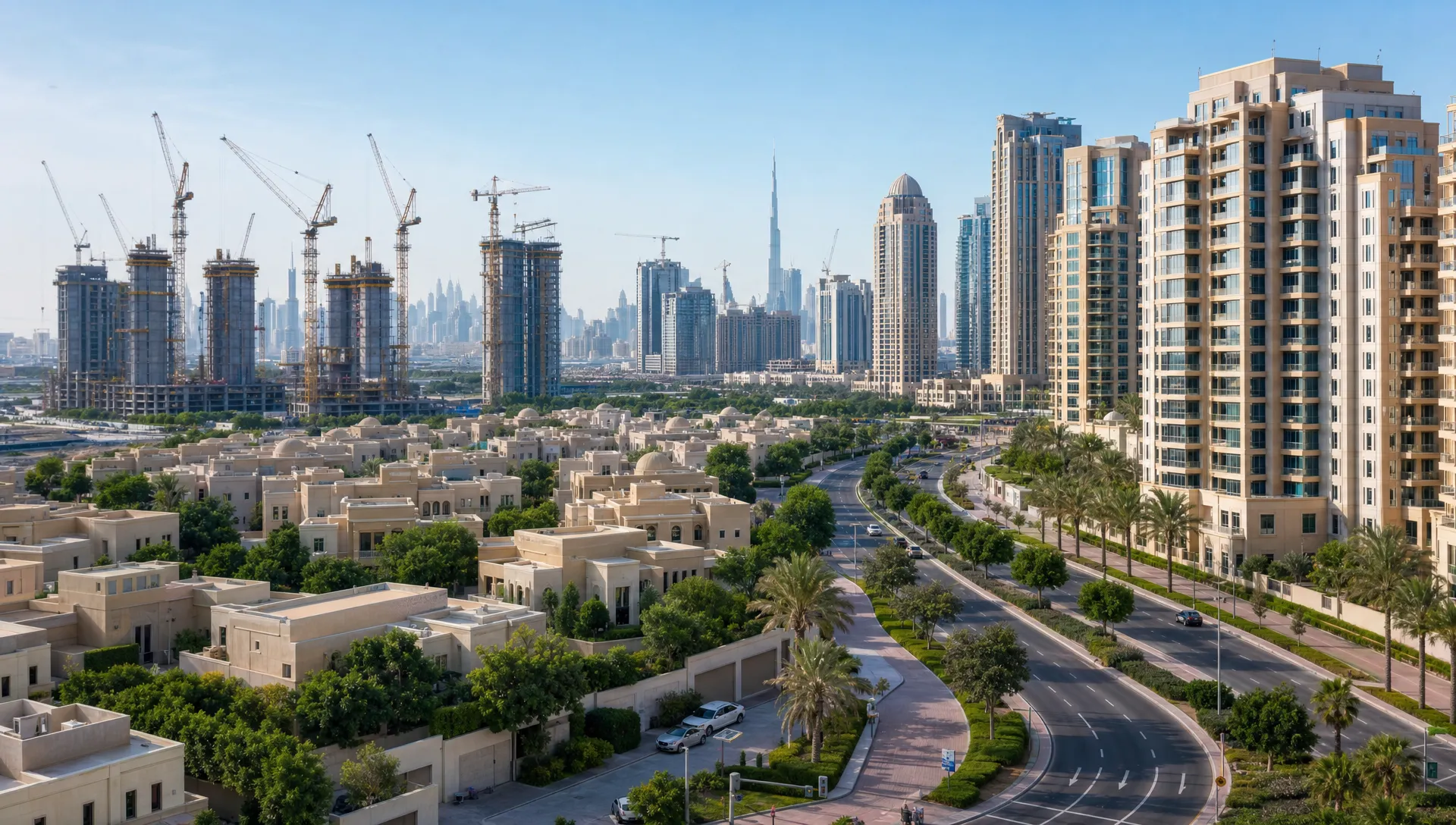
New supply is one of the most important trends for buyers to watch. Dubai is constantly expanding, and new projects can create excellent opportunities. But future supply can also affect rental rates, resale competition, and the time it takes to exit an investment.
A new community may offer attractive entry prices, but if many similar units are handed over in a short period, landlords may compete heavily for tenants. This can put pressure on rents, incentives, and resale pricing. Established locations may have higher entry prices, but they often benefit from proven demand, completed infrastructure, and clearer price benchmarks.
The practical question is not whether a district is “good” or “bad.” It is whether the price already reflects the risk and maturity level of the location.
| Market factor | What it may signal | Buyer takeaway |
|---|---|---|
| Many launches in one district | Future competition may rise | Compare handover timelines and unit mix |
| Limited resale listings in a mature area | Strong owner holding power | Expect firmer pricing for quality units |
| High number of similar studios or one-bed units | Tenant competition may increase | Check realistic rental demand, not only advertised yields |
| Infrastructure under construction | Potential future upside | Confirm timelines and access today |
| Rising service charges | Net yield may shrink | Calculate returns after all ownership costs |
This is where local area research becomes critical. If you are still shortlisting communities, the Best Areas to Buy Property in Dubai 2026 guide can help you compare locations based on buyer profile, investment goals, and lifestyle needs.
6. Rental yield remains attractive, but net returns matter more than gross yield
Dubai is well known for rental yield potential, especially compared with many global gateway cities. But buyers should be careful with advertised gross yields. A listing may promote a high rental return, yet actual net income can be lower after service charges, maintenance, vacancy periods, management fees, mortgage costs, and furnishing expenses.
This is especially relevant for investors choosing between long-term rentals and short-term rentals. Short-term rental income can be higher in tourist-friendly areas, but it may involve greater seasonality, licensing requirements, furnishing costs, management fees, and operational effort. Long-term rentals may provide more stability but less upside during peak tourism periods.
Before buying for rental income, estimate:
- Expected annual rent based on actual comparable leases
- Service charges and chiller costs where applicable
- Maintenance and repair allowance
- Vacancy assumption, even in popular locations
- Property management fees if you will not manage the unit yourself
- Mortgage payments if financed
Dubai’s rental market is also influenced by regulation. The Real Estate Regulatory Agency and Dubai Land Department provide tools such as rental index resources and tenancy-related services through official channels. Buyers should use official data where possible instead of relying only on optimistic rental projections.
7. Mortgage conditions are influencing buyer behavior
Financing has become a more important part of Dubai property decisions as end-user demand grows. Cash buyers are still active, especially in luxury and international investor segments, but mortgage-backed purchases are important for residents and long-term buyers.
Interest rates, loan-to-value requirements, bank approval criteria, and monthly affordability all influence what buyers can realistically purchase. Even small rate changes can affect budgets, particularly for buyers considering larger villas or family homes.
The trend to watch is affordability discipline. Buyers should avoid stretching their budget based only on current income or expected rent growth. A more resilient plan allows for higher maintenance costs, temporary vacancy, currency changes for overseas buyers, and possible refinancing differences in the future.
If you are financing a purchase, get mortgage pre-approval before serious negotiations. It strengthens your position with sellers and helps you avoid wasting time on properties outside your true budget.
8. Branded residences and lifestyle-led projects are growing, but premiums need justification
Branded residences, resort-style towers, wellness communities, and hospitality-linked projects have become a visible part of Dubai’s sales landscape. These properties often appeal to international buyers because they offer recognizable names, curated amenities, and a lifestyle proposition.
The buyer challenge is deciding whether the premium is financially justified. A brand can support resale appeal, rental demand, and perceived quality, but not every branded project will outperform. The asset still needs the fundamentals: location, views, layout, building quality, service charge control, and long-term management.
When evaluating a branded or lifestyle-led project, ask whether the added price is supported by tangible value. Does the brand improve operations and resident experience? Is the location already desirable? Are similar non-branded properties much cheaper, and if so, why? Will future buyers pay the same premium?
In short, branding can be a strength, but it should not replace due diligence.
9. Buyer due diligence is becoming a competitive advantage
As Dubai’s market becomes more sophisticated, the best buyers are not necessarily the fastest buyers. They are the ones who can quickly identify which opportunities deserve speed and which require caution.
Due diligence should cover legal, financial, and practical checks. For ready properties, buyers should verify title deed status, occupancy, service charges, outstanding payments, building condition, and whether the seller has authority to sell. For off-plan properties, buyers should verify project registration, escrow details, developer reputation, and payment obligations.
Listing quality is another important filter. Missing information, vague location descriptions, unrealistic pricing, poor photos, or pressure tactics can be warning signs. Best Property’s guide to real estate property listing red flags is useful if you want to avoid common mistakes before contacting an agent.
The more active the market becomes, the more valuable a structured buying process becomes. Serious buyers should keep a shortlist, compare properties objectively, save listing details, ask written questions, and track price changes over time.
10. Infrastructure and community maturity will drive long-term value
Dubai’s infrastructure expansion continues to shape property demand. Roads, public transport links, schools, malls, beaches, parks, business hubs, and entertainment destinations can all influence how desirable an area becomes.
However, buyers should distinguish between confirmed infrastructure and aspirational marketing. A future metro connection, mall, school, or park can support long-term value, but only if it is realistically planned and delivered. Until then, buyers must evaluate the current living experience.
Community maturity often matters more than buyers expect. A completed district with supermarkets, clinics, nurseries, gyms, restaurants, and reliable access can be easier to rent or resell than a cheaper property in an area that still feels incomplete. Early buyers can benefit from growth, but they should be compensated through a sensible entry price.
How buyers should respond to these trends
The best strategy depends on your objective. A family buying a primary home should prioritize lifestyle fit and long-term affordability. A rental investor should focus on net yield, tenant demand, and liquidity. A capital growth buyer should look for scarcity, infrastructure upside, and entry price discipline.
A practical decision framework can help:
| Buyer goal | What to prioritize | What to avoid |
|---|---|---|
| Primary residence | Layout, commute, schools, maintenance, community feel | Buying only because a project is popular |
| Long-term rental income | Net yield, tenant demand, service charges, building quality | Relying on inflated rental projections |
| Capital appreciation | Scarcity, infrastructure growth, below-market entry price | Overpaying in launch hype |
| Holiday home or short-term rental | Tourism demand, furnishing quality, management feasibility | Ignoring seasonality and operating costs |
| Wealth diversification | Prime location, legal clarity, liquidity, asset quality | Choosing unfamiliar projects without verification |
The common thread is clarity. Buyers who know their purpose can filter listings faster and negotiate better.
Frequently Asked Questions
Are real estate sales in Dubai still strong in 2026? Dubai remains an active property market, supported by local and international demand. Buyers should still evaluate each property carefully, using transaction data, rental comparisons, and future supply analysis rather than relying only on broad market momentum.
Is off-plan property still a good option in Dubai? Off-plan can be attractive when the developer is reputable, the payment plan is manageable, and the location has strong future demand. Buyers should check project registration, escrow details, handover timelines, and comparable pricing before committing.
What type of Dubai property is best for rental income? There is no single best type. Apartments in high-demand rental zones, family townhouses, and well-located short-term rental units can all perform well. The key is to calculate net yield after service charges, vacancy, maintenance, and management costs.
Should buyers choose ready or off-plan property? Ready property offers immediate use or rental income and clearer inspection. Off-plan may offer flexible payments and future upside. The better choice depends on your timeline, risk tolerance, cash flow, and investment objective.
How can I avoid overpaying for property in Dubai? Compare recent transactions, review competing listings, check service charges, understand the building or community’s reputation, and avoid pressure-based decisions. Work with verified agents and use official data where possible.
Final thoughts: watch the trend, then inspect the property
The Dubai market continues to offer strong opportunities, but buyers should be selective. The most important trends in real estate sales in Dubai point toward a more mature market where quality, location, livability, and financial discipline matter more than ever.
Before buying, define your goal, compare real data, check the property carefully, and understand the full cost of ownership. If you want to explore current opportunities, Best Property lets you search UAE listings with filters, detailed property information, photos, and direct contact options so you can compare homes and investments more confidently.


Join The Discussion