
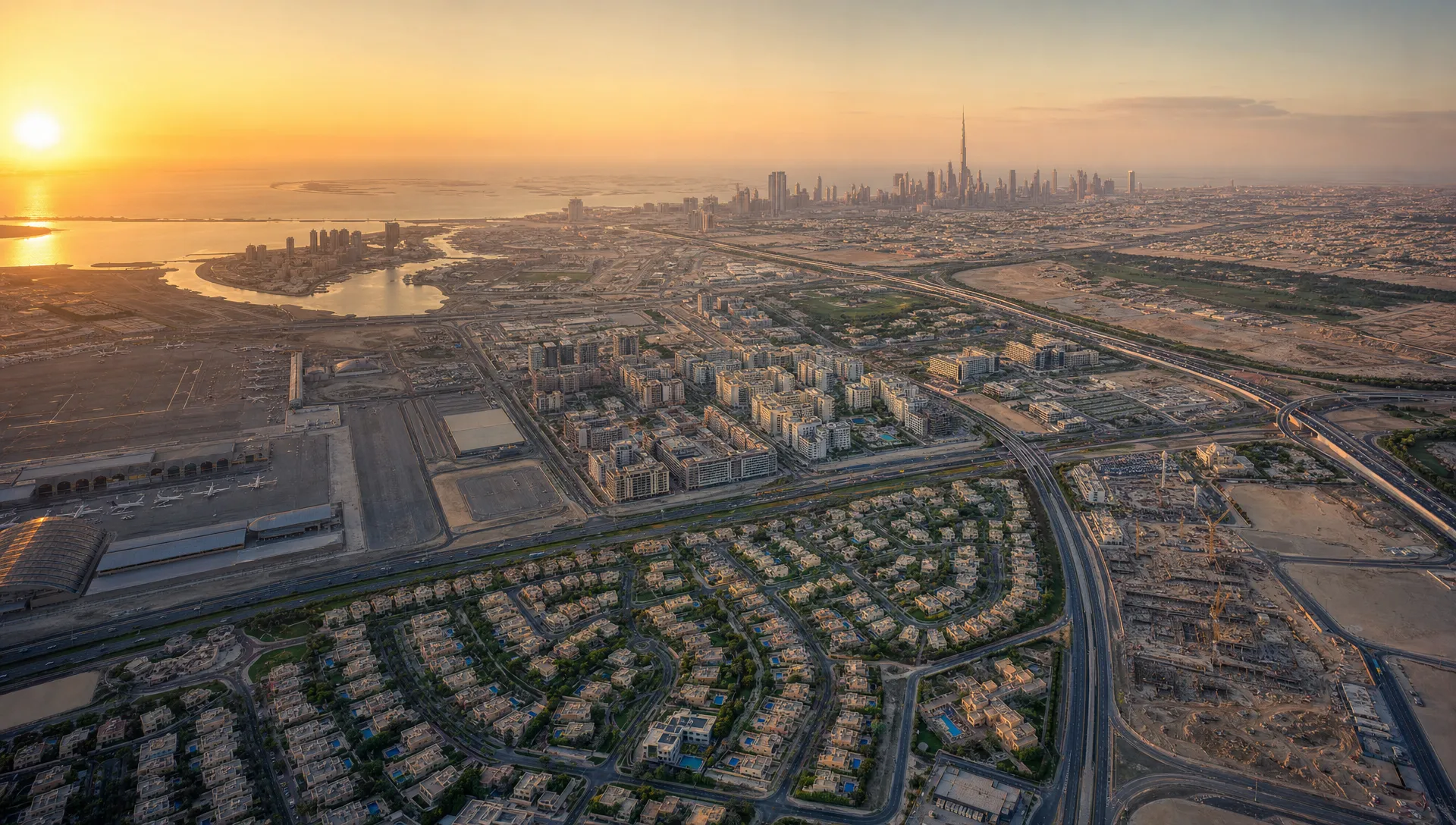
Dubai real estate for sale in areas with growth potential is not about chasing the cheapest launch or the loudest marketing campaign. It is about buying where demand has room to deepen, infrastructure is improving, and the next buyer or tenant has a clear reason to choose that location.
In 2026, Dubai remains one of the most watched real estate markets in the world, but the opportunity is becoming more selective. Mature prime districts can offer prestige and liquidity, while emerging or transitioning communities may offer better entry prices and stronger upside if the fundamentals support them.
This guide focuses on how to identify those fundamentals, which Dubai areas deserve attention, and what to check before you commit to an apartment, villa, townhouse, or off-plan unit.
What growth potential really means in Dubai real estate
Growth potential is often used as a shortcut for future price appreciation, but smart buyers should think more broadly. A property with genuine upside should have a realistic path to higher demand, better rental performance, stronger resale liquidity, or improved quality of life over time.
Dubai has several structural forces that can support long term property demand, including population growth, global business relocation, tourism, transport expansion, and master-planned community development. The Dubai 2040 Urban Master Plan is especially useful for investors because it highlights how the city intends to organize future housing, mobility, public spaces, and economic activity.
Still, not every area mentioned in a future plan will outperform. Buyers need to compare planning vision with current reality. A district may have excellent long term potential but still face short term gaps in schools, roads, retail, public transport, or rental depth. That gap can be an opportunity if you buy at the right price, but it can also become a holding-cost problem if your investment horizon is too short.
Before shortlisting, review transaction evidence, rental comparables, handover schedules, and developer track records. Dubai buyers can use official sources such as Dubai Land Department open data to understand market activity and avoid relying only on listing prices.
| Growth signal | Why it matters | What to verify before buying |
|---|---|---|
| Infrastructure upgrades | Better roads, metro access, and bridges can expand buyer and tenant demand | Confirm announced timelines and whether the property is actually close to the benefit |
| Population and job growth nearby | More residents and workers can support rental demand | Look at offices, logistics hubs, schools, retail, and commuting patterns |
| Master community maturity | Amenities often improve as more phases are delivered | Check what is completed versus what is still only planned |
| Price gap versus nearby areas | Value can rise when buyers are priced out of established districts | Compare quality, service charges, and commute times, not only price per square foot |
| Rental absorption | Strong rental demand can support holding costs | Compare current asking rents with actual market rents where available |
| Resale liquidity | A property is more flexible if there is a broad pool of future buyers | Check transaction volume, unit type popularity, and building reputation |
Dubai areas and corridors with growth potential in 2026
The areas below are not guaranteed winners, and they are not a substitute for project-level due diligence. They are locations where buyers often find a combination of future catalysts, improving amenities, and active sales supply. If you want a wider neighborhood comparison, the Best Areas to Buy Property in Dubai guide can help you compare lifestyle, budget, and investment profiles across the city.
| Area or corridor | Main growth catalyst | Property types to watch | Best suited for |
|---|---|---|---|
| Dubai South and Expo City corridor | Airport expansion, Expo City activity, logistics and business growth | Apartments, townhouses, family homes | Long horizon investors and value-focused end users |
| Jumeirah Village Circle | Established rental demand, central location, ongoing community improvements | Apartments, townhouses | Yield-focused buyers and first-time investors |
| Arjan and wider Dubailand | Lower entry prices, growing family amenities, access to key roads | Apartments, townhouses | Buyers seeking value outside prime zones |
| Dubai Silicon Oasis, Academic City, and nearby corridors | Education, technology ecosystem, future mobility improvements | Apartments, affordable family units | Rental investors and residents working in eastern Dubai |
| Al Furjan and Jebel Ali corridor | Metro access, proximity to Marina, JLT, Jebel Ali, and Dubai South | Apartments, villas, townhouses | End users and investors seeking connectivity |
| Mohammed Bin Rashid City and Meydan | Central location, premium master planning, lagoon and villa communities | Apartments, villas, luxury residences | Lifestyle buyers and mid to high budget investors |
| Dubai Creek Harbour | Waterfront positioning, master community planning, proximity to central Dubai | Apartments, branded or premium units | Buyers seeking long term waterfront growth |
| Rashid Yachts and Marina, Mina Rashid | Waterfront redevelopment, cruise and heritage district appeal | Apartments, premium residences | Investors targeting lifestyle-led demand |
Dubai South and the Expo City corridor
Dubai South is one of the clearest long horizon plays in the city. Its growth story is tied to Al Maktoum International Airport, logistics, aviation, Expo City, and the broader expansion of Dubai toward the south. This is not a district where every buyer should expect instant capital appreciation. The real case is based on scale, future employment, and the gradual buildout of a city within the city.
For investors, the key question is holding period. If you need immediate rental depth, compare current occupancy, rent levels, and transport convenience carefully. If you can hold through community maturation, Dubai South may offer attractive entry points compared with more central locations.
Jumeirah Village Circle
Jumeirah Village Circle, often called JVC, is no longer an undiscovered area, but it still has growth potential because it sits between affordability and centrality. Many tenants like it because it offers access to Dubai Marina, JLT, Dubai Internet City, Al Barsha, and Business Bay without the same rental levels as prime districts.
The opportunity in JVC is building-specific. Some projects have strong layouts, facilities, and management, while others may suffer from maintenance issues or weaker resale appeal. Buyers should pay close attention to service charges, parking, developer reputation, view, road access, and the actual building handover quality.
Arjan and the wider Dubailand value belt
Arjan and nearby Dubailand communities appeal to buyers who want relatively accessible prices in a growing part of the city. The area benefits from road connections, family attractions, and proximity to communities such as Motor City, Dubai Hills Estate, and Arabian Ranches.
The main risk is supply. When many similar apartments launch in the same corridor, future resale performance depends heavily on differentiation. A better layout, lower service charge, stronger developer, or more convenient location can matter more than a small discount on purchase price.
Dubai Silicon Oasis, Academic City, and nearby eastern corridors
Dubai Silicon Oasis and the Academic City corridor have a practical demand base. Students, educators, technology workers, and families already live in and around this part of Dubai. Future mobility improvements may further support the area, especially where projects benefit from better access to the wider metro and road network.
This area is usually more suitable for buyers who prioritize affordability and rentability over prestige. Look for units with efficient layouts, realistic rents, parking, and easy access to schools, universities, and employment clusters.
Al Furjan and the Jebel Ali corridor
Al Furjan has grown from a suburban community into a more connected residential district, helped by metro access and its position between established western Dubai and the southern growth corridor. It can appeal to residents who work around Jebel Ali, Dubai Marina, JLT, Dubai Internet City, or Dubai South.
Buyers should separate older and newer stock. Some older properties may offer space and value, while newer projects may offer better amenities and lower maintenance risk. For villas and townhouses, plot, layout, road noise, and community facilities can have a major impact on resale appeal.
Mohammed Bin Rashid City and Meydan
Mohammed Bin Rashid City and Meydan sit close to Downtown Dubai, Business Bay, and major road networks. Their growth potential comes from centrality, large-scale master planning, and the appeal of premium lifestyle communities with water features, villas, and branded residences.
This is not usually a low entry price market. The key is whether the premium is justified by the product, location within the master plan, and future liquidity. Buyers should compare payment plans, handover timing, developer reputation, and how much similar supply is expected nearby.
Dubai Creek Harbour
Dubai Creek Harbour is one of Dubai’s most visible waterfront growth stories. It offers skyline views, a master-planned environment, and proximity to older central Dubai as well as Downtown and the airport side of the city. Its appeal is strongest for buyers who want waterfront living without choosing the most established beachfront locations.
The area’s future depends on continued community activation. Retail, schools, transport, public spaces, and hospitality all influence whether a district becomes a true daily-life destination rather than only a collection of towers.
Rashid Yachts and Marina, Mina Rashid
Mina Rashid is interesting because it combines waterfront redevelopment with heritage proximity and cruise tourism. For some buyers, it offers a different lifestyle proposition from Palm Jumeirah or Dubai Marina, with a more curated marina identity.
As with any emerging luxury waterfront district, pricing discipline matters. Premium views and marina positioning can support demand, but investors should assess resale depth, short term rental rules, service charges, and whether the exact unit has a strong enough view or layout to stand out.
Ready property vs off-plan in growth areas
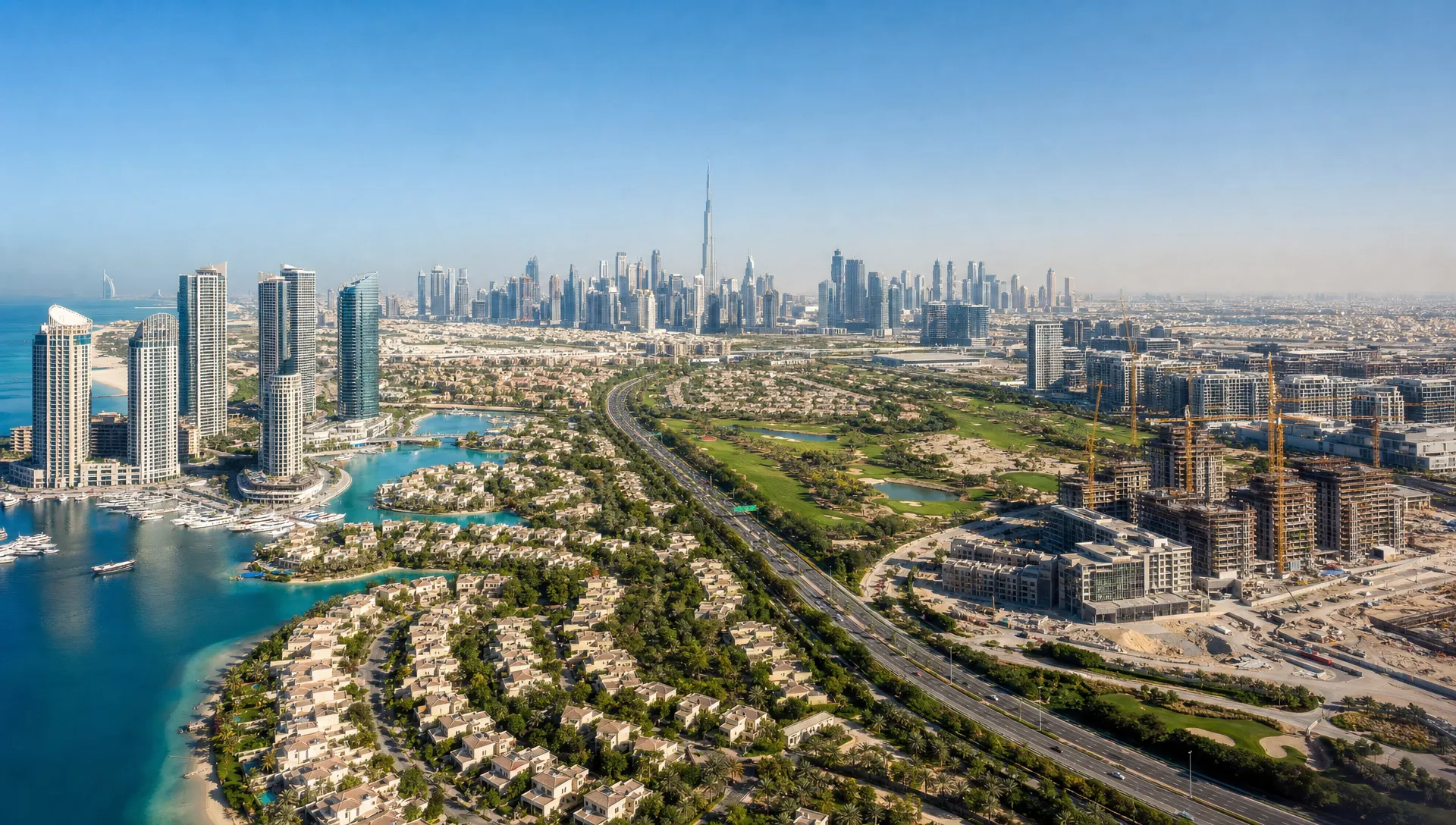
Many growth-potential districts have both ready homes and off-plan projects. Neither is automatically better. Ready property gives buyers visibility on the exact building, view, service charges, rent, and tenant demand. Off-plan property can offer staged payments and access to new communities, but it carries delivery, pricing, and future supply risks.
If you are comparing new launches, browse current off-plan projects across the UAE and evaluate them against ready alternatives in the same area. A project can look attractive because of a flexible payment plan, but the final investment result depends on handover quality, market conditions, and whether the property is still competitive when delivered.
| Decision point | Ready property | Off-plan property |
|---|---|---|
| Cash flow | Rental income may start immediately if rented or rentable | Usually no income until handover |
| Price visibility | You can compare actual transaction and rental history | Pricing depends on developer launch strategy and future market conditions |
| Product certainty | You can inspect the unit, building, and surrounding area | You rely on plans, renders, show units, and developer track record |
| Risk profile | Lower delivery risk but may need maintenance or renovation | Higher delivery and supply risk but often staged payment terms |
| Best for | Buyers who want clarity, income, and faster use | Buyers with longer horizons and confidence in the developer and area |
How to avoid overpaying for future potential
The most common mistake in a growth area is paying today for a future that is not yet guaranteed. Developers, agents, and sellers often price in planned infrastructure, future malls, upcoming schools, or skyline views. Some of those benefits may arrive, but timing and execution matter.
Start with a simple question: if nothing new were delivered for the next two years, would this property still make sense? If the answer is no, the investment may depend too heavily on speculation.
Use this due diligence checklist before making an offer:
- Compare recent sale transactions with current asking prices in the same building or community.
- Calculate net yield after service charges, vacancy, maintenance, management fees, and furnishing costs.
- Check whether the unit type has broad demand, especially studios, one-bedrooms, family-sized apartments, townhouses, and villas.
- Review the developer’s delivery history, build quality, and reputation for after-sales service.
- Visit the area at different times of day to assess traffic, noise, parking, and access.
- Confirm ownership status, title details, escrow protections for off-plan purchases, and broker licensing.
- Assess exit liquidity by asking who the next buyer is likely to be and why they would choose this property.
Listing quality also matters. Vague descriptions, unrealistic photos, missing floor plans, and unusually low prices can signal problems. Before you inquire, review these real estate property listing red flags so you can separate genuine opportunities from weak or misleading listings.
Matching the area to your buyer profile
A growth-potential area is only attractive if it matches your goals. Two buyers can look at the same community and reach different conclusions because their timelines, budgets, financing, and risk tolerance are different.
If you are buying for rental yield
Focus on current tenant demand, not only future appreciation. Areas such as JVC, Arjan, Al Furjan, and Dubai Silicon Oasis can be interesting because they serve practical rental markets. Pay attention to layouts, furnishing potential, public transport, parking, and service charges. A lower purchase price does not always mean a better yield if the building is hard to rent or expensive to maintain.
If you are buying for capital growth
Look for areas where the future buyer pool may expand. Dubai South, Expo City, Dubai Creek Harbour, Meydan, and Mina Rashid may appeal to buyers with longer horizons because their value story is connected to master planning and infrastructure. The tradeoff is patience. Capital growth can be uneven, and resale timing matters.
If you are buying as an end user
Growth potential should support your lifestyle, not replace it. A future metro station or planned mall is helpful, but your daily commute, school run, community feel, and maintenance standards matter immediately. End users should be careful not to buy a property that only makes sense on a spreadsheet.
If you are buying luxury property
In premium districts, growth potential is less about low entry price and more about scarcity, view, brand, privacy, and lifestyle. Waterfront units, branded residences, and villa communities can perform well when they offer something difficult to replicate. However, luxury buyers should be especially careful with premiums, because small differences in view, floor, plot, or finishing can create large differences in resale value.
A practical shortlisting framework
When reviewing Dubai real estate for sale, try to move from area-level excitement to property-level evidence. A strong neighborhood cannot rescue a poorly managed building, and a beautiful unit can still be a weak investment if the location has limited demand.
A practical shortlist should include no more than five to eight serious options at a time. For each property, compare purchase price, expected rent, service charges, payment terms, completion status, view, floor plan, parking, and resale audience. If an option does not have a clear reason to outperform, remove it.
It is also worth building a simple base case and downside case. In the base case, use realistic rent, normal vacancy, and conservative resale expectations. In the downside case, assume delayed handover, lower rent, higher service charges, or slower resale. If the property still works under conservative assumptions, it is a stronger candidate.
Frequently Asked Questions
Which Dubai areas have the best growth potential in 2026? Areas worth watching include Dubai South, Expo City, JVC, Arjan, Al Furjan, Dubai Silicon Oasis, Meydan, Dubai Creek Harbour, and Mina Rashid. The best choice depends on budget, time horizon, rental goals, and risk tolerance.
Is off-plan property better for growth potential? Not always. Off-plan can offer staged payments and exposure to new communities, but ready property offers clearer evidence of rent, building quality, and resale demand. Compare both before deciding.
How can I tell if an area is genuinely improving? Look for completed infrastructure, rising transaction volume, better retail and school access, stronger rental demand, and improving community facilities. Announcements alone are not enough.
Are cheaper Dubai areas always better for investment? No. A lower entry price can help, but only if the property has tenant demand, manageable service charges, good build quality, and resale liquidity. Cheap properties can become expensive if they are hard to rent or sell.
Should I buy in an emerging area or an established area? Emerging areas may offer more upside but often require a longer holding period. Established areas may offer stronger liquidity and rental visibility but can have higher entry prices. Many investors balance both.
Turn growth potential into a smarter property shortlist
The best opportunities in Dubai are rarely found by looking at price alone. They come from comparing location catalysts, project quality, rental demand, and resale appeal with discipline.
Best Property helps buyers explore UAE real estate listings with advanced filters, detailed property information, high-quality photos, virtual tours where available, comparison tools, and direct agent or owner contact. Use it to build a focused shortlist, compare growth areas side by side, and move from market research to confident action.
As always, combine online research with professional advice, property inspections, and legal checks before making a purchase decision.


Join The Discussion