

Buying a home is exciting, but the smartest purchase decisions usually happen before you fall in love with the view, kitchen or payment plan. When you are evaluating a residential property for sale in Dubai or anywhere in the UAE, the first question is not only “Do I like it?” It is also “Can I verify it, afford it and live with it comfortably over time?”
The UAE property market offers strong choice across apartments, villas, townhouses and off-plan homes. That choice is valuable, but it also means buyers need a structured way to compare options. A polished listing can hide practical issues. A lower price can come with higher service charges. A prime location can be inconvenient if the daily commute, school run or future construction plans do not fit your life.
Use the checks below as a practical due diligence framework before you reserve, sign or transfer funds.
Start with the reason you are buying
Before checking documents or negotiating, define the purpose of the purchase. A home for your family, a holiday apartment, a buy-to-let investment and a future resale asset all have different priorities.
If you plan to live in the property, daily comfort matters more than short-term price movement. Look closely at layout, noise, parking, storage, natural light, building facilities and access to schools, clinics, supermarkets and public transport. A slightly higher purchase price can make sense if the location reduces commuting time and fits your routine.
If you are buying for investment, the decision should be driven by rental demand, realistic occupancy, service charges, maintenance exposure and resale liquidity. Do not rely only on advertised rental yields. Compare current asking rents, recently leased units where available and the supply of similar homes in the same community.
If you are still deciding between apartment, townhouse or villa, Best Property’s guide on how to choose the right property to buy can help you match property type with budget, lifestyle and ownership goals.
Confirm ownership rules and legal eligibility
Foreign ownership rules vary by emirate, location and property type. In Dubai, non-UAE nationals can generally buy freehold property in designated freehold areas. Other emirates have their own rules, and some areas may offer leasehold or usufruct rights instead of full freehold ownership.
Before you proceed, confirm that you are legally eligible to buy in the building, community or project. The UAE Government portal gives a useful overview of buying property in the UAE, but the final check should be with the relevant land department, developer, broker or qualified conveyancer.
For ready property, ask to see the title deed and confirm that the seller’s name matches the registered owner. If the property is mortgaged, the bank’s involvement must be handled correctly before transfer. If the seller is using a power of attorney, verify that it is valid, current and accepted for the transaction.
For off-plan property, verify that the developer and project are registered with the relevant authority. In Dubai, buyers can check project and developer information through Dubai Land Department channels. Off-plan payments should normally be made according to the approved payment plan and into the correct escrow account, not to informal personal accounts.
| Purchase type | Documents and checks to request | Why it matters |
|---|---|---|
| Ready apartment or villa | Title deed, seller ID, mortgage status, NOC requirement, service charge statement | Confirms ownership, transfer readiness and ongoing costs |
| Off-plan property | Developer registration, project status, escrow details, SPA, payment plan, completion timeline | Reduces risk before paying deposits or installments |
| Resale off-plan unit | Original SPA, payment history, developer approval, transfer or assignment process | Confirms what has been paid and whether resale is permitted |
| Leasehold or usufruct property | Contract term, renewal rules, rights of use, transfer restrictions | Clarifies whether rights differ from freehold ownership |
Build the full budget, not just the asking price
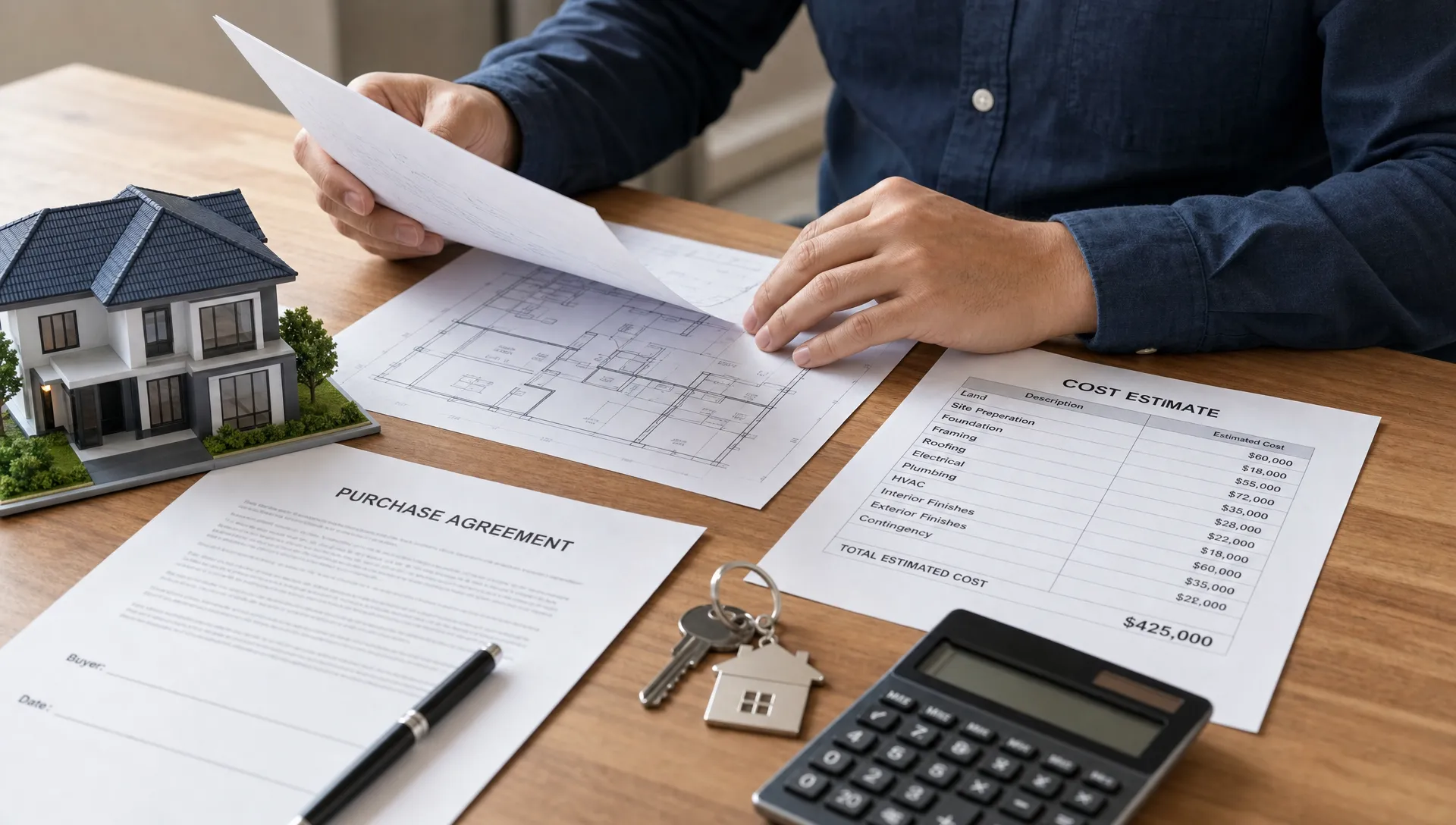
A common buyer mistake is treating the listing price as the total cost. In the UAE, the real purchase budget includes government fees, agency commission, mortgage fees where applicable, valuation costs, trustee or registration charges, insurance, moving costs and future maintenance.
In Dubai, property transfers generally include a Dubai Land Department transfer fee, commonly calculated at 4% of the purchase price. Brokerage commission is often payable on secondary market purchases, and VAT may apply to certain professional fees. Mortgage buyers should also budget for bank valuation, arrangement fees and mortgage registration charges.
Service charges deserve special attention. Two similar apartments at similar prices can have very different annual ownership costs. Ask for the latest service charge statement and check whether there are arrears, special levies or major works planned. For villas and townhouses, factor in landscaping, cooling, pool maintenance, pest control and community fees if applicable.
| Cost item | Typical buyer question | When to check |
|---|---|---|
| Transfer and registration fees | What government and trustee fees apply in this emirate? | Before making an offer |
| Agent commission | Who pays the commission and how much is it? | Before signing an agreement |
| Mortgage costs | What are the valuation, arrangement and registration fees? | Before applying for finance |
| Service charges | What is the annual cost and are there unpaid balances? | Before final price negotiation |
| Maintenance reserve | What repairs may be needed in the first year? | After inspection, before transfer |
| Utilities and cooling | Is cooling district-based or chiller-free, and what are typical bills? | Before final decision |
For a deeper overview of the UAE buying journey, including budgeting and due diligence, you can also review the property residential guide for UAE buyers.
Check the listing against the real property
A high-quality listing should make your search easier, but every listing still needs verification. Check that the location, size, view, floor level, parking allocation, furnishing status and handover condition match what is advertised. If the unit is described as vacant, confirm whether it is actually vacant now or only expected to become vacant later.
Photos can be outdated or taken from a similar unit. Floor plans may not show modifications. A “full view” can be partially blocked by nearby construction. A “short walk” to the metro can feel very different in August heat. Treat the listing as the starting point, not the proof.
Before arranging viewings, compare the property with similar listings in the same building or community. Large price gaps can be legitimate, but they need explanation. The unit may have a better view, a larger layout or upgrades. It may also have tenancy restrictions, maintenance issues, legal complications or unrealistic seller expectations.
Best Property’s article on real estate property listings red flags is useful if you want to spot warning signs before spending time on viewings.
Inspect the property like an owner, not a visitor
A viewing is not just a tour. It is a condition check. Visit during daylight if possible, then consider a second visit at a different time to assess noise, traffic, parking and building activity. In apartments, look beyond the unit and inspect corridors, elevators, lobby condition, parking access, waste areas and amenities. These shared spaces often reveal how well the building is managed.
Inside the property, test what you can reasonably test. Check water pressure, drainage, AC performance, windows, doors, built-in appliances, electrical points and signs of damp or leaks. Look for uneven flooring, cracks, poor sealing, mold smells, ceiling stains and balcony drainage issues.
For villas and townhouses, the inspection should go further. Roof condition, boundary walls, garden drainage, pool equipment, irrigation systems, external paint, AC units and water tanks can all create major costs after handover. If the property is older or heavily modified, consider hiring a professional inspector or snagging company.
For off-plan handover, do not rush the snagging stage. Document visible defects, missing finishes and non-functioning items before accepting the unit. Keep written records and photos. The handover process is often smoother when issues are clearly listed and submitted through the proper channel.
Review the community and future surroundings
Location is more than a pin on the map. A residential property can be well priced and beautifully finished, yet still be unsuitable because the surrounding area does not match your needs.
Check commute times during real travel hours, not just late evening or weekend visits. If you rely on schools, nurseries, clinics or public transport, test the route. If you drive, check entry and exit points, congestion, parking availability and access to main roads.
Future development is another major consideration. Empty land beside your building may not stay empty. A quiet view today may change if a new tower, road or commercial project is planned. Ask the agent, developer or community management about known nearby projects, and check official master community information where available.
For investors, community maturity matters. Established areas may offer stronger rental comparables and easier resale data. Emerging communities may provide better entry prices, but buyers need patience and a realistic view of completion timelines, infrastructure growth and tenant demand.
Understand tenancy status before you buy
If the property is rented, buying it does not automatically mean you can move in immediately. Review the tenancy contract, rent amount, renewal date, notice history and deposit arrangements. In Dubai, landlord and tenant rules are regulated, and eviction for personal use or sale has specific notice requirements.
A rented property can be attractive for investors because income starts from day one. For end-users, it can create delays if vacant possession is not properly agreed. Make sure the sale agreement clearly states whether the property will be transferred vacant or tenanted.
Also compare the current rent with market rent. If the tenant pays significantly below market, your near-term yield may be lower than expected. If the rent is high, check whether it is sustainable at renewal.
Read the contract before paying serious money
Never rely only on verbal promises. Whether you are buying ready property or off-plan, the written agreement should reflect the commercial deal you actually accepted.
For secondary market purchases in Dubai, buyers commonly sign a sale agreement that sets out the price, deposit, transfer date, responsibilities, NOC process and default terms. Read every clause before signing. If a deposit is required, understand who holds it, when it becomes refundable or non-refundable and what happens if the seller cannot transfer.
For off-plan purchases, the Sale and Purchase Agreement should be reviewed carefully. Check the payment schedule, completion provisions, delay clauses, handover conditions, allowed changes, cancellation terms and any restrictions on resale before completion. If you do not understand a clause, ask for professional advice before signing.
Key questions to ask before paying a deposit include:
- Is the seller the registered owner or authorized representative?
- Is the property mortgaged, rented or subject to any dispute?
- Are there unpaid service charges or community fees?
- What exactly is included in the sale, such as furniture, appliances and parking?
- What are the deadlines for NOC, mortgage approval, transfer and handover?
- What happens if either party misses a deadline?
A careful contract review may feel slow, but it is faster than fixing a preventable dispute after payment.
Compare financing options early
If you need a mortgage, get pre-approval before making firm commitments. Pre-approval helps you understand your borrowing limit, down payment requirement, monthly repayment and bank conditions. It also makes your offer stronger because sellers can see that financing is in progress.
Do not stretch your budget to the maximum approved amount without stress testing the monthly payment. Consider interest rate changes, service charges, maintenance, insurance and personal cash flow. A property can be affordable on paper but uncomfortable in practice if every unexpected bill becomes a problem.
Cash buyers should also prepare proof of funds and clarify transfer timing. In competitive situations, clean documentation can help the transaction move faster.
Use a final decision checklist
Before you commit, pause and review the purchase from four angles: legal, financial, physical and practical. If one area is unclear, resolve it before signing or transferring funds.
| Check area | Green signal | Warning signal |
|---|---|---|
| Legal status | Ownership, authority and transfer process are verified | Missing documents, unclear POA or pressure to pay quickly |
| Financial fit | Total cost and monthly obligations are clear | Budget only covers the asking price |
| Property condition | Inspection issues are minor or priced in | Major defects, poor building maintenance or vague repair promises |
| Location fit | Daily life, commute and amenities match your needs | Good property in an inconvenient or uncertain setting |
| Contract terms | Written terms match the negotiated deal | Verbal promises not included in the agreement |
The best purchase is rarely the one that looks perfect at first glance. It is the one that still makes sense after the documents, numbers, inspection and long-term fit have been tested.
Frequently Asked Questions
What is the most important check before buying residential property in the UAE? Ownership and legal status should come first. Confirm the title, seller identity, mortgage status, buyer eligibility and transfer process before paying a deposit or signing binding documents.
Should I inspect a new or off-plan property before handover? Yes. Even new properties can have defects. A snagging inspection helps identify issues with finishes, AC, plumbing, doors, windows, appliances and common handover items before you fully accept the unit.
How much extra should I budget beyond the property price? The amount depends on the emirate, property type and financing method. Budget for transfer or registration fees, agent commission, mortgage charges if applicable, valuation, insurance, service charges, moving costs and maintenance.
Is it safe to buy a tenanted property? It can be safe if the tenancy terms are clear. Review the tenancy contract, rent amount, expiry date, deposit, notice status and whether the sale agreement states vacant or tenanted transfer.
How can I compare residential properties more efficiently? Compare similar homes in the same area by price per square foot, layout, view, condition, service charges, parking, tenancy status and building quality. This gives a clearer picture than comparing asking prices alone.
Find verified residential property options in the UAE
A good buying process starts with better shortlisting. On Best Property, you can explore residential listings across the UAE, use search filters, review detailed property information and connect directly with agents or owners.
Use the checks in this guide as you compare apartments, villas and townhouses. The right property should look good in photos, but it should also stand up to legal, financial and practical due diligence before you buy.


Join The Discussion