

Buying a house in the UAE is different from scanning apartment listings. A villa or townhouse comes with land, outdoor space, service systems, community rules and maintenance responsibilities that can change the real cost of ownership. That is why buyers should look beyond the headline price when reviewing real estate houses for sale.
A red flag does not always mean you should walk away. Sometimes it means you need better documents, an independent inspection or a clearer answer from the seller. The key is knowing which warning signs are minor negotiation points and which ones can become expensive problems after transfer.
This guide focuses on practical red flags for buyers considering houses in Dubai and across the UAE, from suspicious listing details to legal, physical and financial issues that deserve a closer look.
Why houses need extra due diligence
Apartments are usually easier to compare because the building, facilities and service charge framework are shared. Houses are more individual. Two villas in the same community can have different plot sizes, extensions, landscaping, swimming pools, AC systems, parking layouts and maintenance history.
That individuality is part of the appeal, but it also increases risk. A house may look move-in ready in photos, yet hide roof leaks, aging waterproofing, unauthorized modifications or boundary issues. A townhouse may appear cheaper than similar homes nearby because it faces a busy road, sits next to ongoing construction or has higher maintenance needs than the listing suggests.
Before you book viewings, it helps to screen the listing itself. If the property information is incomplete or inconsistent, the viewing is less likely to produce a clean decision. For a deeper pre-viewing checklist, Best Property's guide on how to spot a great house listing before you visit is a useful companion to this article.
Pricing red flags that deserve a second look
A below-market price is the red flag most buyers notice first. It can be legitimate if the seller wants a fast transaction, the house needs renovation or the market has moved since comparable sales. Still, a price that looks far lower than similar houses in the same community should trigger verification, not excitement alone.
Start by comparing like with like. Match the number of bedrooms, built-up area, plot size, view, backing position, renovation status and vacant or tenanted status. In villa communities, a corner plot, single-row position or upgraded kitchen can justify a higher price. A smaller plot, road-facing location or older AC system can explain a discount.
Watch for these pricing patterns:
- The asking price is far below similar homes, but the agent cannot explain why.
- The listing says urgent sale, but basic documents are not ready.
- The price changes repeatedly within a short period with no clear reason.
- The agent quotes one price online and a higher price during the call.
- The property is advertised as upgraded, but there is no evidence of permits, invoices or warranties.
Low prices are not the only issue. Overpriced houses can also be risky if you rely on a mortgage. If the bank valuation comes in below the agreed purchase price, you may need to pay the gap from your own funds or renegotiate. Before signing, ask your lender or mortgage adviser how valuation shortfalls are handled.
Listing details that feel incomplete or inconsistent
A strong house listing should help you understand the property before you visit. It should include clear photos, accurate size information, the number of bedrooms and bathrooms, community name, occupancy status and enough detail to judge whether it matches your budget and lifestyle.
Missing information is not proof of a bad deal, but vague listings waste time and can hide issues. Be cautious if photos avoid the exterior, garden, bathrooms, kitchen, roof terrace, service area or neighboring plots. In houses, these areas often reveal the most about maintenance quality.
The wording also matters. Phrases like motivated seller, rare deal or best price in market are common in real estate marketing, but they do not replace facts. Ask for details: Is the house vacant? Is it owner-occupied or rented? Are there outstanding service charges? Is there a mortgage? Are any extensions approved by the master developer or relevant authority?
If you are comparing several homes at once, use a consistent method instead of relying on memory. The guide to smarter ways to compare listings online explains how to compare properties on a like-for-like basis rather than being distracted by the most attractive photos.
Legal and ownership red flags
Legal clarity is non-negotiable. In Dubai, property transactions should align with Dubai Land Department procedures. Across the UAE, ownership rules can vary by emirate, freehold area and buyer eligibility. The UAE government portal provides a general overview of owning property in the UAE, but buyers should confirm the exact rules for the property and emirate they are considering.
A serious seller or agent should be able to provide a clear path to verification. In Dubai, ask for the title deed for completed property or the relevant off-plan documentation if the home is not yet handed over. If you are dealing with an agent, ask for their broker identification and verify their authorization to market the property.
Red flags include a seller name that does not match the ownership documents, a representative who cannot show a valid power of attorney or an agent who avoids written answers about title status. Be careful with properties where the owner is overseas, the sale depends on unresolved inheritance matters or the agent asks you to transfer money before you have reviewed basic documents.
Mortgaged properties are common and not automatically a problem. The warning sign is lack of clarity. You need to understand how the mortgage will be cleared, when the bank will release the property and what documents are required before transfer. For a broader legal and budgeting overview, Best Property's guide on key checks before buying residential property for sale covers due diligence points that apply across many UAE purchases.
| Red flag | Why it matters | What to verify |
|---|---|---|
| Agent cannot share verifiable ownership details | You may be dealing with someone who is not authorized to sell | Title status, seller identity and agent authorization |
| Price is far below comparable houses | The discount may reflect legal, condition or location issues | Recent comparable listings and reason for discount |
| Seller refuses inspection | Major defects may be hidden | Independent property inspection before signing or transfer |
| Extensions are not documented | Unauthorized changes can create compliance and resale issues | Approvals, drawings, permits and master developer rules |
| Outstanding community or service fees are unclear | Unpaid amounts can delay the transaction or affect negotiation | Latest fee statements and no-objection requirements |
Physical condition red flags during a viewing
A house viewing should be more than a walk through attractive rooms. It is your chance to check how the property has been maintained and whether the listing matches reality. Bring a checklist, take photos with permission and view the property during daylight if possible.
Cracks deserve context. Hairline cracks in paint can be normal, but wide cracks, diagonal cracks near doors or repeated cracking across several walls should be assessed by a qualified professional. Water stains, bubbling paint, musty smells and discoloration around ceilings or bathrooms can signal leaks or waterproofing issues.
In the UAE climate, AC condition is a major ownership cost. Ask when the units were last serviced and whether any major parts have been replaced. Poor cooling, unusual noise, weak airflow or visible condensation should be investigated. Outdoor AC units, pump rooms, water heaters and electrical panels are easy to ignore during a viewing, but they can be expensive to repair.
Also check exterior areas. Uneven paving, poor drainage, damaged boundary walls, loose tiles around pools and signs of pests can indicate maintenance gaps. If the villa has a landscaped garden or private pool, ask who maintains it, what it costs and whether equipment is included in the sale.
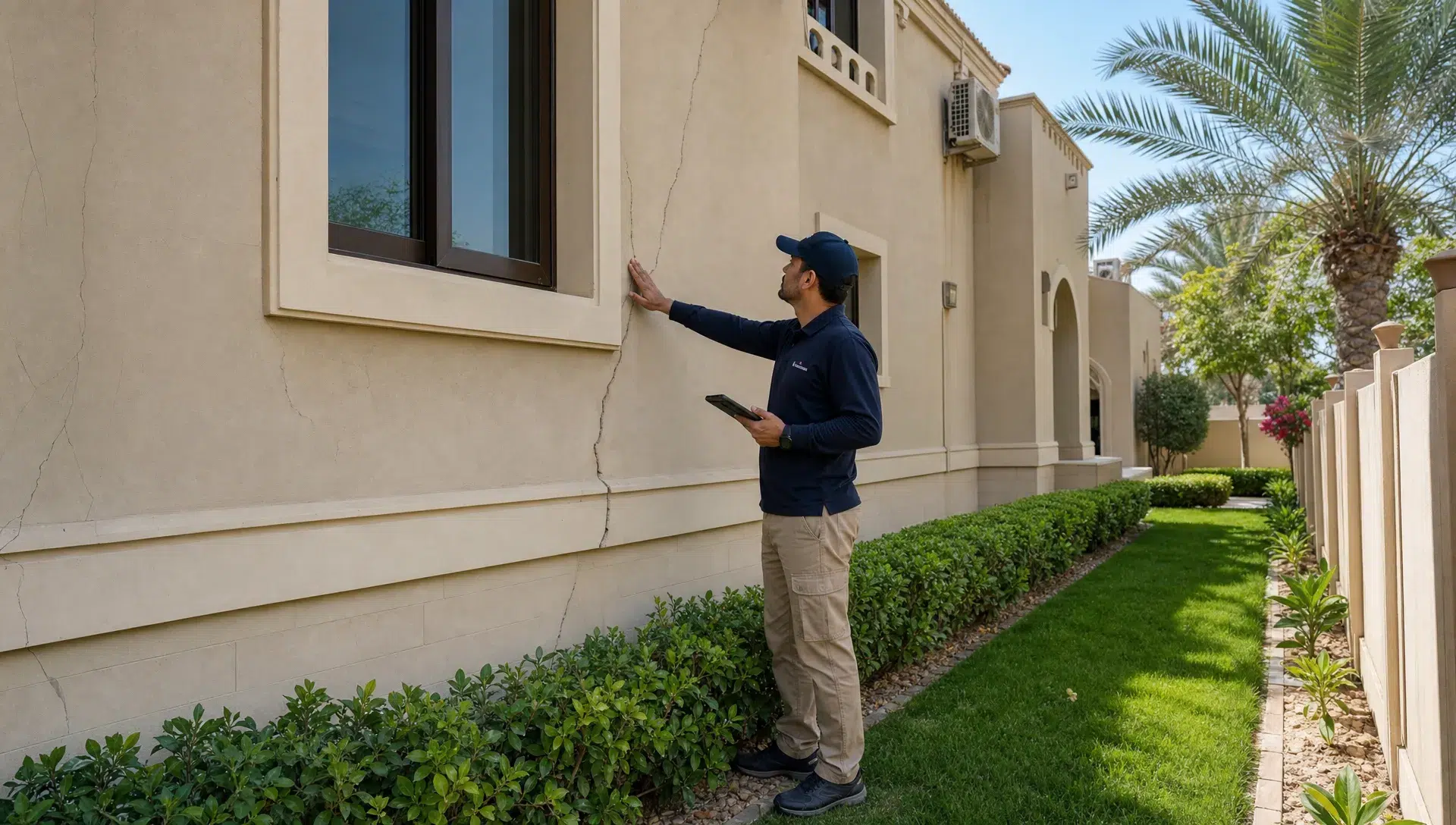
A professional inspection is especially valuable for older houses, heavily upgraded villas or properties that have been vacant for some time. Even if the seller insists everything is fine, an independent report can help you negotiate repairs, adjust the price or walk away with confidence.
Plot, location and community warning signs
A house is tied to its plot in a way an apartment is not. The orientation, road position, neighboring properties and community layout all affect comfort and resale value. A beautifully renovated villa may still be hard to live in if the garden faces constant traffic noise or the plot offers little privacy.
Visit the area at different times if you can. Morning school traffic, weekend community activity, nearby mosque announcements, delivery access, parking pressure and construction noise can feel very different from a quiet weekday afternoon viewing. If the house backs onto vacant land, ask what may be built there in the future.
Location red flags often appear outside the property boundary. Watch for poor street lighting, difficult entry and exit routes, limited visitor parking, neglected common areas or heavy truck movement nearby. In gated communities, check whether the community is mature, still under construction or affected by upcoming infrastructure works.
Do not rely only on map distance. A house that appears close to a school, mall or main road may still require a long internal drive because of community access points. For end users, that affects daily convenience. For investors, it can influence rental demand and tenant retention.
Renovation and extension red flags
Upgrades can add value, but only when they are done properly. In UAE villa communities, extensions, façade changes, pool additions, boundary modifications and major landscaping work may require approvals from the master developer, community management or local authority.
Ask the seller to identify what is original and what was changed. A renovated kitchen, converted garage, enclosed balcony, maid's room adjustment or added pergola may look attractive, but you should know whether approvals exist and whether the work affects warranties, insurance or resale.
Be cautious when upgrades are described in vague terms. Fully upgraded can mean anything from a fresh coat of paint to a full mechanical and electrical renovation. Ask for invoices, warranties, contractor details and before-and-after information where available. If the seller cannot provide records, price the house as if future repairs may fall on you.
The same applies to furnished houses. Confirm exactly what is included in the sale. Built-in appliances, curtains, garden equipment, pool pumps, smart home systems and loose furniture should be listed clearly in the contract if they are part of the deal.
Financial and contract red flags
The asking price is only one part of the cost. Buyers should account for transfer fees, agency fees, mortgage costs if applicable, maintenance, moving expenses, community charges and any immediate repairs. In Dubai, official transfer procedures and fees should be checked through the Dubai Land Department or your conveyancer because the exact transaction structure can affect the final amount.
Contract pressure is a major warning sign. If you are told to sign immediately without time to review documents, confirm financing or inspect the property, slow down. A good deal should survive reasonable due diligence. A seller can set deadlines, but those deadlines should not prevent basic verification.
Deposits require special care. Avoid transferring money to a personal account without a clear agreement, receipt and documented purpose. Confirm who holds the deposit, when it becomes non-refundable and what happens if the property fails legal checks, bank valuation or inspection.
Review the memorandum of understanding or sale agreement carefully. It should reflect the agreed price, payment schedule, transfer timeline, included items, vacant possession date if relevant and responsibilities for clearing fees or mortgages. If anything was promised verbally, put it in writing before you sign.
Agent and communication red flags
Good agents make the buying process clearer. They answer direct questions, share available documents, coordinate viewings professionally and explain the next step without pressuring you. Poor communication is not just annoying, it can increase risk.
Be cautious if an agent avoids written communication, refuses to identify the property until you meet, advertises a house that is no longer available or pushes you toward a different property after you ask for documents. Duplicate listings from multiple agents can also create confusion, especially when prices, sizes or occupancy details do not match.
A professional agent should be comfortable with verification. In Dubai, that means providing broker details and working within the regulatory framework overseen by the Real Estate Regulatory Agency under the Dubai Land Department. If an agent discourages you from verifying information through official or professional channels, treat that as a serious concern.
What to do when you spot a red flag
The right response depends on the severity of the issue. Some red flags can be resolved with documentation or negotiation. Others should stop the transaction until you receive professional advice.
Use this simple process before making an offer or signing:
- Pause the decision until the issue is explained in writing.
- Ask for supporting documents, not only verbal reassurance.
- Compare the house with similar properties in the same area.
- Arrange an independent inspection for condition concerns.
- Verify ownership, agent authorization and transaction steps through official or qualified channels.
- Make sure the agreement records all conditions, inclusions and deadlines.
If the seller or agent reacts badly to reasonable questions, that is useful information. Serious buyers have the right to verify what they are buying, especially when the purchase involves a house, land and long-term ownership costs.
Frequently Asked Questions
What is the biggest red flag when buying real estate houses for sale in the UAE? The biggest red flag is lack of verifiable ownership or authorization. If the seller, representative or agent cannot provide documents that connect them clearly to the property, do not pay a deposit or sign until the issue is resolved.
Is a below-market house price always suspicious? No. A low price can reflect urgency, renovation needs, location drawbacks or a motivated seller. It becomes suspicious when the discount is large and nobody can give a clear reason supported by comparable prices and property documents.
Should I inspect a newly built or recently renovated house? Yes. New and renovated houses can still have defects, incomplete warranties, poor workmanship or undocumented changes. An independent inspection can reveal issues before you commit.
What should I ask before paying a deposit? Ask who owns the property, who is authorized to sell it, where the deposit will be held, when it becomes non-refundable, what documents are available and what conditions protect you if legal checks, inspection or financing fail.
Can unauthorized villa extensions affect resale? They can. If extensions or structural changes lack required approvals, future buyers, lenders, insurers or community management may raise concerns. Always ask for approval records for major modifications.
Find houses with clearer information
The safest house purchase starts with better comparison. On Best Property in Dubai, you can search UAE property listings, filter by your requirements, review detailed property information and contact agents or owners directly. Use the platform to shortlist houses carefully, then verify the legal, physical and financial details before you make an offer.


Join The Discussion