

Finding apartments for sale in Dubai with low service charges is not just about reducing an annual bill. It can change your net rental yield, resale appeal and day-to-day ownership experience. Two apartments may have the same purchase price and rent potential, yet the one with lower recurring building costs can produce a stronger return over time.
The challenge is that service charges are not always obvious when browsing listings. They can vary from one tower to another in the same community, change after handover or rise when a building needs major maintenance. A smart buyer treats service charges as a core due diligence item, not a detail to ask about after making an offer.
This guide explains how Dubai service charges work, how to compare them properly and how to find apartments where the yearly cost makes sense for your lifestyle or investment plan.
What are service charges in Dubai?
Service charges are recurring fees paid by property owners to cover the management, maintenance and operation of shared areas in a building or community. For apartments, they usually help fund items such as security, cleaning, common area utilities, lifts, landscaping, building management, insurance and reserve funds for future repairs.
In Dubai, service charges are generally calculated per square foot. If an apartment is 800 square feet and the building charge is AED 15 per square foot, the annual service charge would be AED 12,000 before any other building-specific fees.
The key point is that service charges are an ownership cost. Even if you rent the apartment to a tenant, the owner remains responsible for paying them. That is why buyers comparing apartments for sale Dubai should look beyond the purchase price and calculate the full annual cost of holding the property.
Why low service charges matter for buyers and investors
Low service charges can improve affordability for end users and raise net returns for investors. In a rental investment, gross yield can look attractive on paper, but service charges reduce the income that actually stays with the owner.
Here is a simple hypothetical example showing how the same apartment size can produce very different annual costs:
| Apartment size | Service charge per sq ft | Annual service charge | Monthly equivalent |
|---|---|---|---|
| 750 sq ft | AED 12 | AED 9,000 | AED 750 |
| 750 sq ft | AED 18 | AED 13,500 | AED 1,125 |
| 750 sq ft | AED 24 | AED 18,000 | AED 1,500 |
A difference of AED 9,000 per year may not seem dramatic during the buying process, especially when compared with the purchase price. Over five years, however, that gap becomes AED 45,000, excluding any increases. For an investor, this can materially affect net yield. For an end user, it affects monthly cash flow.
Low service charges can also help resale, provided the building remains well maintained. Buyers often ask about annual ownership costs before committing, especially in communities with many competing apartments.
What counts as “low” service charges in Dubai?
There is no universal number that qualifies as low across all of Dubai. A fair service charge depends on the building type, amenities, location, age, maintenance quality and whether certain costs are included separately.
For example, a simple mid-rise building with limited amenities may naturally cost less to run than a waterfront tower with multiple pools, concierge services, extensive landscaping and high-end common areas. The lower number is not automatically better if the building is poorly maintained, and the higher number is not automatically bad if it supports strong tenant demand and premium rents.
A better question is: are the service charges low compared with similar buildings in the same area offering a similar level of amenities?
| Factor to compare | Why it affects service charges | Buyer takeaway |
|---|---|---|
| Building height and design | High-rise towers often have more lift, facade and mechanical maintenance | Compare with similar towers, not low-rise buildings |
| Amenities | Pools, gyms, lounges and concierge services add operating costs | Pay for amenities only if they support your use or rental demand |
| Cooling arrangement | Chiller or district cooling costs may be separate or handled differently | Ask what is included and what the occupant pays separately |
| Building age | Older buildings may need larger reserve funds or repairs | Check maintenance history, not just the current charge |
| Management quality | Efficient management can control costs without neglecting upkeep | Look at cleanliness, response times and common area condition |
Where to start your search
Begin with a clear shortlist of communities and apartment sizes. If you search the entire market without filters, you will waste time comparing properties that are not truly comparable. A studio in JVC, a one-bedroom in Business Bay and a two-bedroom in Dubai Marina have different buyer profiles, rent expectations and operating costs.
Use a listing platform to narrow by budget, property type, size and location first. On Best Property, you can explore apartments for sale in Dubai across different budgets before asking agents for the exact service charge figures on shortlisted units.
Once you have a shortlist, request the annual service charge per square foot and the total annual amount for the exact unit. Do not rely only on verbal estimates. Ask for the latest available service charge information, and confirm whether the figure includes all building-related owner charges or if any separate items apply.
Best property types for lower service charges
Apartments with low service charges often share a few practical characteristics. They are usually in buildings with efficient layouts, modest amenities and a large number of units sharing common expenses. However, the right property type depends on your goal.
For investors, the best option is not always the building with the absolute lowest fee. It is often the apartment where service charges, rent demand, maintenance quality and resale liquidity are balanced. A low-cost building with weak tenant demand may underperform a slightly more expensive building in a stronger location.
For end users, low service charges are useful when they reduce monthly ownership costs without compromising comfort. If you rarely use a large pool deck, valet, luxury lobby or residents lounge, paying extra for those features may not make sense.
Areas with large apartment supply, practical layouts and mid-market buildings can be worth reviewing first. Examples often considered by budget-conscious buyers include Jumeirah Village Circle, Dubai Silicon Oasis, Arjan, Dubai Sports City, Discovery Gardens, Al Furjan and International City. Service charges still vary by building, so treat the area as a starting point, not a guarantee.
If your priority is strong demand as well as reasonable ownership costs, compare the communities discussed in this guide to Dubai apartments for sale in high-demand communities before making a final decision.
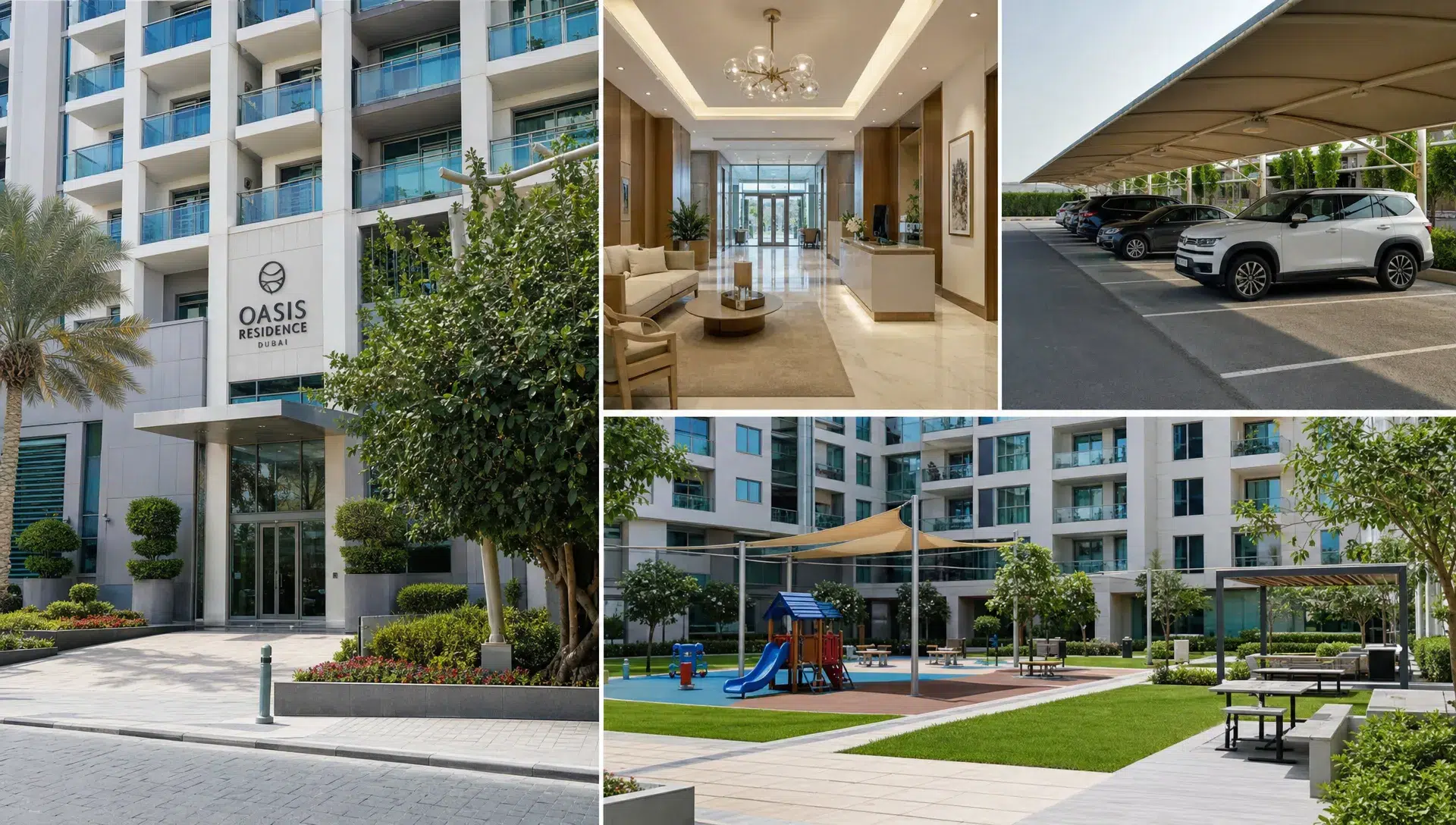
How to verify service charges before you make an offer
Service charges should be verified at unit level before signing. A listing may mention an estimated rate, but your actual annual cost depends on the apartment size and the latest building budget.
Ask the agent or seller for the current annual service charge statement or the latest confirmed service charge rate. If the property is ready, request documentation showing the amount due for the unit. If the property is off-plan, ask the developer for the expected service charge range, but remember that estimates can change after handover.
You should also check whether there are outstanding service charge payments. In Dubai, unpaid service charges can create complications during transfer. A seller generally needs to settle dues before the transaction can proceed, but buyers should still ask early so there are no surprises near closing.
When reviewing listings, check whether the agent provides complete information, clear photos and realistic pricing. If you want a broader due diligence process, use this guide on finding reliable home listings for sale alongside your service charge checks.
Questions to ask the agent or seller
A direct conversation can reveal more than a listing description. Ask precise questions and compare the answers across multiple buildings.
- What is the current annual service charge for this exact apartment?
- What is the service charge per square foot?
- Are any cooling, utility, master community or parking-related fees separate?
- Have service charges increased in the past two to three years?
- Are there any unpaid service charges on the unit?
- Is there any planned major maintenance that could affect future costs?
- Who manages the building and how responsive is the management team?
- Are common areas, lifts, parking levels and amenities in good condition?
The answers will help you separate genuinely efficient buildings from properties where the published cost is incomplete or outdated.
Calculate the impact on net yield
If you are buying for investment, calculate net yield before comparing offers. A high advertised rent does not mean much if recurring costs are also high.
Use this simple formula:
Net yield before financing = (annual rent minus annual service charges minus other recurring owner costs) divided by purchase price x 100
Here is a hypothetical comparison:
| Item | Apartment A | Apartment B |
|---|---|---|
| Purchase price | AED 900,000 | AED 900,000 |
| Expected annual rent | AED 75,000 | AED 75,000 |
| Annual service charges | AED 10,000 | AED 18,000 |
| Income after service charges | AED 65,000 | AED 57,000 |
| Yield after service charges only | 7.2% | 6.3% |
Both apartments look identical if you only compare purchase price and rent. After service charges, Apartment A produces a stronger return. This is why low service charges can be especially important for investors choosing between similar units.
That said, do not make the decision on fees alone. A building with higher charges may still perform better if it rents faster, attracts better tenants or holds value more reliably. The goal is not the lowest possible fee, but the best balance between cost, quality and demand.
Watch for hidden trade-offs
Very low service charges can sometimes signal efficiency, but they can also signal underfunding. If a building is not collecting enough to maintain lifts, pools, corridors, landscaping and reserve funds, owners may face declining property condition or future cost increases.
During your viewing, pay attention to visible maintenance. Look at lift condition, lobby cleanliness, corridor lighting, parking areas, waste rooms, gym equipment and pool areas. A building that feels neglected may become harder to rent or resell, even if annual charges are low.
Also compare the lifestyle value around the building. Good access to supermarkets, schools, gyms, transport, restaurants and retail can support rental demand. At the same time, separate lifestyle spending from property ownership costs in your personal budget, whether that spending is dining out, travel or collecting sneakers from authentic sneakers and streetwear retailers. Service charges are fixed property obligations, so they deserve their own line in your affordability plan.
Ready vs off-plan apartments: which is easier to assess?
Ready apartments are easier to evaluate because the building already has a service charge history. You can inspect the property, review the condition of common areas and ask for current charges. For buyers focused on low service charges, ready properties provide more certainty.
Off-plan apartments can still be attractive, especially when the purchase plan fits your budget, but service charges are less certain before handover. Developers may provide estimated charges, yet the final amount depends on actual building operations, facilities and management after completion.
If you are considering off-plan, ask for the expected range and compare it with completed buildings by the same developer or in the same master community. Be conservative in your calculations. If your investment only works at a very low estimated service charge, the margin may be too tight.
Step-by-step process to find low-service-charge apartments
Use a structured process instead of jumping from one listing to another.
- Set your maximum total ownership cost: Decide what you can afford annually, including service charges, maintenance, insurance if applicable and any mortgage-related costs.
- Shortlist comparable communities: Choose two to four areas that match your budget, commute needs or tenant profile.
- Filter by size and building type: Compare studios with studios, one-bedrooms with one-bedrooms and similar building categories.
- Request exact service charge figures: Ask for the current annual amount for each unit, not just an estimated community average.
- Inspect building condition: Low charges are only attractive if the property is clean, functional and properly maintained.
- Calculate net yield or monthly affordability: Include service charges before ranking your options.
- Check resale and rental demand: A low-cost apartment should still be easy to rent, live in or sell later.
- Negotiate using verified costs: If service charges are high compared with similar buildings, use that data when discussing price.
This process helps you avoid overpaying for a unit that looks affordable at purchase but becomes expensive to hold.
Common mistakes to avoid
Many buyers focus on the asking price and assume the rest will be manageable. That can lead to unpleasant surprises after transfer.
One common mistake is comparing service charges across unrelated properties. A luxury tower in Downtown Dubai and a practical building in Dubai Silicon Oasis should not be judged by the same benchmark. Another mistake is ignoring whether cooling or other charges are separate. If one building has a lower service charge but higher separate occupant costs, the full picture may be different for end users or tenants.
Buyers also sometimes forget that service charges can change. A current low number is helpful, but you should ask about past increases, upcoming maintenance and the general financial health of the building. Finally, do not skip the physical inspection. A spreadsheet cannot show you whether the lifts are slow, the parking is poorly managed or the common areas are wearing out.
Frequently Asked Questions
Are service charges negotiable when buying an apartment in Dubai? Service charges are building or community fees, so they are not normally negotiated directly by the buyer. However, you can use high service charges as part of your price negotiation with the seller.
Who pays service charges in Dubai, the owner or the tenant? The owner is responsible for service charges. In a rental property, the tenant usually pays rent and their own utility costs, while the owner pays building service charges unless a specific legal agreement says otherwise.
Can service charges increase after I buy? Yes. Service charges can change based on building budgets, maintenance needs, management decisions and regulatory approvals. Always ask about recent changes and future planned work.
Are low service charges always better? Not always. Low charges are useful only when the building remains well maintained. If fees are too low to support proper upkeep, the property may suffer in rental demand, resale value or living quality.
How do I compare apartments for sale Dubai with different service charges? Compare similar units in similar buildings, calculate the annual fee for each exact apartment, inspect maintenance quality and use net yield or monthly affordability rather than purchase price alone.
Final thoughts
The best apartments for sale in Dubai with low service charges are usually not found by chasing the cheapest annual fee. They are found by comparing similar buildings, verifying the exact unit cost and checking whether the property is well managed enough to protect future value.
If you are actively shortlisting apartments, use Best Property to compare updated listings, save favorites and connect directly with agents or owners. A lower service charge can be a major advantage, but only when the apartment also fits your location, quality and return expectations.


Join The Discussion