
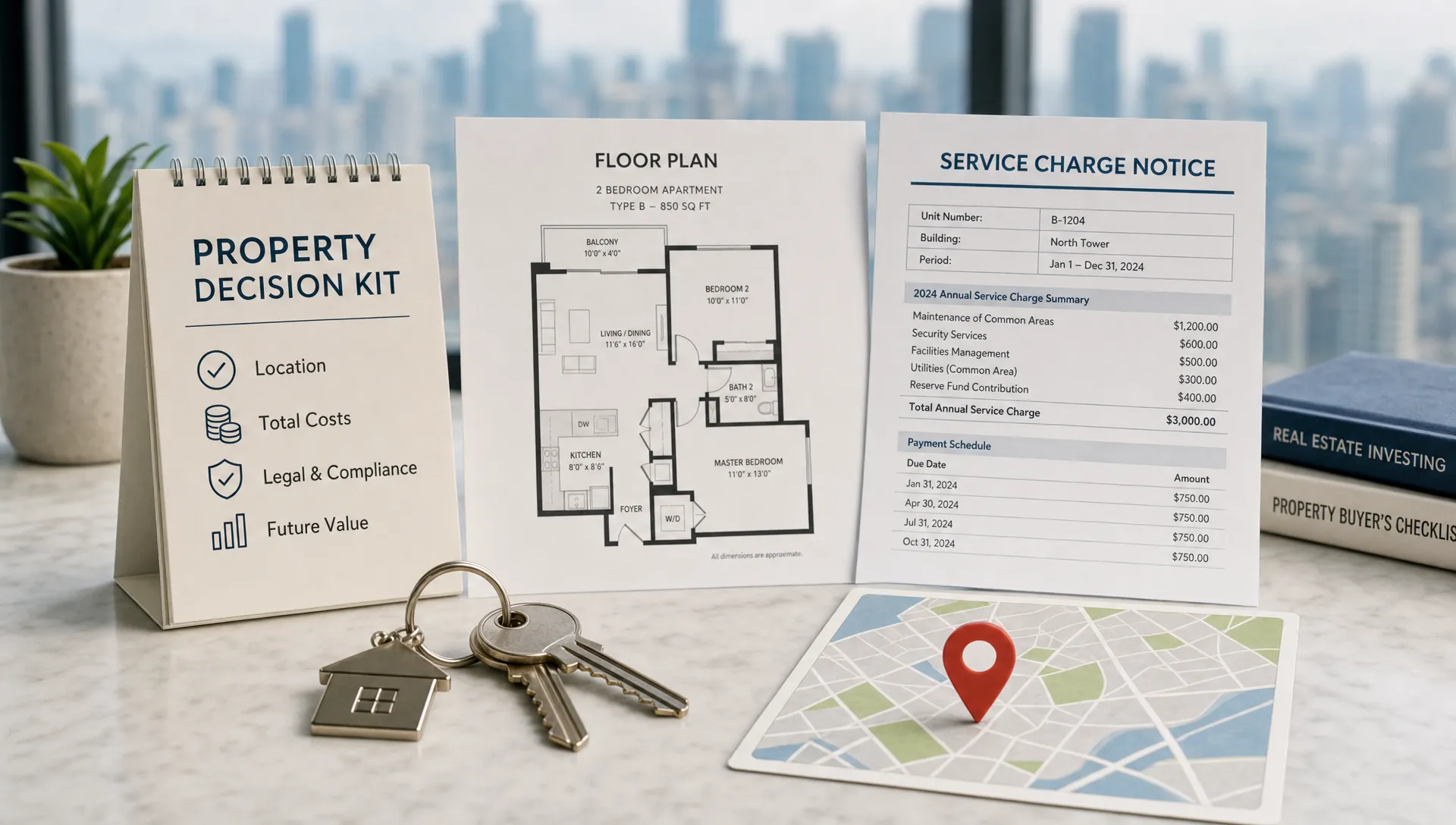
Choosing the right property is less about finding the most attractive listing and more about matching a home or investment to your goals, budget, lifestyle, and exit plan. A property can look perfect in photos and still be the wrong choice if the service charges are high, the commute is impractical, the layout limits resale demand, or the handover timeline does not fit your plans.
In a market like Dubai and the wider UAE, buyers have more choice than ever: apartments, villas, townhouses, branded residences, waterfront homes, off-plan launches, ready units, and commercial assets. That choice is an advantage, but only if you know how to compare properties beyond the asking price.
This guide walks you through the practical factors that matter before you make an offer.
Start with your reason for buying
Before browsing listings, define the job the property needs to do. A home for your family, a rental investment, and a short-term holiday base all require different decision criteria.
If you are buying to live in the property, your priorities should include commute time, school access, community feel, noise levels, parking, storage, building maintenance, and how well the layout supports your daily routine. A slightly smaller home in a better location may be more valuable to your quality of life than a larger unit in an inconvenient area.
If you are buying for investment, the focus shifts to rental demand, tenant profile, vacancy risk, service charges, future supply in the area, and resale liquidity. A property with high projected rent is not automatically a good investment if the building is hard to maintain or similar units are oversupplied.
If your search starts with “property to buy near me,” treat location as a starting point, not the full strategy. Nearby can be convenient, but the right choice may be one or two communities away if it offers better access, stronger rental demand, or more attractive long-term value.
Set a realistic budget, not just a purchase price
The asking price is only one part of what you need to afford. Serious buyers should calculate the full cost of acquisition, ownership, and possible renovation before making a decision.
In Dubai, buyers commonly need to account for Dubai Land Department fees, agency commission in the secondary market, trustee or registration costs, mortgage related costs if financing, annual service charges, insurance, maintenance, furnishing, and moving expenses. Fees and rules can vary by transaction type, so always confirm current requirements through your agent, conveyancer, bank, and official sources such as the Dubai Land Department.
| Cost factor | Why it matters | What to check |
|---|---|---|
| Purchase price | Determines your down payment and financing need | Compare with recent transactions, not only asking prices |
| Transfer and registration fees | Adds to upfront cash required | Confirm current official charges before signing |
| Agency commission | Affects total transaction cost | Make sure the fee is agreed in writing |
| Mortgage costs | Can change your monthly affordability | Review valuation, bank fees, insurance, and interest rate terms |
| Service charges | Impacts yearly holding cost and net yield | Ask for recent service charge history |
| Maintenance and furnishing | Often underestimated by buyers | Budget for repairs, appliances, curtains, furniture, and snagging |
A useful rule is to set two budgets: your maximum purchase price and your maximum total cash outlay. The second number is usually more important because it reflects what you actually need to complete the purchase comfortably.
Decide whether ready or off-plan fits your risk profile
One of the biggest choices in the UAE market is whether to buy a ready property or an off-plan property. Neither is automatically better. The right answer depends on your timeline, cash flow, risk tolerance, and reason for buying.
A ready property lets you inspect the actual unit, understand the building condition, move in or rent it sooner, and use real rental comparables. It may also be easier to value because there are existing transactions in the same building or community.
An off-plan property can offer flexible payment plans, brand-new finishes, and potential capital appreciation if bought well. But you also need to evaluate the developer’s track record, escrow arrangements, handover timeline, payment schedule, project location, and what future supply may do to resale value.
For a deeper comparison, review this guide on off-plan versus ready property in Dubai before committing to either route.
| Buyer situation | Ready property may suit you if | Off-plan may suit you if |
|---|---|---|
| You need to move soon | You want immediate use or rental income | You can wait for handover |
| You want certainty | You want to inspect the actual unit | You are comfortable assessing plans and developer history |
| You need financing clarity | You prefer conventional mortgage evaluation | You want a staged payment plan |
| You focus on investment | You want proven rental data | You seek early pricing and future growth potential |
Choose the right location using daily life and market demand
Location is still the strongest long-term driver of property value, but the “best” location depends on the buyer. For an end user, the best community is the one that works for daily life. For an investor, it is the one with resilient demand, liquidity, and a tenant base willing to pay for that specific lifestyle.
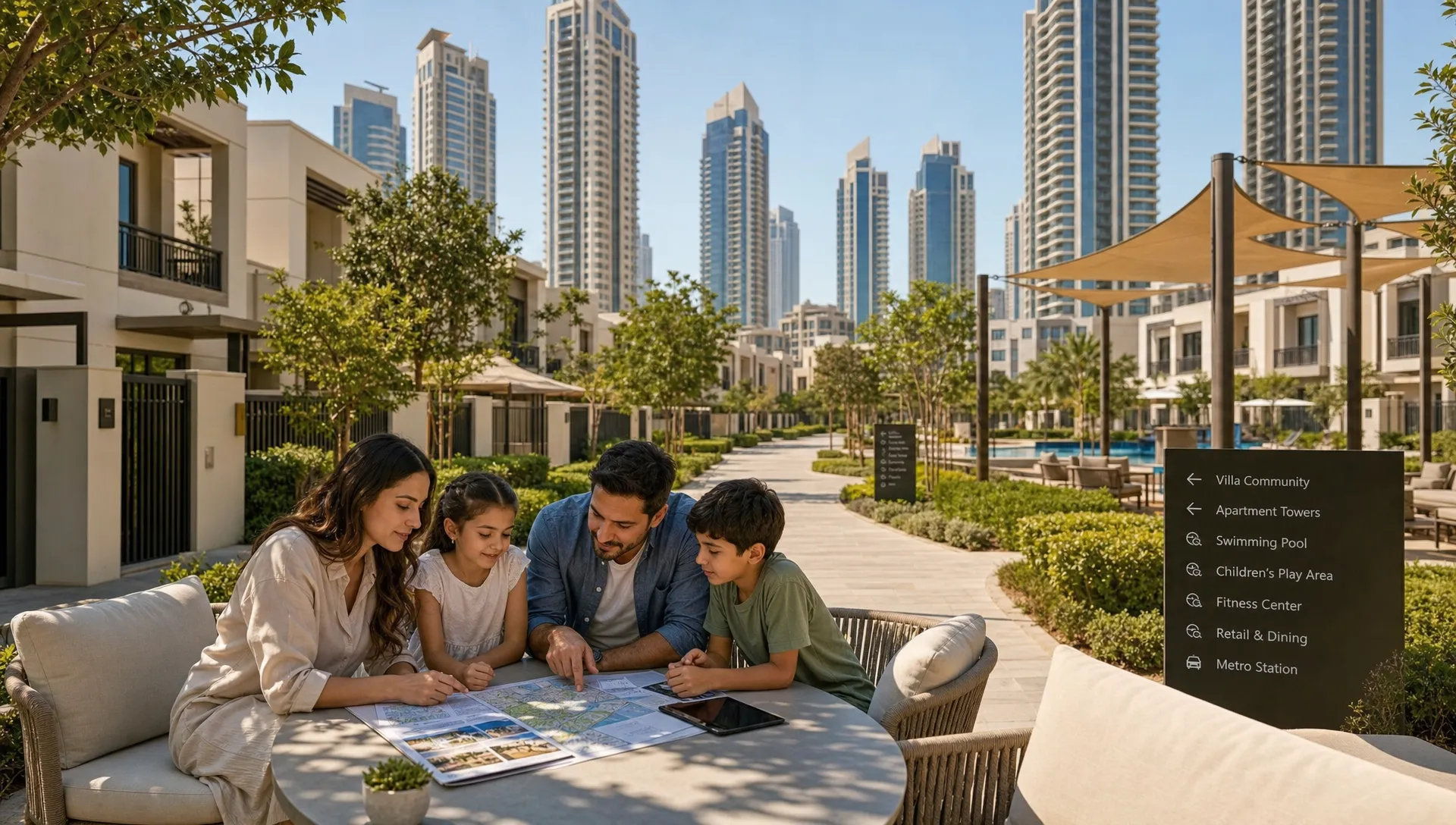
In Dubai, compare areas based on commute patterns, metro or road access, schools, hospitals, supermarkets, beaches, parks, business districts, and planned infrastructure. A community can feel close on a map but take much longer to reach at peak traffic times. Visit at different times of day before deciding.
Also check whether the area is freehold if you are a foreign buyer. Dubai has designated freehold areas where non-UAE nationals can purchase property, but ownership rules and procedures should always be confirmed before signing any agreement.
If you are still shortlisting neighborhoods, this 2026 guide to the best areas to buy property in Dubai can help you compare communities by lifestyle and investment appeal.
Look beyond size and price per square foot
Price per square foot is helpful, but it can be misleading when used alone. A cheaper unit may have an awkward layout, poor view, low natural light, limited parking, a noisy location, or higher service charges. A more expensive property may be better value if it has a functional floor plan, strong building reputation, and better resale appeal.
When comparing units, ask yourself how much of the space is truly usable. Long corridors, oversized foyers, oddly shaped rooms, and small kitchens can reduce practical value. In apartments, balconies may add lifestyle appeal, but they should be usable for the climate and orientation. In villas and townhouses, plot size, privacy, parking, and outdoor space can matter as much as built-up area.
A smart buyer compares the full package: layout, floor, view, building quality, noise, parking, storage, amenities, service charges, and recent transaction evidence.
Inspect the property, building, and community
A viewing should not be treated like a quick walkthrough. It is your chance to test whether the listing matches reality.
For ready properties, inspect walls, ceilings, windows, air conditioning, water pressure, drainage, kitchen fittings, wardrobes, flooring, electrical outlets, balcony doors, and signs of leaks or mold. In apartment buildings, look at corridors, elevators, parking areas, lobby condition, security, waste management, and how busy the amenities feel.
For villas and townhouses, pay extra attention to roof condition, external walls, landscaping, boundary walls, drainage, air conditioning units, water tanks, and any extensions or modifications. If the property is older or expensive, consider using a professional inspection service before finalizing the purchase.
Do not ignore the wider community. Roads, traffic flow, construction nearby, access to shops, noise from highways, and the condition of shared spaces can all affect both lifestyle and resale value.
Verify legal and ownership details early
Good due diligence protects you from expensive mistakes. In Dubai, buyers should work with licensed professionals and verify key documents before paying deposits or signing binding agreements. If you are unfamiliar with the process, the step-by-step guide on how to buy a property in Dubai is a useful place to understand the transaction flow.
Before making a final commitment, check the following with the help of a qualified agent, conveyancer, or legal adviser:
- The seller’s ownership documents and authority to sell
- Whether the property is freehold or leasehold
- Outstanding mortgages, service charges, or developer dues
- The status of any tenancy and notice period if the property is rented
- The agreed inclusions, such as appliances, furniture, parking, or storage
- For off-plan property, the developer, escrow status, payment plan, completion date, and cancellation terms
- The exact deposit amount, refund conditions, and transfer timeline
For rented properties, review the tenancy contract carefully. A property with a tenant can be a good investment, but it may not suit a buyer who wants to move in immediately. Understand the lease expiry, rent level, notice requirements, and whether the current rent is below or close to market.
Evaluate rental yield and resale potential
Even if you are buying for personal use, resale value matters. Life changes, work changes, and market conditions change. A property that is easy to resell gives you flexibility.
Look for features that appeal to a broad future buyer pool: practical layout, good building management, parking, balcony or outdoor space, access to amenities, reasonable service charges, and a location with consistent demand. Highly unusual layouts or very niche designs can be enjoyable to own but harder to sell quickly.
For investment buyers, calculate net yield, not just gross yield. Gross yield is annual rent divided by purchase price. Net yield considers service charges, maintenance, vacancy, property management, mortgage costs if applicable, and other expenses. A headline yield can look attractive until ownership costs are deducted.
You should also compare asking prices with actual transaction data where available. In Dubai, official transaction records and market reports can help you understand whether a seller’s price is realistic. Asking prices show seller expectations, while completed transactions show what buyers actually paid.
Compare at least three serious options
Many buyers make the mistake of falling in love with the first property that looks right. A better method is to shortlist at least three comparable options, then score them against the same criteria.
| Criteria | Property A | Property B | Property C |
|---|---|---|---|
| Total purchase cost | |||
| Location convenience | |||
| Layout efficiency | |||
| Building or community quality | |||
| Service charges or maintenance | |||
| Rental demand | |||
| Resale potential | |||
| Legal clarity |
This simple comparison keeps emotion in check. It also helps you see tradeoffs more clearly. The “best” property is rarely perfect in every category, but it should score strongly on the factors that matter most to your goal.
Know when to walk away
A good property decision is not only about knowing what to buy. It is also about knowing what to avoid.
Be cautious if the seller or agent pressures you to pay quickly without documents, refuses to clarify costs, avoids questions about service charges, or cannot explain the property’s ownership status. Also be careful with units that seem much cheaper than similar properties without a clear reason. Sometimes there is a valid explanation, such as urgency or condition. Other times, there may be legal, maintenance, tenancy, or financing complications.
Walking away can feel frustrating, especially after weeks of searching. But avoiding the wrong property is one of the most valuable decisions a buyer can make.
Use the right tools and professional support
The right property search is much easier when you can filter listings, compare options, review photos, check details, and contact agents directly. A platform like Best Property can help you explore residential and commercial properties across the UAE, use search filters, view detailed listings, and connect with agents or owners.
Still, online research should be combined with in-person viewings and professional advice. For large purchases, consider support from a mortgage adviser, conveyancer, property inspector, or qualified legal professional. Their fees can be small compared with the cost of choosing the wrong property.
Frequently Asked Questions
What is the most important factor when choosing a property to buy? The most important factor is fit for purpose. A property should match your goal, budget, lifestyle, financing ability, and future exit plan. Location is critical, but it should be judged together with layout, costs, condition, and resale demand.
How do I know if a property is overpriced? Compare it with recent completed transactions, similar listings in the same building or community, rental potential, service charges, and property condition. If the asking price is much higher than comparable properties, the property should offer a clear advantage.
Is it better to buy a villa or an apartment in Dubai? It depends on your needs. Apartments may offer central locations, amenities, and lower entry prices. Villas often provide more space, privacy, and land value, but can require higher maintenance and a larger budget.
Should I buy ready or off-plan property? Ready property suits buyers who want immediate use, rental income, or the ability to inspect the unit. Off-plan can suit buyers who want flexible payments and are comfortable assessing developer risk, handover timelines, and future market supply.
How many properties should I view before making an offer? There is no fixed number, but you should compare at least three serious options in the same budget and area. This gives you a clearer sense of value and helps prevent emotional decision-making.
Ready to find the right property?
Choosing the right property takes research, patience, and a clear comparison process. Start with your goal, calculate the true cost, shortlist the right areas, inspect carefully, verify documents, and think about resale before you commit.
When you are ready to compare options, browse current listings on Best Property to search, filter, save, and connect with agents across Dubai and the UAE.


Join The Discussion