
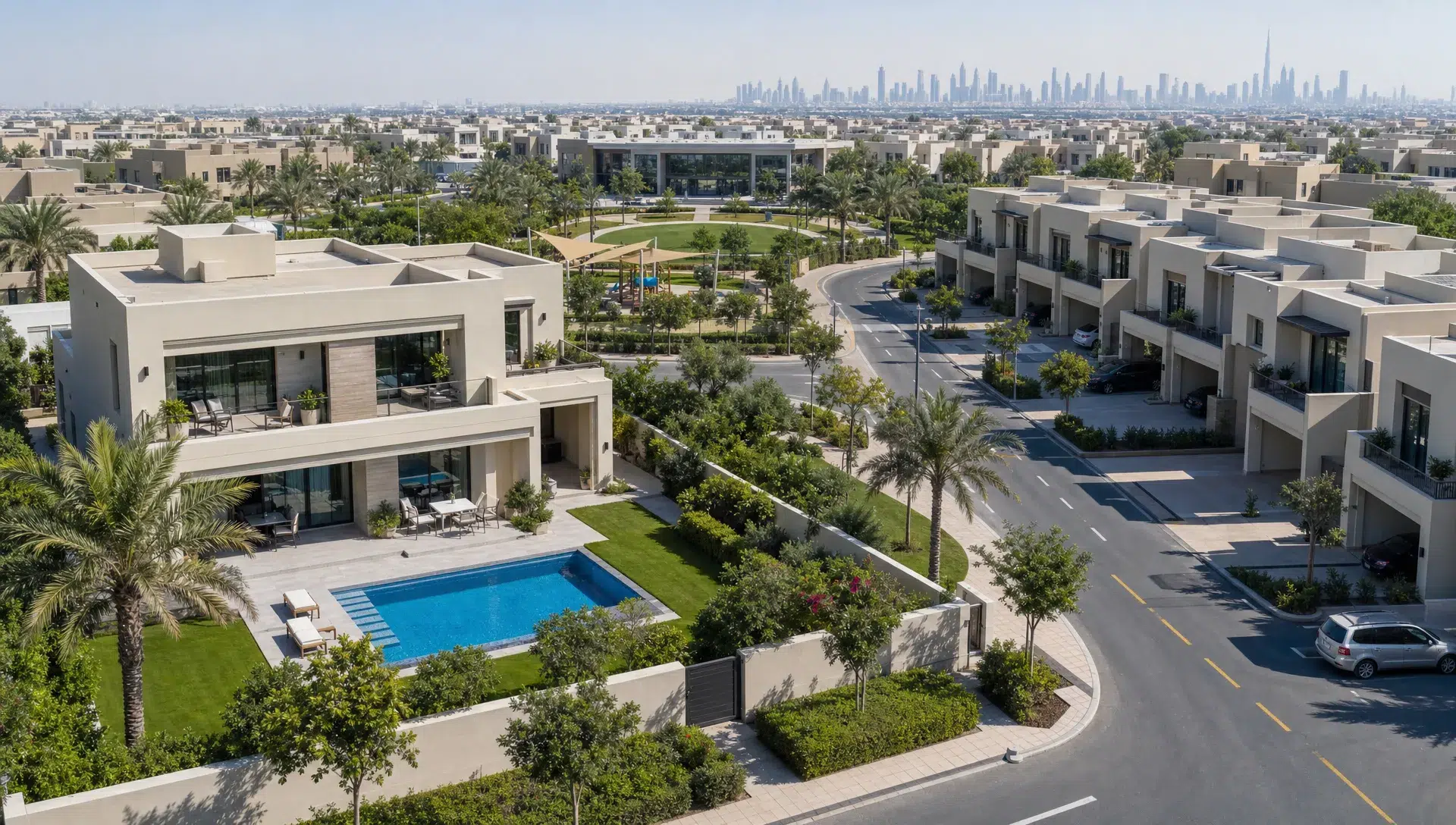
Dubai’s villa market gives buyers a rare combination of private outdoor space, community amenities, long-term residency appeal, and access to a global tenant base. But choosing the right villa to buy in Dubai is not simply about finding the most beautiful home within budget. The best choice depends on how you plan to use the property, how easily it can be maintained, and how attractive it will remain when you eventually sell or rent it.
A villa can be a family home, a second residence, a rental asset, or a value-add investment. Each goal leads to different priorities. A family may care most about school access and privacy, while an investor may focus on tenant demand, service costs, and resale liquidity. The key is to compare villas with a structured checklist rather than reacting to photos, staging, or a limited-time offer.
This guide walks through the practical factors that matter before you make an offer, from location and ownership type to inspections, financing, community fees, and future resale value.
Start with your real reason for buying
Before looking at listings, decide what success means for you. A villa that is perfect for a family relocating to Dubai may be a poor match for a short-term investor. Likewise, a large plot with renovation potential can be attractive to an experienced buyer but risky for someone who wants a move-in-ready home.
| Buyer goal | What to prioritize | What to be careful about |
|---|---|---|
| Primary residence | Commute, schools, layout, privacy, community facilities | Overpaying for features you will rarely use |
| Long-term rental investment | Tenant demand, maintenance costs, resale liquidity | Unusual layouts or remote locations with limited demand |
| Luxury second home | Security, prestige, finish quality, lock-up-and-leave convenience | High upkeep costs for pools, gardens, and large plots |
| Renovation or value-add strategy | Plot size, structural condition, upgrade potential, permissions | Underestimating renovation time, approvals, and costs |
This first decision will make your search more efficient. For example, if your main goal is family living, a smaller villa in a mature community near schools may be better than a larger villa in an area that adds 30 minutes to every commute. If your goal is investment, you may accept a less emotional choice if the property has stronger rentability and easier exit potential.
Build a budget beyond the asking price
The listed price is only one part of the real cost of buying a villa in Dubai. Villas often come with larger plots, landscaping, pools, outdoor areas, and more maintenance responsibilities than apartments. That makes budgeting especially important.
In Dubai, buyers should generally account for transaction fees, agent commission if applicable, mortgage-related charges, moving costs, inspection costs, and early maintenance. The Dubai Land Department transfer fee is commonly 4% of the purchase price, but fees and procedures should always be confirmed during the transaction through official sources such as the Dubai Land Department.
| Cost category | Why it matters when buying a villa |
|---|---|
| Purchase price | The main negotiated amount, but not the full cost of ownership |
| Transfer and registration fees | Required to complete the legal transfer of property ownership |
| Agency commission | Often agreed as part of the transaction terms when using an agent |
| Mortgage costs | May include valuation, arrangement, and registration-related charges |
| Inspection and conveyancing | Helps reduce legal and technical risk before completion |
| Maintenance and upgrades | Villas may require AC servicing, pool work, landscaping, repainting, or repairs |
| Community and service fees | Ongoing charges affect annual holding cost and net rental return |
If you are using finance, speak to lenders early and secure pre-approval before making serious offers. UAE mortgage rules, loan-to-value limits, salary requirements, and bank policies can vary depending on residency status, property value, and buyer profile. A pre-approval helps you understand your real ceiling and gives you more credibility when negotiating.
For a broader overview of the purchase process, documents, and transaction stages, you can also review this guide on how to buy a property in Dubai.
Choose location by lifestyle and exit demand
Location is the single factor you cannot renovate. Paint, flooring, kitchens, bathrooms, and landscaping can be improved. Road access, school proximity, community maturity, and surrounding supply cannot be changed by the buyer.
When comparing villa communities, think in two timeframes. First, how will the location feel during daily life? Second, how will future buyers or tenants judge it when you decide to exit?
Strong villa locations usually offer a combination of practical access, recognizable community branding, established amenities, and consistent demand. For families, proximity to schools, nurseries, clinics, supermarkets, parks, and major roads matters. For luxury buyers, privacy, waterfront access, plot size, architectural quality, and prestige may carry more weight. For investors, rental depth and resale liquidity are often more important than having the largest possible home.
Dubai has many villa submarkets, and each has a different buyer profile. Established communities may command higher entry prices but can offer mature landscaping, active resale demand, and clearer rental comparisons. Newer master communities may offer modern layouts, fresh infrastructure, and staged growth, but buyers should study delivery timelines, future supply, and how quickly amenities are being completed.
If you are still comparing communities, the 2026 guide to the best areas to buy property in Dubai is a useful next step for location research.
Match the villa type to how you will actually live
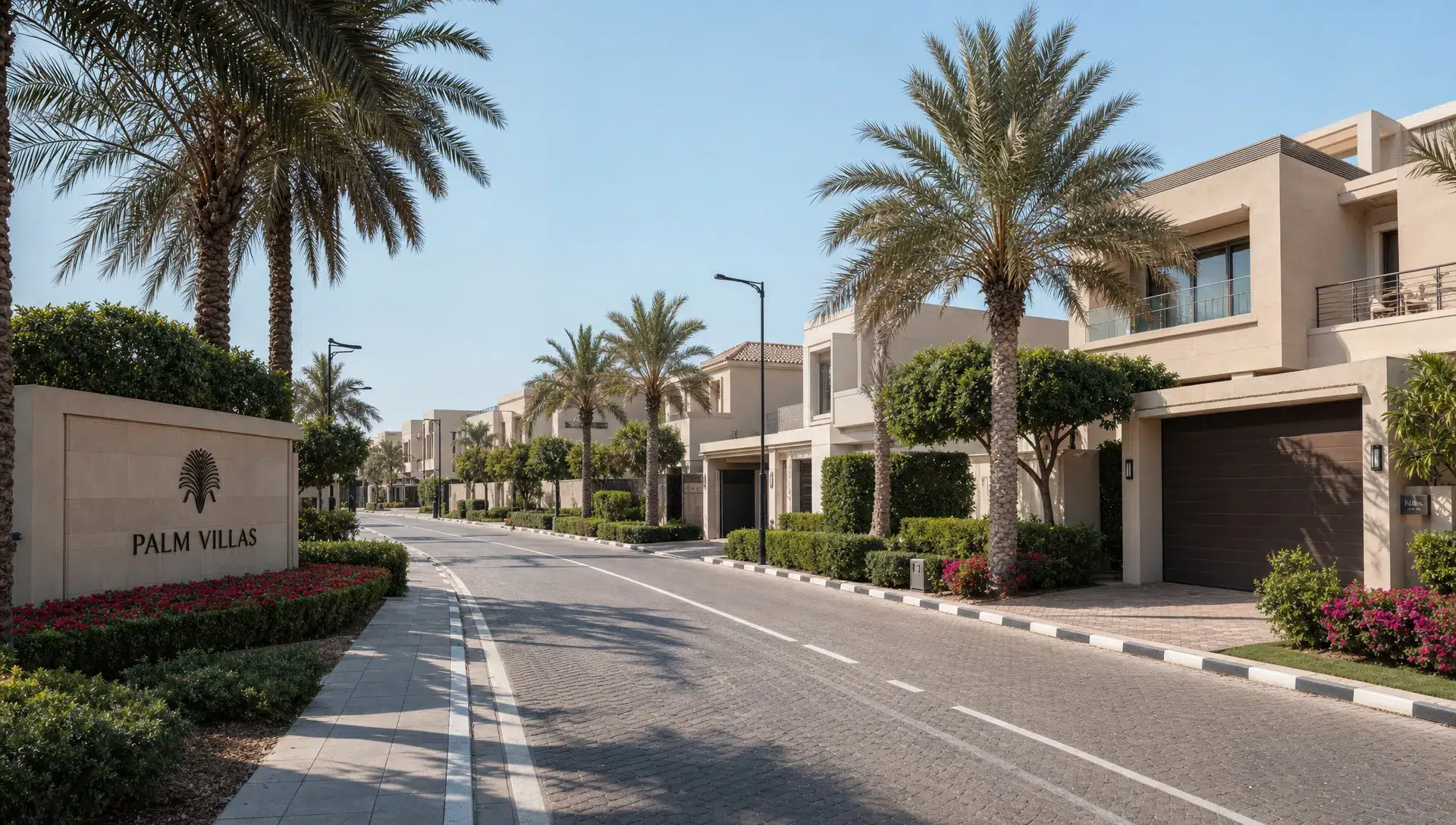
In Dubai, the word villa can describe several property types. Some are standalone homes on private plots. Others are semi-detached villas or townhouse-style homes within gated communities. The right option depends on privacy expectations, maintenance appetite, family size, and budget.
| Villa type | Best suited for | Key trade-off |
|---|---|---|
| Independent villa | Buyers who want privacy, land, and customization potential | Higher maintenance and usually a higher price |
| Semi-detached villa | Families wanting more space than a townhouse with lower cost than a standalone villa | Shared wall or reduced privacy compared with an independent villa |
| Townhouse-style villa | Buyers seeking community living, efficient layouts, and easier upkeep | Smaller plots and less exclusivity |
| Luxury mansion or custom villa | High-net-worth buyers prioritizing prestige, plot size, and bespoke design | Limited buyer pool and higher ongoing costs |
Do not compare villas only by bedroom count. A well-designed four-bedroom villa can feel more comfortable than a poorly planned five-bedroom home. Look at built-up area, plot size, storage, natural light, ceiling heights, staff accommodation, guest room placement, parking, kitchen layout, and garden usability.
Also consider orientation. In Dubai’s climate, sunlight, shade, outdoor usability, and AC efficiency matter. A beautiful garden that receives harsh direct sun all afternoon may be less practical than it looks in photos. Covered terraces, shaded seating, mature landscaping, and efficient indoor-outdoor flow can make a major difference to daily comfort.
Check ownership type, title status, and developer reputation
Foreign buyers can purchase property in designated freehold areas of Dubai, but not every property has the same ownership structure or documentation status. Before you become emotionally attached to a villa, confirm whether it is freehold, leasehold, completed, mortgaged, rented, or off-plan.
For ready villas, ask for clear information on the title deed, ownership status, outstanding mortgage if any, service fee position, and whether the seller can obtain the required no-objection certificate. For off-plan villas, review the developer, payment plan, construction progress, escrow arrangements, handover expectations, and registration status.
| Buying ready | Buying off-plan |
|---|---|
| You can physically inspect the villa before purchase | You rely on plans, specifications, show homes, and developer track record |
| Move-in or rental timing is usually clearer | Payment plans may reduce immediate cash pressure |
| Defects, wear, and maintenance needs can be assessed | Delivery timelines and final finishes require careful review |
| Price negotiation may depend on seller motivation | Future supply and market conditions can affect handover value |
Developer and community reputation matter because they influence build quality, maintenance standards, resale confidence, and tenant perception. A villa in a well-managed community may hold value better than a larger villa in a project with weak facilities or inconsistent upkeep.
Inspect the villa beyond photos and virtual tours
High-quality photos and virtual tours are valuable for shortlisting, but they are not a substitute for an in-person inspection. Villas have more systems than apartments: roofs, external walls, gardens, pools, irrigation, boundary walls, AC units, water tanks, pumps, and sometimes private elevators or smart-home systems.
Before making a final offer, inspect the villa during the day and, if possible, at a time when traffic and community activity are normal. A quiet street at noon can feel different during school drop-off, evening commute, or weekend gatherings.
Pay close attention to these items during the viewing:
- AC cooling performance, age of units, servicing history, and unusual noise.
- Water pressure, drainage, damp marks, roof leaks, and bathroom ventilation.
- Electrical capacity, lighting, sockets, outdoor power points, and visible wiring quality.
- Pool condition, pump room, tiles, filters, leaks, and safety barriers if relevant.
- Landscaping, irrigation, boundary walls, garden privacy, and maintenance burden.
- Signs of poor renovations, uneven flooring, cracked walls, low-quality extensions, or unapproved modifications.
- Parking access, garage dimensions, guest parking, and street congestion.
A professional property inspection is often worthwhile, especially for older villas or upgraded homes. If a seller has renovated, ask what was changed, whether approvals were required, and whether warranties or invoices are available.
When reviewing online listings before a viewing, learn to separate useful details from marketing language. This guide on how to read real estate listings like a smart buyer explains how to assess headlines, photos, prices, layouts, and hidden signals more carefully.
Understand community rules and ongoing costs
Villa ownership is not only about the home itself. The wider community affects your quality of life, expenses, and resale value. In master-planned communities, owners may be subject to rules on exterior changes, landscaping, extensions, short-term rentals, parking, pets, and noise.
Ask for current community fee information and understand what is included. Some communities offer parks, pools, gyms, security, clubhouses, cycling tracks, retail centers, and maintenance of shared areas. Others may have fewer facilities but lower ongoing costs. Neither is automatically better. The right answer depends on how much you will use the amenities and how the charges affect long-term affordability.
For villas, recurring costs can include garden maintenance, pool cleaning, AC servicing, pest control, exterior repainting, home insurance, security systems, and repairs to outdoor areas. If the property is older, budget for replacement cycles. AC units, pumps, waterproofing, kitchen appliances, wardrobes, and bathroom fittings all have lifespans.
If you are buying for rental income, calculate net yield after these costs, not just gross rent divided by purchase price. A villa with strong rent but high maintenance may produce a weaker return than a simpler, more efficient property.
Think like the next buyer before you buy
Even if you plan to live in the villa for years, resale value should guide your decision. The easiest properties to sell are usually those that appeal to a broad pool of buyers: good community, practical layout, clean title, sensible plot, well-maintained condition, and no confusing legal or structural issues.
Highly personalized upgrades can be enjoyable, but they do not always translate into higher resale value. A rare marble finish, unusual room conversion, or dramatic color scheme may impress one buyer and discourage another. If resale matters, prioritize upgrades that improve function and durability: kitchens, bathrooms, flooring, AC efficiency, storage, lighting, landscaping, and curb appeal.
Also consider scarcity. A villa on a larger plot, backing a park, facing a lake, sitting on a quiet internal street, or offering a popular layout may command stronger demand than a similar unit in a less desirable position. Within the same community, micro-location can make a major difference.
Use a simple scorecard before making an offer
A villa purchase is emotional, but your final decision should be disciplined. After viewing several properties, details start to blur. A scorecard helps you compare homes objectively and prevents you from overvaluing one attractive feature while ignoring serious drawbacks.
| Question | Strong sign | Warning sign |
|---|---|---|
| Is the location practical? | Good access to daily needs, schools, roads, and community amenities | Long commute, weak infrastructure, or limited nearby services |
| Is the layout functional? | Natural light, usable rooms, storage, parking, and good flow | Wasted space, awkward extensions, or poor room placement |
| Is the condition clear? | Inspection supports the asking price and repairs are manageable | Hidden defects, poor maintenance, or unclear renovation quality |
| Are ownership documents clean? | Title and seller status can be verified through proper channels | Unclear ownership, unresolved mortgage issues, or missing documents |
| Do the numbers work? | Total cost, financing, fees, and maintenance fit your plan | Budget depends on optimistic rent, fast resale, or no repairs |
| Will future buyers want it? | Broad appeal, strong community, and easy-to-understand value | Niche design, weak demand, or excessive ongoing costs |
Once you have two or three strong options, compare recent asking prices, recent transactions where available, current rental demand, and the seller’s motivation. Do not rush simply because a villa looks attractive. The right property should make sense emotionally, practically, and financially.
Frequently Asked Questions
What is the most important factor when choosing a villa to buy in Dubai? Location is usually the most important factor because it affects lifestyle, rentability, and resale value. After location, focus on ownership status, layout, condition, community quality, and total cost of ownership.
Can foreigners buy villas in Dubai? Yes, foreign buyers can buy villas in designated freehold areas of Dubai. Always verify the ownership type, title status, and legal documentation before committing to a purchase.
Is it better to buy a ready villa or an off-plan villa in Dubai? A ready villa is better if you want to inspect the actual home, move in, or rent it soon. An off-plan villa may suit buyers who prefer staged payments and newer designs, but it requires careful review of the developer, construction progress, and handover risks.
How much extra should I budget beyond the villa price? Budget for transfer fees, registration costs, agency commission if applicable, mortgage-related charges, inspection, conveyancing, moving, furnishing, and early maintenance. Villas can also have higher ongoing costs for pools, gardens, AC systems, and exterior upkeep.
Should I buy the biggest villa I can afford? Not always. A smaller villa in a better community or with a more functional layout may be a stronger purchase than a larger villa in a weaker location. Usability, demand, and long-term costs matter more than size alone.
Start your Dubai villa search with better information
The right villa is the one that fits your life, protects your budget, and remains attractive to future buyers or tenants. Take time to compare communities, inspect the property properly, verify documents, and calculate the full cost of ownership before you make an offer.
On Best Property, you can search villas across the UAE using advanced filters, review detailed listings, view photos and virtual tours where available, save favorites, compare options, and contact agents or owners directly. Use those tools to build a focused shortlist, then apply the checklist above to choose with confidence.


Join The Discussion