

A villa in Dubai can be a dream home, a long-term investment, or both. The real question is not simply whether you should buy, but why you are buying. A family looking for stability, space, schools, and lifestyle should evaluate a villa differently from an investor focused on rental yield, capital appreciation, and exit timing.
If you are planning to buy a villa in Dubai in 2026, the strongest decision starts with a clear priority: living value or return on investment. The same property can look excellent on paper but feel inconvenient to live in, while another may be perfect for your family yet produce a modest yield compared with more investment-oriented options.
This guide breaks down how to compare both goals, what to check before committing, and when a Dubai villa can realistically serve both lifestyle and ROI.
Living vs ROI: the same villa, two different scorecards
When buying for personal use, you are looking for comfort, daily convenience, privacy, community quality, and long-term suitability. When buying for ROI, you are analyzing numbers: rental income, occupancy, maintenance, demand, future supply, and resale liquidity.
Neither approach is automatically better. The right choice depends on your time horizon, budget, financing, family plans, and risk tolerance.
| Factor | Buying to live | Buying for ROI |
|---|---|---|
| Main goal | Lifestyle, stability, comfort | Rental income and capital growth |
| Best location | Near schools, work, parks, daily amenities | High tenant demand and resale liquidity |
| Layout priority | Family-friendly flow, storage, privacy | Broad tenant appeal and efficient space |
| Holding period | Often longer, usually 5 years or more | Can be medium or long term depending on strategy |
| Risk focus | Community fit, maintenance, commute | Vacancy, service costs, market cycles |
| Success measure | Quality of life and ownership security | Net yield, appreciation, total return |
A useful rule is simple: if you would not rent the villa yourself at a fair market rent, be cautious about buying it purely for lifestyle reasons. If tenants would not pay a strong rent for it, be cautious about buying it purely for ROI.
When buying a Dubai villa for living makes sense
Buying for living makes the most sense when you want control over your home environment and expect to stay in Dubai long enough to justify the transaction costs. Villas are especially attractive for families who value more space, outdoor areas, parking, maid’s rooms, privacy, and access to community facilities.
Dubai’s villa communities often appeal to residents because they offer a more settled lifestyle than high-rise apartment districts. Many are built around schools, parks, clubhouses, cycling tracks, retail centers, and family-oriented amenities. For buyers who are tired of rent increases or moving every year, ownership can also create a sense of stability.
However, lifestyle buyers should avoid treating every attractive villa as a good purchase. Daily practicality matters more than brochure appeal. A beautiful home can become frustrating if school runs take too long, the community is still under construction, or the floor plan does not suit your family’s routines.
Key lifestyle questions include:
- Is the commute realistic during peak hours, not just on a weekend viewing?
- Are the schools, clinics, supermarkets, and leisure options already available?
- Does the layout work for children, guests, remote work, and storage?
- Is the garden size useful, or will it become an expensive maintenance burden?
- Does the community feel established, safe, and easy to live in?
For a deeper property-level checklist, the guide on what makes a villa for sale in Dubai worth buying is a useful next step before you shortlist homes.
When buying a Dubai villa for ROI makes sense
Buying for ROI makes sense when the numbers are strong enough to compensate for the costs, risks, and time involved. Villa investors usually target one or more of three outcomes: rental yield, capital appreciation, or value creation through renovation and repositioning.
Rental yield depends on purchase price, achievable rent, vacancy risk, service charges, maintenance, management fees, insurance, financing costs, and eventual resale costs. Headline gross yield can be misleading because villas may require higher maintenance than apartments, especially if they have pools, landscaped gardens, larger AC systems, or aging infrastructure.
Capital appreciation is harder to predict, but it is often driven by land scarcity, community maturity, transport access, school proximity, branded or waterfront positioning, and limited competing supply. Villas on better plots, with practical layouts and strong community demand, are usually more liquid than unusual or heavily customized homes.
Investors should also consider tenant depth. A villa that only appeals to a very narrow tenant profile may sit vacant longer, even if it looks luxurious. In many Dubai villa communities, the most rentable homes are not always the largest or most expensive. They are the ones that match what families are actively searching for: functional bedrooms, good parking, privacy, modern finishes, and reliable access to amenities.
If your strategy includes upgrading an older villa, make sure renovation costs are realistic. Cosmetic upgrades can improve rentability and resale value, but structural repairs, waterproofing, AC replacement, pool works, and landscaping can quickly reduce returns. For a more investment-specific angle, Best Property’s guide to villa investment, renovation, and profit strategy explains how investors think about this model.
The 2026 market context: why villas remain a serious asset class
Dubai’s villa market has benefited from population growth, long-term residency reforms, global wealth inflows, and strong demand from families who want more space. While market conditions vary by area and price band, villas remain a distinct segment because land and low-density communities are more limited than apartment supply.
Foreign buyers can purchase property in designated freehold areas, and official information should always be checked through reliable sources such as the Dubai Land Department and qualified conveyancing professionals. This is especially important when comparing freehold, leasehold, off-plan, and ready properties.
Costs also matter. In Dubai, buyers commonly need to budget beyond the advertised purchase price, including Dubai Land Department registration fees, agency commission, trustee fees, mortgage-related costs if applicable, moving expenses, and post-handover maintenance. Always verify the latest costs before signing because fees, lending terms, and developer payment plans can change.
The key point for 2026 is that villa buying should be more disciplined than speculative. Strong demand does not mean every villa is fairly priced. The best opportunities tend to have a clear reason for future demand, such as established infrastructure, limited supply, practical design, school access, lifestyle appeal, or a price gap that can be corrected through upgrades.
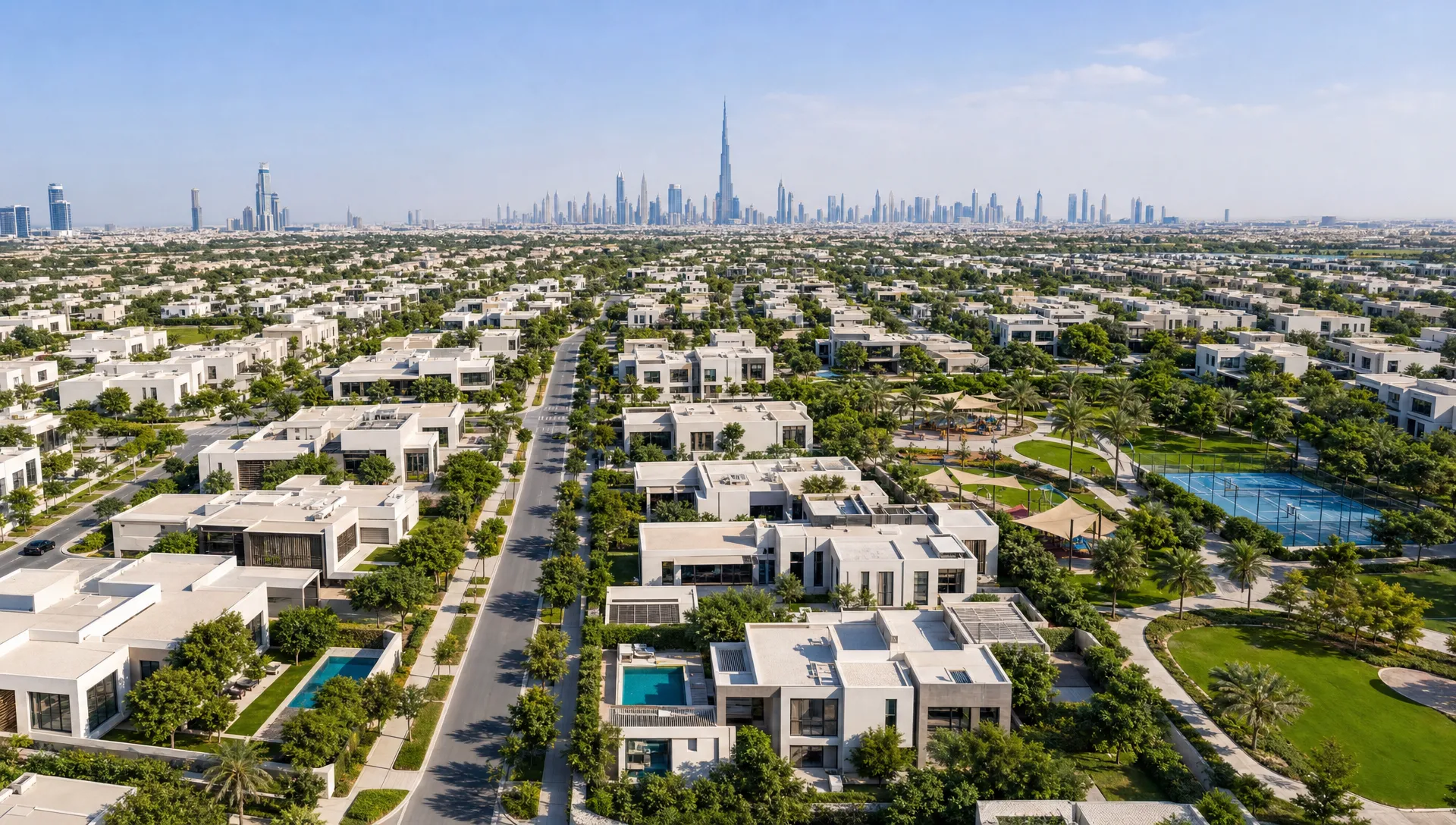
How to calculate ROI before you buy
A villa investment should never be judged by expected rent alone. You need to compare gross yield, net yield, and total return.
Gross yield is annual rent divided by purchase price. For example, if a villa costs AED 4,000,000 and rents for AED 260,000 per year, the gross yield is 6.5 percent.
Net yield subtracts recurring costs such as service charges, maintenance, insurance, property management, vacancy allowance, and other ownership expenses. This is the more useful number because it shows what you may actually keep before financing and tax considerations in your home country.
Total return adds potential capital appreciation or loss to the income return. This matters because a lower-yield villa in a prime, land-scarce location may outperform a higher-yield property in a less liquid area if resale prices rise faster.
| Metric | What it tells you | Why it matters |
|---|---|---|
| Gross yield | Rent compared with purchase price | Quick first filter, but incomplete |
| Net yield | Income after recurring costs | More realistic cash-flow view |
| Vacancy allowance | Expected empty periods between tenants | Protects against optimistic projections |
| Capital growth | Potential resale price increase | Important for long-term wealth creation |
| Exit liquidity | Ease of selling later | Crucial if your plans change |
If you are financing the purchase, calculate returns both before and after mortgage costs. A villa can have a positive long-term outlook but still create monthly cash-flow pressure if loan payments, maintenance, and vacancy are underestimated.
Best villa types for living
For end users, the best villa is usually the one that fits real life, not just the one with the most impressive finishes. A slightly smaller home in the right community can be far better than a larger villa in a location that disrupts your daily routine.
Family buyers often benefit from prioritizing:
- Established communities with schools, healthcare, retail, and leisure nearby
- Layouts with practical bedroom distribution and enough storage
- Good natural light without excessive heat exposure
- Parking that works for the household and guests
- Manageable gardens, pools, and outdoor areas
- Quality maintenance history and clear ownership documents
Plot orientation is often overlooked. In Dubai’s climate, how sunlight hits the garden, pool, and main living areas can affect comfort and cooling costs. Privacy also matters, especially in communities where villas are close together. A villa facing a park, green strip, or quiet internal road may feel very different from one on a busy access street.
Best villa types for ROI
For investors, the best villa is usually one with broad tenant appeal and a clear resale story. Ultra-personalized interiors, unusual layouts, or overbuilt extensions can reduce the buyer pool. A villa does not need to be plain, but it should be easy for the next tenant or buyer to imagine living in it.
ROI-focused buyers should pay attention to:
- Entry price compared with recent transactions in the same community
- Rent achieved for similar villas, not just asking rents
- Upcoming supply that could compete for tenants
- Maintenance condition and expected capital expenditure
- Developer reputation and community management quality
- Exit demand from both investors and end users
In many cases, the best investment villa is not the cheapest one. A low price may reflect poor condition, weak location within the community, legal issues, unpopular layout, or high future costs. The goal is value, not simply discount.
For area research, compare family demand, infrastructure, and price trends across communities using a current market guide such as Best Areas to Buy Property in Dubai.
Ready villa or off-plan villa?
The choice between ready and off-plan depends heavily on whether you are buying to live or invest.
A ready villa is usually better if you want to move soon, inspect the actual property, understand the community, and estimate rent based on real market evidence. It gives you more certainty, but it may require a larger upfront payment and immediate maintenance checks.
An off-plan villa may suit investors or future residents who can wait for handover and want staged payments. It can offer attractive pricing or newer amenities, but it carries construction, handover, and market timing risks. You are buying based on plans, developer promises, and future community potential, so due diligence becomes even more important.
If you are undecided, the comparison of off-plan vs ready property in Dubai can help you weigh flexibility, risk, and timing.
Can one villa deliver both lifestyle and ROI?
Yes, but it requires discipline. The best dual-purpose villa is one you would genuinely enjoy living in and one that a future tenant or buyer would also value. This usually means buying in a community with proven demand, choosing a practical layout, avoiding extreme customization, and paying a price supported by comparable sales.
A dual-purpose buyer should think like an end user and an investor at the same time. Ask whether the villa improves your daily life today, then ask whether it remains attractive if you need to rent it out or sell it later. Life changes, business relocations, school decisions, and market cycles can all affect your plans.
The strongest overlap usually appears in villas with:
- Family-friendly layouts and bedroom sizes
- Good community facilities and access roads
- Limited maintenance surprises
- Neutral, durable finishes
- A plot that offers privacy or a useful outdoor space
- Resale appeal across multiple buyer groups
If a villa only works because you personally love one unusual feature, treat that as lifestyle value, not investment value.
Common mistakes to avoid
The first mistake is buying based on emotion alone. Villas are high-value assets, and a stunning entrance, pool, or staged interior can distract from pricing, maintenance, and location weaknesses.
The second mistake is relying on asking prices instead of transaction evidence. Sellers can ask anything. Buyers should compare recent sales, current competition, rental evidence, and days on market where possible.
The third mistake is ignoring total ownership cost. A villa may feel affordable at purchase but become expensive through landscaping, AC maintenance, pool service, repairs, upgrades, and community fees.
The fourth mistake is assuming every luxury villa will appreciate. Luxury demand is strong in parts of Dubai, but the segment is selective. Prime location, scarcity, design quality, and buyer depth matter more than price alone.
The fifth mistake is not planning your exit. Even if you are buying to live, ask who might buy the villa from you later. A property with a larger future buyer pool is usually safer than one that depends on finding a very specific buyer.
So, should you buy a villa in Dubai for living or ROI?
Buy for living if your priority is stability, space, family lifestyle, and control over your home environment. This is especially sensible if you plan to stay long enough to absorb buying costs and benefit from long-term ownership.
Buy for ROI if you can evaluate the villa like a business asset. That means calculating net yield, understanding tenant demand, budgeting maintenance, comparing transaction evidence, and having a clear exit strategy.
Buy for both only when the property passes both tests. It should improve your quality of life and still make sense to a future tenant or buyer. In Dubai’s villa market, the strongest decisions are rarely based on hype. They are based on location, land, layout, legal clarity, realistic costs, and disciplined pricing.
Frequently Asked Questions
Is it better to buy a villa or apartment in Dubai for ROI? Apartments can sometimes offer lower entry prices and easier rental management, while villas may offer stronger land value, family demand, and long-term scarcity in selected communities. The better option depends on net yield, location, maintenance costs, and resale liquidity.
What is the best area to buy a villa in Dubai? There is no single best area for every buyer. Families may prioritize schools and community amenities, while investors may focus on rental demand, entry price, and future growth. Established communities and well-connected emerging areas should both be compared carefully.
Can foreigners buy villas in Dubai? Foreign buyers can purchase property in designated freehold areas in Dubai. Always confirm the property’s ownership structure, title status, and registration process through official sources and qualified professionals before signing.
Is buying a villa in Dubai a good long-term investment? It can be, especially when the villa has strong location fundamentals, practical design, limited competing supply, and manageable ownership costs. However, returns are not guaranteed, so buyers should run conservative numbers and avoid overpaying.
Should I buy a ready villa or an off-plan villa? A ready villa offers more certainty because you can inspect it and assess the existing community. An off-plan villa may offer staged payments and newer designs, but it carries delivery and market timing risk. The right choice depends on your timeline and risk tolerance.
Ready to compare Dubai villas with confidence?
Whether you are buying for your family, rental income, or long-term capital growth, start by comparing real options side by side. On Best Property in Dubai, you can explore updated villa listings, use search filters, review photos and virtual tours, save favorites, compare properties, and contact agents or owners directly.
The right villa should not only look good today. It should still make sense tomorrow, financially, practically, and emotionally.


Join The Discussion