
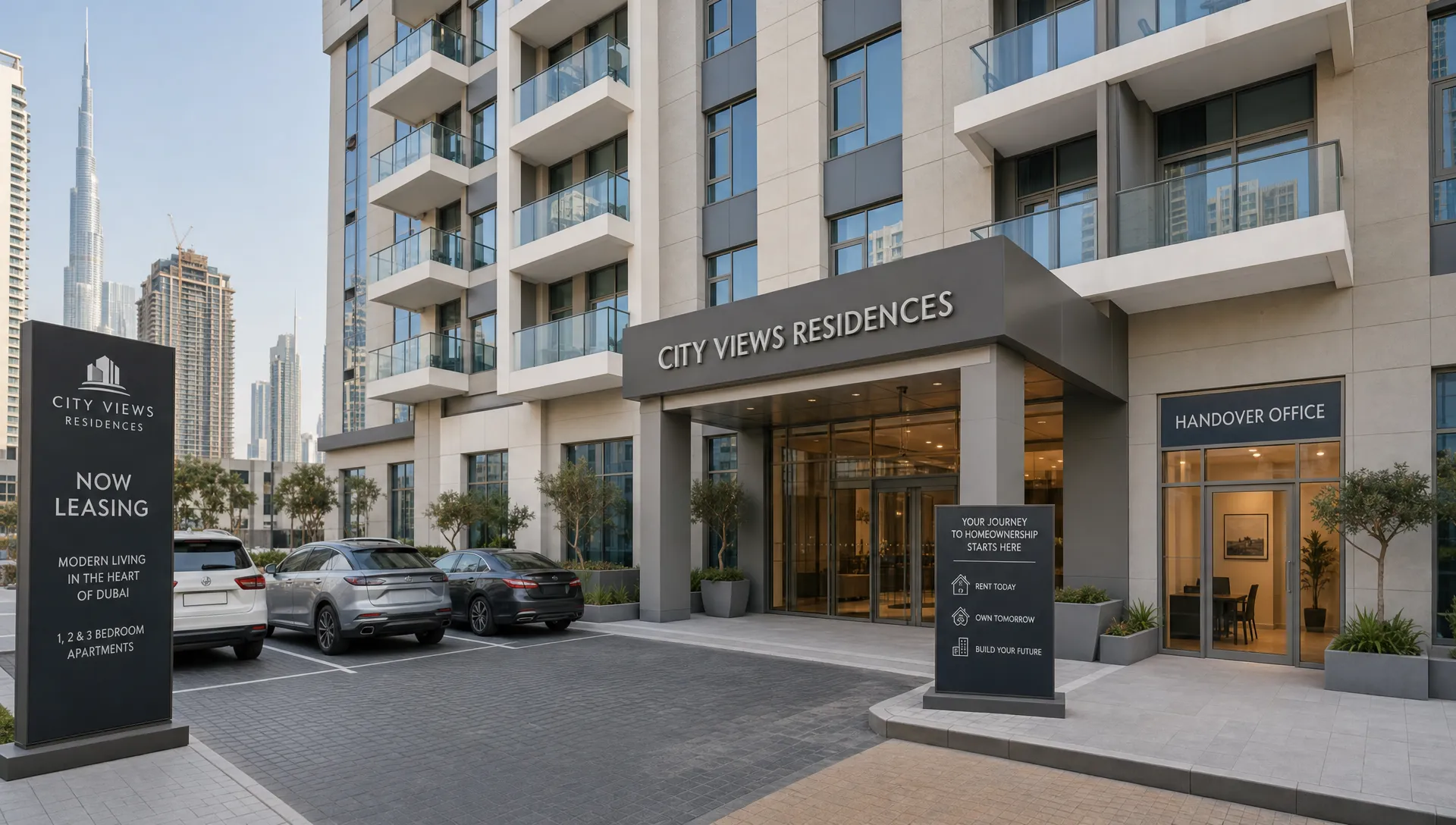
Rent-to-own sounds simple: you live in the home as a tenant, then a portion of what you pay helps you buy it later. In practice, rent-to-own property in Dubai needs careful reading because every agreement can be structured differently.
For first-time buyers, the appeal is obvious. Dubai property prices can move quickly, mortgage approvals take planning and the upfront cash required for a traditional purchase can feel high. A rent-to-own arrangement may create a bridge between renting and buying, but it is not a shortcut around due diligence, affordability checks or legal review.
This guide explains how rent-to-own usually works in Dubai, what to check before signing and how to decide whether it is better than continuing to rent or buying through a standard mortgage.
What does rent-to-own mean in Dubai?
A rent-to-own arrangement is a property agreement where a tenant occupies a home and has the right, or in some cases the obligation, to buy it after a set period. The monthly or annual payment is usually higher than normal rent because part of the payment may be credited toward the future purchase.
The key detail is that you do not automatically own the property just because you have paid rent for several years. Ownership normally transfers only when the sale is completed and registered with the Dubai Land Department, the official authority for real estate registration in Dubai.
Most rent-to-own offers fall into one of these broad structures:
| Structure | How it usually works | What first-time buyers should check |
|---|---|---|
| Lease with option to buy | You rent the property and can choose to buy it later at an agreed price or under an agreed pricing formula | Whether the option is enforceable, how long it lasts and what happens if you walk away |
| Lease with purchase obligation | You rent now but commit to buying by a future date | Default penalties, financing deadlines and your ability to complete the purchase |
| Developer payment plan marketed as rent-to-own | Payments are spread over time, sometimes after handover, with eventual transfer of ownership | Whether it is truly a lease first or simply a sale with staged payments |
| Islamic Ijara style finance | A bank or finance provider owns the property while the buyer makes lease style payments | Finance approval terms, bank fees and whether the product suits your circumstances |
These models are not interchangeable. A casual marketing phrase is not enough. The written agreement is what determines your rights.
Who is rent-to-own best suited for?
Rent-to-own may suit a first-time buyer who is confident about staying in Dubai, has stable income and expects to qualify for a mortgage or complete the purchase later. It can also appeal to buyers who want to lock in a home before they have the full deposit ready.
It is less suitable if your job situation is uncertain, you may relocate within a year or two or you are already stretching to afford the monthly payment. The arrangement often works only if you complete the purchase. If you do not, the premium you paid above market rent may be partly or fully lost, depending on the contract.
Foreign buyers should also confirm whether the property is in an area where they are allowed to own. Dubai has designated freehold areas where non-UAE nationals can purchase property, but the ownership type matters. If this is your first purchase, it is worth reviewing how freehold property in Dubai works for foreign buyers before you assess any rent-to-own offer.
How the process typically works
Although each deal is different, a rent-to-own purchase in Dubai often follows a familiar sequence.
- You identify a suitable property: The property may be offered by a developer, private seller or investor owner. You should compare it with similar homes in the same community, not only with other rent-to-own advertisements.
- You negotiate the purchase terms upfront: The future sale price, payment period, rent credit and completion date should be stated clearly. If the price will be adjusted later, the formula should be precise.
- You sign the lease and purchase documentation: A true lease component should usually be registered through Ejari. The purchase component may require separate sale documentation, registration steps or legal protections depending on the structure.
- You make regular payments: Each payment may include normal rent, a purchase credit, a premium or a combination of these. The contract should show exactly how the money is allocated.
- You complete the purchase: At the agreed time, you pay the remaining balance through cash or mortgage finance, then the transfer is completed with the Dubai Land Department.
If any of these steps are vague, pause. Rent-to-own depends on clarity. A deal that relies on future goodwill is risky, especially when large sums are paid before title transfer.
For a wider overview of the standard purchase journey, financing questions and first-time buyer preparation, see this Dubai sale home guide for first-time buyers.
Costs first-time buyers should calculate
The biggest mistake is comparing the rent-to-own payment only with normal monthly rent. You also need to compare the future purchase price with today’s market value, estimate the cash you will need at completion and understand what you lose if you do not buy.
At the time of writing, buyer budgets in Dubai commonly include the Dubai Land Department transfer fee, often 4 percent of the purchase price, plus trustee, registration or administration charges. If a broker, mortgage or conveyancer is involved, additional fees may apply. Always verify current costs before signing because fees and lender requirements can change.
| Cost item | Why it matters | Questions to ask |
|---|---|---|
| Option fee or upfront deposit | May secure your right to buy, but may not be refundable | Is it credited to the purchase price, refundable or forfeited if you do not complete? |
| Monthly or annual payment | Often higher than market rent | How much is rent and how much is purchase credit? |
| Purchase price | Determines whether the deal is fair | Is the price fixed, indexed or renegotiated later? |
| Service charges | Can be significant in apartment communities | Who pays them before title transfer? |
| Maintenance costs | Repairs can become a dispute point | Which repairs are tenant costs and which remain the owner’s responsibility? |
| Transfer and registration fees | Due when ownership transfers | Who pays each fee and when must funds be available? |
| Mortgage related costs | Needed if you finance the final balance | Can you qualify by the completion date? |
A rent credit is only valuable if you complete the purchase. If your agreement says AED 50,000 per year is credited toward the purchase but that credit is forfeited when you withdraw, treat it as money at risk until you are certain you can buy.
How to tell if a rent-to-own offer is fairly priced
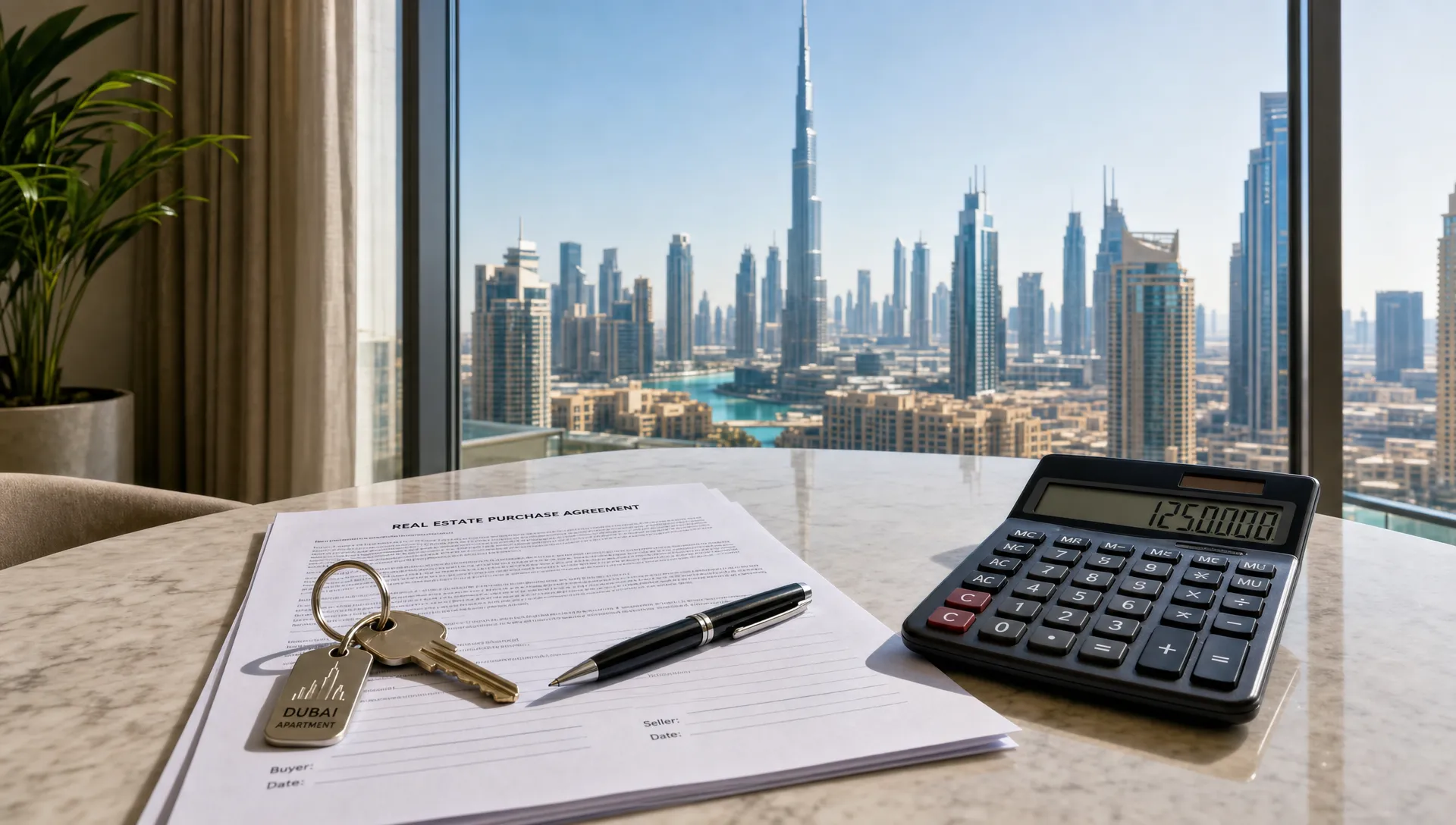
Start with three numbers: normal market rent, comparable sale prices and the rent-to-own payment. You need all three to see the real cost.
Imagine a similar apartment rents for AED 100,000 per year. A rent-to-own offer asks for AED 135,000 per year and says AED 45,000 will be credited toward your purchase. If you buy successfully, your effective annual occupancy cost may feel closer to AED 90,000 because the credit reduces the purchase balance. If you do not buy, the contract may treat the AED 45,000 as forfeited, making your actual annual cost AED 135,000.
That difference is the risk premium. It may be acceptable if the purchase price is fair, your financing plan is realistic and you truly intend to own the property. It is a poor deal if the sale price is inflated, the rent credit is conditional or the contract gives the owner broad rights to cancel.
When benchmarking the property, compare size, building age, view, floor level, service charges, handover condition and community facilities. A cheap looking monthly plan can hide an overpriced sale price. You can also compare current property for sale in Dubai across different budgets to understand what a similar upfront purchase might cost.
Contract terms that matter most
A rent-to-own agreement should be reviewed by a qualified professional before you sign. This is especially important because you may be combining lease rights, purchase rights and financing assumptions in one transaction.
Pay close attention to these clauses:
- Purchase price: The contract should state the exact price or a clear pricing formula. Avoid vague wording that leaves the price to future negotiation.
- Rent credit: It should specify the amount credited, when it is applied and whether it is refundable if the sale does not complete.
- Option versus obligation: Know whether you have the choice to buy or a binding duty to buy.
- Default rules: The agreement should explain what happens if you miss a payment, cannot get a mortgage or need to exit early.
- Title and ownership status: Confirm that the seller has the right to sell, the title is clean and there are no undisclosed restrictions.
- Maintenance and service charges: Do not assume normal tenant rules apply if the contract shifts owner type costs to you.
- Transfer timeline: The completion date, notice requirements and payment method should be clear.
- Dispute process: The agreement should identify the relevant forum or legal route for resolving disputes.
One warning sign is pressure to sign quickly without full documentation. Another is a large upfront payment described loosely as a deposit, token, premium or reservation fee without a clear refund or credit rule.
Rent-to-own versus mortgage purchase versus renting
Rent-to-own is not automatically better than a mortgage or traditional rent. It solves a specific problem: you want a path to ownership but cannot, or do not want to, complete a standard purchase immediately.
| Option | Main advantage | Main drawback | Best fit |
|---|---|---|---|
| Continue renting | Flexibility and lower commitment | No ownership benefit and rent may rise | Buyers unsure about location, job stability or long-term plans |
| Buy with mortgage | Clear ownership path once transfer is complete | Requires deposit, approval and upfront costs | Buyers with savings, stable income and readiness to commit |
| Rent-to-own | Time to occupy and work toward purchase | Contract complexity and risk of losing credits | Buyers committed to a specific property who need time to complete |
The right choice depends on certainty. If you are still exploring communities, standard renting may be smarter. If you already have deposit funds and mortgage preapproval, a direct purchase may be cleaner. If you have strong income but need time to build the final deposit, rent-to-own may deserve consideration.
Due diligence checklist before you sign
Before committing, slow the process down and verify the basics. A good rent-to-own opportunity should survive detailed questions.
Ask for proof of ownership and check that the person signing has authority to sell. Review the title status, building condition, service charge history and any owner association rules. Confirm whether the property is vacant, mortgaged or subject to any existing tenancy. If a mortgage exists on the property, ask how it will be cleared when you complete the purchase.
You should also speak with lenders early. A rent-to-own contract does not guarantee future mortgage approval. Banks will still assess your income, liabilities, credit profile, age, employer, property type and valuation at the time you apply. If the final purchase depends on financing, your timeline should include enough room for preapproval, valuation and final offer issuance.
Finally, think like both a tenant and a buyer. As a tenant, you need a livable home with clear repair responsibilities. As a buyer, you need a property that will still be worth owning when the purchase date arrives.
When to walk away
Some rent-to-own offers are not worth the risk. Be cautious if the seller refuses to document the purchase option, will not confirm how payments are allocated or offers a future sale price far above comparable properties. You should also be wary if the contract says all credits are forfeited after a minor delay or if you cannot independently verify ownership.
A deal is also risky if it leaves your future financing to chance. If you know you are unlikely to qualify for a mortgage by the completion date, paying a high rent-to-own premium may simply make saving harder.
The best rent-to-own agreements are transparent. You know the price, the timeline, the amount credited, the exit rules and the registration path. If those points are unclear, keep looking.
Frequently Asked Questions
Is rent-to-own property in Dubai common? It exists, but it is less common than standard renting, mortgage purchases or developer payment plans. Availability depends on market conditions, seller motivation and developer offers.
Do I own the property during the rental period? Usually no. You normally remain a tenant until the purchase is completed and the ownership transfer is registered with the Dubai Land Department.
Can foreigners buy through rent-to-own in Dubai? Foreign buyers can own property in designated freehold areas, subject to the property type and applicable rules. The rent-to-own structure does not remove the need to confirm ownership eligibility.
What happens if I decide not to buy? It depends entirely on the contract. Some agreements let you walk away but forfeit the option fee or rent credits. Others may impose stronger penalties if you had an obligation to purchase.
Is rent-to-own cheaper than getting a mortgage? Not necessarily. It may reduce immediate upfront pressure, but the total cost can be higher if the payment premium, purchase price or forfeiture rules are unfavorable.
Should I use a lawyer or conveyancer? Yes. Because rent-to-own combines lease and purchase issues, independent legal or conveyancing review is strongly recommended before you pay a deposit or sign.
Find a Dubai property path that matches your budget
Rent-to-own can be useful for first-time buyers, but only when the numbers, documents and timeline make sense. Treat it as a serious property purchase from day one, not just a rental with a possible bonus later.
If you are comparing rent-to-own with standard buying or renting, Best Property in Dubai can help you explore current UAE listings, filter by property type and location, review detailed listing information and contact agents directly. The more options you compare, the easier it becomes to spot a fair deal and avoid an expensive commitment that does not fit your plans.


Join The Discussion