
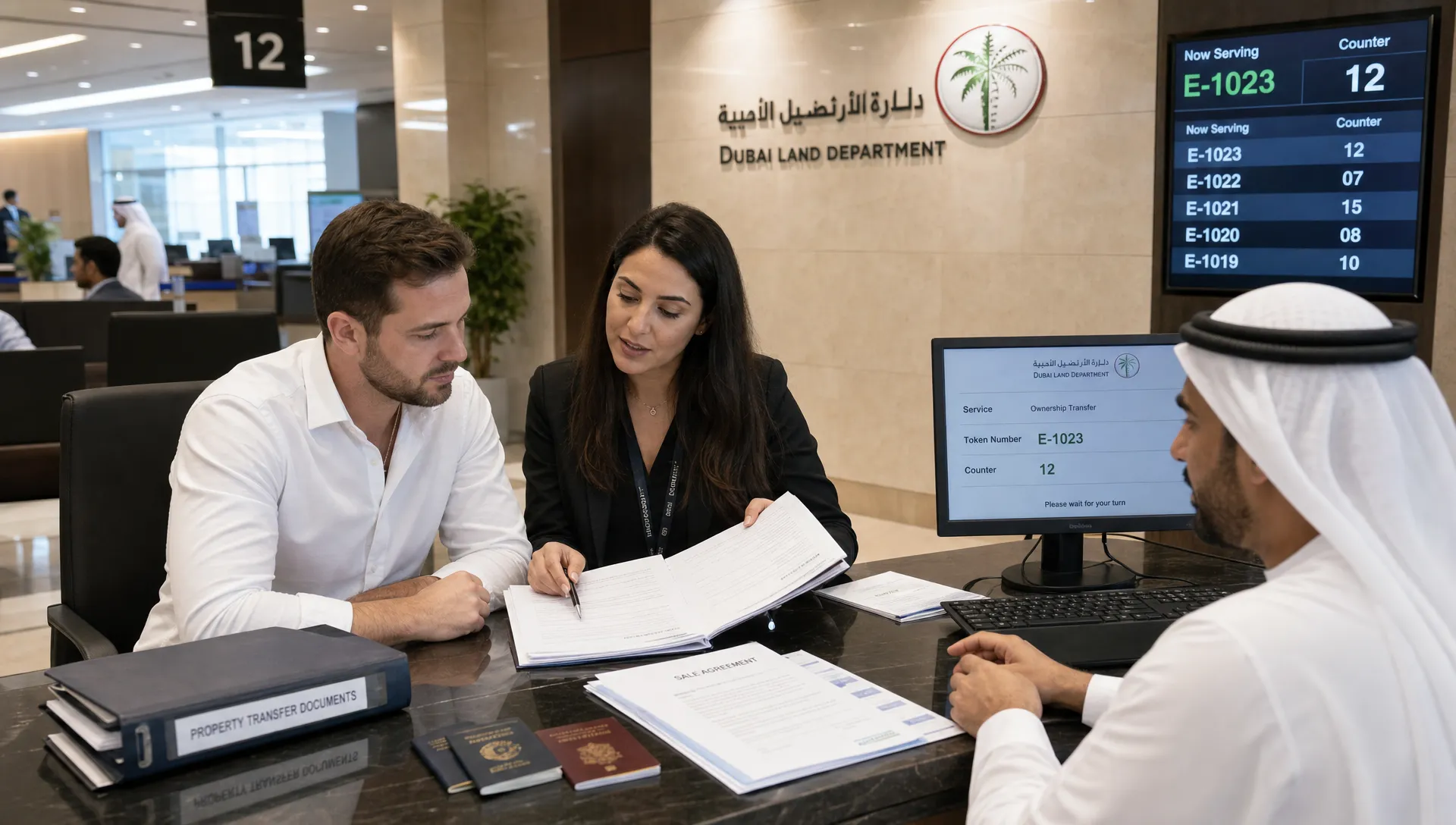
Dubai remains one of the most accessible major real estate markets for international buyers. Foreign investors can purchase property in designated areas, choose from ready and off-plan homes and, in many cases, complete the transaction without being physically present for every step. That openness is attractive, but it also creates a common problem: buyers move too quickly because the process looks simpler than it really is.
Buying property in Dubai as a foreigner is not just about finding a good-looking apartment or villa. You need to confirm ownership rights, understand the full cost of the transaction, check the developer or seller, compare communities realistically and make sure your payment structure matches your financial plan.
This guide focuses on the mistakes foreign buyers make most often, and how to avoid them before you sign a Form F, reserve an off-plan unit or transfer funds.
Can foreigners buy property in Dubai?
Yes. Foreign nationals can buy property in Dubai in designated freehold areas, subject to the rules set by the Dubai government. In these areas, a foreign buyer may generally own the property and the land interest attached to it, depending on the project and title structure.
The key point is that not every property in Dubai is available for full foreign ownership. Some areas and ownership structures may be leasehold, usufruct or otherwise restricted. Before comparing prices, you should confirm whether the property is in a foreign-buyer eligible area and what type of title you will receive.
If you are still unclear on the difference between freehold, leasehold and other ownership structures, Best Property’s guide to freehold property in Dubai for foreign buyers is a useful starting point.
Mistake 1: Assuming every Dubai property is available to foreign buyers
This is one of the first mistakes to avoid. Dubai has many communities where foreign buyers are active, such as Dubai Marina, Downtown Dubai, Business Bay, Jumeirah Village Circle, Dubai Hills Estate, Palm Jumeirah and other designated zones. Still, eligibility should never be assumed from the listing alone.
Before paying a booking deposit, ask for written confirmation of the ownership type and check whether the property is registered with the Dubai Land Department. For off-plan property, confirm that the project is registered and that payments go to an approved escrow account.
This matters because the legal rights attached to a property affect resale, inheritance planning, financing, service charges and long-term flexibility. A lower price is not a bargain if the ownership structure does not match your objective.
Mistake 2: Budgeting only for the advertised price
Many foreign buyers calculate affordability using the sale price alone. That creates a gap between the budget they expect and the cash they actually need at transfer.
In Dubai, you should plan for transaction costs, agent fees, mortgage-related charges if financing and ongoing ownership costs. The Dubai Land Department transfer fee is commonly 4% of the property value, usually paid by the buyer unless otherwise negotiated. Agency commission is often 2% plus VAT for resale transactions, though exact terms should be confirmed in your agreement.
Here is a simple cost planning table for a typical resale purchase:
| Cost item | What to check | Why it matters |
|---|---|---|
| Purchase price | Final agreed price in the sale agreement | Main transaction value and basis for many fees |
| DLD transfer fee | Commonly 4% of property value | Large upfront cost that buyers sometimes forget |
| Agency commission | Often 2% plus VAT in resale deals | Should be agreed before signing |
| Trustee office fees | Depends on transaction type and value | Paid during transfer appointment |
| Mortgage costs | Bank valuation, arrangement fees, registration | Can change your upfront cash requirement |
| Service charges | Annual community or building charges | Affects rental yield and long-term holding cost |
| Maintenance and furnishing | Especially for older or unfurnished units | Impacts move-in or rental readiness |
For off-plan purchases, you also need to understand payment milestones, handover fees, developer administration charges and whether the quoted price includes parking, storage or other items.
A buyer who budgets carefully can compare properties more accurately. A unit with a slightly higher price but lower service charges or fewer immediate repairs may be a better investment than a cheaper unit with hidden costs.
Mistake 3: Not checking the agent, seller or developer
Dubai’s real estate market is regulated, but buyers still need to verify who they are dealing with. A professional-looking listing is not enough.
For resale property, confirm that the seller is the legal owner or that the representative has a valid power of attorney. Ask to see the title deed, Emirates ID or passport details for the seller where appropriate and the signed listing or agency authority. The transaction should be handled through proper Dubai Land Department and Real Estate Regulatory Agency procedures.
For off-plan property, check the developer’s track record, project registration and escrow arrangements. Dubai’s escrow system is designed to protect buyer payments for registered off-plan projects, but you should still make sure you are paying into the correct project escrow account, not a personal or unrelated business account.
The Dubai REST app and Dubai Land Department digital services can help buyers access official property-related services and information. When in doubt, verify through official channels before transferring money.
Mistake 4: Confusing reservation with ownership
A booking form, expression of interest or reservation payment does not mean you own the property. Foreign buyers sometimes feel locked in after paying a small deposit, then discover conditions they did not understand.
In a resale transaction, the key document is usually the Memorandum of Understanding, commonly known as Form F. It sets out the agreed price, deposit, completion date and conditions. In an off-plan purchase, the sale and purchase agreement with the developer governs the buyer’s rights and obligations.
Read every clause before signing. Pay particular attention to:
- Refund conditions for reservation deposits
- Penalties for buyer or seller default
- Completion timelines and extension rights
- Mortgage approval conditions if you are financing
- Service charge responsibility before and after transfer
- Handover conditions for off-plan property
If a clause is unclear, get advice before signing rather than trying to fix the issue after payment.
Mistake 5: Choosing a community based only on rental yield
Dubai investors often compare communities by gross rental yield. Yield matters, especially if the property is being bought as an investment, but it should not be the only factor.
A high-yield property may come with higher tenant turnover, older building systems, upcoming maintenance costs or limited capital appreciation. A lower-yield property in a stronger location may offer better liquidity when you sell.
Foreign buyers should compare communities using a wider lens: tenant demand, public transport, schools, road access, building quality, service charges, future supply and resale depth. For lifestyle purchases, you also need to think about noise levels, commute patterns, parking and building management.
If you are comparing live options, using a platform with filters for location, price, property type and features can help narrow your shortlist. Best Property lets buyers explore properties for sale and rent across the UAE with detailed listings, photos and direct contact options, which is useful when you are comparing neighborhoods remotely.
Mistake 6: Underestimating service charges and building condition
Service charges can materially affect your net return. Two apartments with the same purchase price and rent can produce different results if one has significantly higher annual charges.
Service charges are usually linked to building facilities, maintenance quality, community management and shared amenities. Luxury towers with pools, gyms, concierge services and extensive common areas may cost more to run. Older buildings may have lower purchase prices but require closer inspection for maintenance, chiller systems, lifts, waterproofing and common-area upkeep.
Before buying, ask for the latest service charge information and compare it with similar buildings nearby. For resale units, inspect the property carefully and request information on outstanding service charges, notices or building issues.

Mistake 7: Treating off-plan property as risk-free
Off-plan property can be attractive because of staged payment plans, new construction and potential capital growth before completion. It can also carry risks that are different from buying a ready unit.
The main risks include construction delays, changes in market conditions, payment stress if your income changes and differences between marketing visuals and the final delivered property. A reputable developer and registered project reduce risk, but they do not eliminate it.
Before buying off-plan, check the developer’s delivery history, the project’s registration status, escrow payment details, construction progress and handover terms. Read the sale and purchase agreement carefully, especially clauses on delays, specifications, defect liability and cancellation.
Do not rely only on showroom finishes or promotional brochures. Ask practical questions about parking allocation, unit orientation, view protection, building facilities, handover charges and service charge estimates.
Mistake 8: Ignoring currency and transfer risks
Foreign buyers often earn income in another currency but buy property priced in UAE dirhams. Since the dirham is pegged to the US dollar, buyers from countries with floating currencies can see their real cost change significantly between reservation and completion.
This is especially important for off-plan purchases with multi-year payment plans. A buyer from Europe, the UK, India or another non-dollar market may find that currency movement changes the affordability of future installments.
Speak with your bank or a regulated foreign exchange provider before committing. Plan transfer timing, bank charges and documentation requirements. Large international transfers may require source-of-funds checks, so keep salary records, sale agreements, bank statements and tax documents organized.
Mistake 9: Assuming property purchase automatically guarantees residency
Dubai property ownership may support eligibility for certain UAE residence visa routes if minimum property value and other conditions are met, but the rules can change and not every purchase qualifies. Buyers should not treat a property purchase as an automatic visa guarantee.
The UAE government provides official guidance on residence visa categories, including property-related options, through government channels. Always verify current criteria before you buy if residency is part of your plan.
Important details can include the property value, completion status, mortgage level, title deed status and whether the property is jointly owned. If visa eligibility is a major reason for purchasing, get professional immigration advice before signing the property contract.
Mistake 10: Skipping legal and technical due diligence
Some buyers complete transactions quickly because they trust the agent, developer or seller. Trust is helpful, but due diligence protects you when something goes wrong.
For a resale property, check the title deed, seller identity, outstanding mortgage, service charge clearance, tenancy contract if rented and physical condition. If the property is tenanted, review the tenancy terms and whether eviction or rent increase rules affect your plan.
For a ready villa or townhouse, technical inspection is especially important. Look for water leaks, AC performance, roof condition, drainage, boundary issues and unauthorized modifications. For apartments, inspect AC, plumbing, windows, balcony drainage, appliances if included and signs of poor building maintenance.
Best Property has a more detailed checklist on what to check before you buy real estate property, which can help you structure your review before committing.
Mistake 11: Not understanding mortgages before making an offer
Foreign buyers can obtain mortgages in Dubai, subject to bank approval, income checks, residency status, age, credit profile and property eligibility. Non-resident mortgage options may be more limited than resident options and down payment requirements can be higher.
The UAE Central Bank sets loan-to-value rules for mortgages, but individual banks also apply their own policies. A buyer who assumes they can borrow a certain amount may face delays or lose a deposit if approval does not come through.
Before making an offer, get a mortgage pre-approval if you need financing. Confirm the maximum loan amount, interest rate type, fees, insurance requirements and whether the target property is acceptable to the bank. Add a mortgage condition to the agreement where possible so your position is clearer if financing is not approved.
Cash buyers should still prepare proof of funds and source-of-funds documents. A fast cash offer can be attractive to sellers, but only if funds are ready and transferable.
Mistake 12: Overlooking resale liquidity
A property can look attractive today but be difficult to sell later. Resale liquidity depends on location, building reputation, floor plan, view, service charges, parking, developer quality and demand from both end users and investors.
Foreign buyers should think about their exit before they buy. A highly customized layout, awkward view, very high service charge or oversupplied micro-location can reduce the future buyer pool. In contrast, properties with practical layouts, good maintenance, clear title, strong transport links and realistic pricing tend to be easier to resell.
This is particularly important if your investment horizon is short. Transaction costs mean you usually need either price growth, rental income or both to make the investment worthwhile.
A safer buying process for foreign buyers
The exact process varies between ready and off-plan property, but the safest approach follows a simple logic: verify, budget, negotiate, document and transfer through official channels.
For most foreign buyers, the process looks like this:
- Define your goal: Decide whether you are buying for personal use, rental income, capital growth, residency planning or portfolio diversification.
- Choose eligible areas: Focus only on communities where foreign ownership fits your plan and budget.
- Shortlist carefully: Compare price, service charges, building quality, rental demand, developer reputation and resale potential.
- Verify documents: Check title, seller authority, project registration, escrow details and fee obligations.
- Secure financing early: Get mortgage pre-approval before committing if you are not buying fully in cash.
- Review contracts: Understand deposits, default clauses, payment dates, handover terms and transfer conditions.
- Transfer officially: Complete payments and ownership transfer through approved banking and Dubai Land Department channels.
For a broader walkthrough of the buying process, you can also review Best Property’s guide on how to buy a property in Dubai.
Quick checklist before you pay a deposit
Before paying any reservation fee or deposit, pause and confirm the essentials. This is the stage where many mistakes are still easy to prevent.
| Question | Why it matters |
|---|---|
| Is the property in a foreign-buyer eligible area? | Confirms you can legally own the intended interest |
| Is the seller or developer verified? | Reduces fraud and authority risks |
| Are all fees included in your budget? | Prevents cash shortfalls at transfer or handover |
| Is the project registered if off-plan? | Helps confirm regulatory compliance |
| Are payments going to the correct account? | Protects against misdirected transfers |
| Have you reviewed service charges? | Affects net yield and holding cost |
| Have you checked the contract terms? | Clarifies deposit, default and completion obligations |
| Is financing approved or realistically available? | Reduces the risk of failed completion |
A good property decision is rarely rushed. In Dubai, strong opportunities move quickly, but a serious seller, agent or developer should still be able to provide the documents you need to make an informed decision.
Frequently Asked Questions
Can a foreigner buy property in Dubai without being a resident? Yes, non-residents can buy property in designated freehold areas in Dubai. Residency is not always required for purchase, but banks, visa rules and documentation requirements may differ for non-resident buyers.
What is the biggest mistake foreign buyers make in Dubai? The biggest mistake is committing before verifying the ownership type, total costs and legal documents. A property can look attractive online but still carry risks related to title, service charges, financing or contract terms.
Do foreigners get a title deed in Dubai? Foreign buyers can receive a title deed for eligible freehold property once the transaction is completed and registered with the Dubai Land Department. The exact rights depend on the property location and ownership structure.
Is buying off-plan property in Dubai safe for foreigners? Off-plan property can be a legitimate option when the project is registered, payments go to the approved escrow account and the developer has a credible track record. Buyers should still review the contract and understand delay, cancellation and handover terms.
How much extra should I budget beyond the purchase price? The amount depends on whether the property is resale or off-plan, cash or mortgage-financed. For resale, buyers commonly plan for the DLD transfer fee, agency commission, trustee fees, mortgage costs if applicable, service charges and moving or furnishing costs.
Can buying property in Dubai lead to a residence visa? Property ownership may support eligibility for certain UAE residence visa options if current requirements are met, but it is not automatic. Check official rules and get professional advice if residency is a key reason for buying.
Make your Dubai property search more informed
Buying property in Dubai as a foreigner can be straightforward when you know what to verify and where mistakes usually happen. The safest buyers are not the slowest buyers; they are the ones who ask the right questions before money changes hands.
Use clear filters, compare communities, review listing details and speak with qualified agents before committing. To start your search, explore updated UAE property listings on Best Property and build a shortlist that matches your budget, ownership goals and risk tolerance.


Join The Discussion