

Buying directly from a seller can be a smart way to purchase in Dubai, especially when the owner is responsive, the documents are clean and the price reflects the market. It can also be risky if you treat it like an informal private deal. A Dubai property transfer still has to move through the right legal, banking and Dubai Land Department channels.
If you are searching for property for sale in Dubai direct from owner, the goal is not to avoid all professional help. The goal is to avoid unnecessary friction while keeping every verification, payment and handover step documented. In practice, the safest direct purchase is a controlled transaction where the buyer, seller, bank, developer, trustee office and any conveyancer know exactly what happens next.
What buying direct from an owner really means in Dubai
A direct owner purchase means you negotiate with the registered seller rather than through a traditional listing agent. The owner may be an individual, a company or an investor reselling an off-plan unit before handover. The property can be vacant, tenanted, mortgaged or fully paid off.
The direct route does not remove Dubai’s formal transfer requirements. You still need to confirm ownership, check the property’s legal status, settle applicable fees, handle any mortgage release and complete the transfer through the approved process. Foreign buyers also need to make sure the property sits in an area where they are eligible to own, usually a designated freehold area.
Direct buying can reduce agency commission in some cases, but it should not become a do-it-yourself legal experiment. Many buyers still hire a conveyancer, independent valuer or inspection company. That cost is small compared with the risk of paying a deposit on the wrong assumptions. For a broader due diligence view, Best Property’s guide to key checks before buying residential property is a useful companion to this direct-owner checklist.
Why buyers consider direct owner deals
The biggest attraction is direct communication. You can ask the owner about service charges, renovation history, noisy neighbors, parking access, maintenance issues and why they are selling. In a strong negotiation, direct access can shorten the time between viewing, offer and agreement.
A direct deal may also make pricing more transparent. Some owners are realistic because they want a faster sale. Others overprice because they are emotionally attached to the property or are benchmarking against asking prices rather than completed transactions. That is why “direct from owner” should never be treated as a discount by default.
The trade-off is that you lose a layer of filtering. A good agent often checks documents, manages timelines and prevents unclear commitments from becoming disputes. Without that support, the buyer must be more disciplined. Every claim needs evidence and every payment needs a traceable, agreed purpose.
Verify the seller before you discuss money
Before paying a deposit or signing anything, confirm that the person negotiating has the legal right to sell. The name on the title deed should match the seller’s identification. If someone is acting through a power of attorney, the document must be current, valid for property sale and properly notarized or attested when required.
Company-owned properties need extra care. Ask for company documents, signing authority, board resolution if relevant and proof that the person signing can bind the company. If the property is inherited, under dispute or being sold after a divorce or corporate restructuring, pause until a qualified professional confirms the selling authority.
You should also verify the property record through official Dubai channels such as Dubai Land Department services or the Dubai REST app. Do not rely only on screenshots, forwarded PDFs or a seller’s verbal assurance that “everything is ready.”
| Check | What it helps confirm | Safety note |
|---|---|---|
| Title deed or Oqood record | Registered ownership or off-plan registration | Verify through official channels where possible |
| Seller passport or Emirates ID | Identity of the person selling | The name should match the ownership record or valid authority document |
| Power of attorney | Authority for a representative to sell | Confirm validity, scope and attestation before signing |
| Mortgage status | Whether a bank has a claim on the property | Ask for a liability letter or clearance route if mortgaged |
| Developer NOC | No objection to transfer and service charge status | Often required before resale transfer |
| Tenancy documents | Occupancy, rent and tenant rights | A valid tenancy can continue after sale |
Check the property status, not just the apartment or villa
A viewing tells you whether you like the home. It does not tell you whether the transfer will be clean. A safe buyer checks the ownership record, building status, developer requirements, service charges, mortgage position and tenancy status before making a binding commitment.
For completed properties, ask whether service charges are paid up to date and whether there are any pending disputes with the developer, owners association or facilities management company. For villas and townhouses, check whether extensions, landscaping changes, pool additions or structural works were properly approved.
For tenanted property, request the Ejari registration, tenancy contract, rental amount, security deposit details and any notices already served. If you need vacant possession, write that condition clearly into the agreement rather than relying on the seller’s promise that “the tenant will leave.”
Price a direct owner listing like any other Dubai listing
A direct deal only makes sense if the price works after all costs and risks are included. Compare the asking price against recent transactions, similar active listings, property size, view, floor level, furnishing, maintenance condition, parking spaces and building reputation.
Price per square foot is useful, but it is not enough. A high-floor apartment with a full marina view is not the same product as a lower-floor unit facing a service road, even if both are in the same tower. A renovated villa with approved upgrades can justify a premium, while a neglected property may need a repair discount.
When comparing property for sale in Dubai direct from owner against portal listings, separate asking prices from real market evidence. If you need a faster method, this guide on how to compare Dubai property listings quickly explains how to shortlist options without being distracted by weak listings.
Inspect before you commit
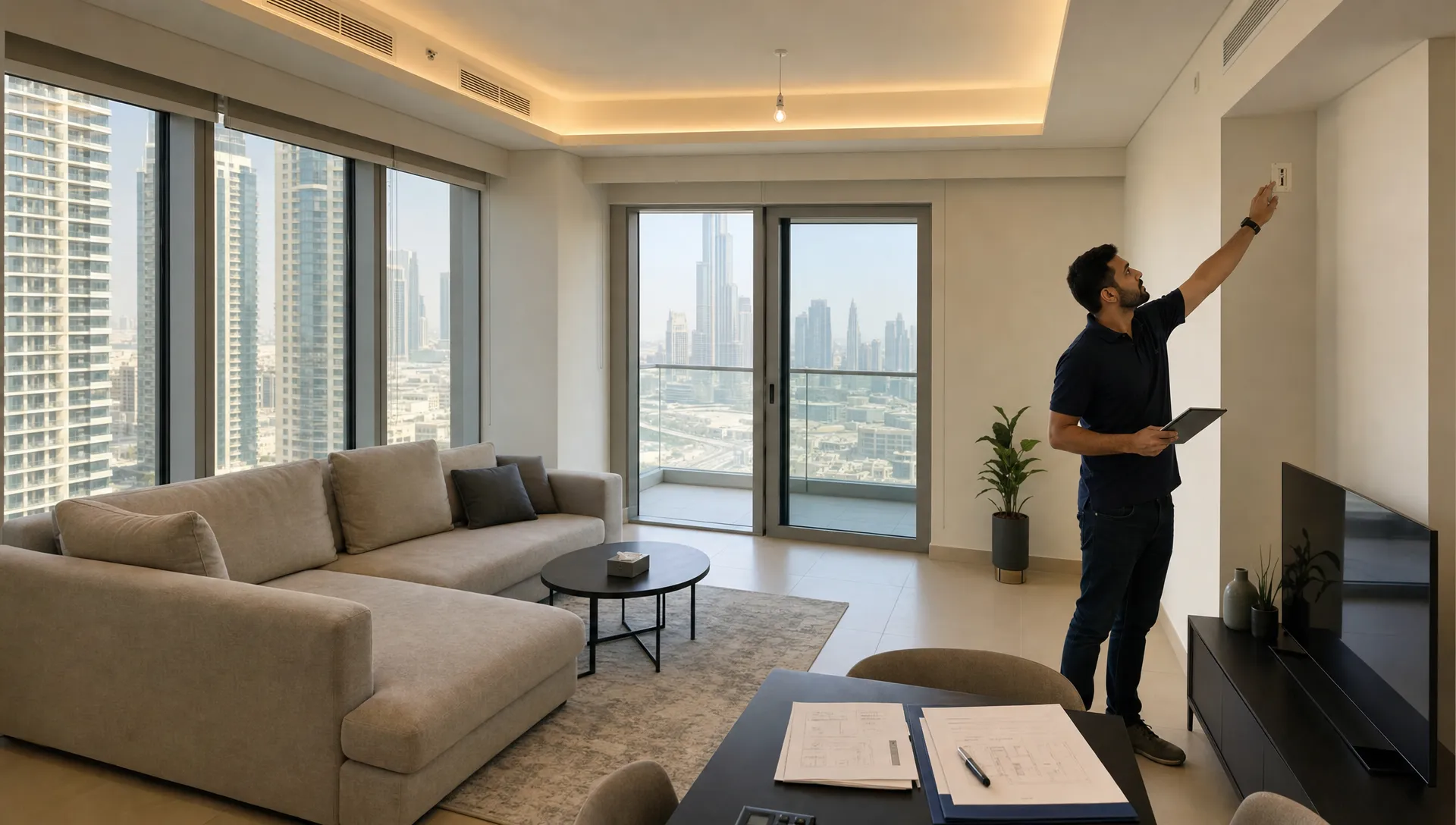
A direct seller may know the property better than anyone else, but that does not replace an independent inspection. Air conditioning, water pressure, electrical load, waterproofing, balcony drainage, windows, doors, built-in appliances and signs of damp should all be checked carefully. In Dubai, AC performance and water leaks deserve particular attention because repairs can be expensive and disruptive.
If the property is new or recently handed over, consider a snagging inspection. If it is older, ask for maintenance records and check whether repairs were done by approved contractors. For villas, inspect roof areas, boundary walls, pool equipment, irrigation and outdoor electrical points.
The principle is the same as comparing repair quotes in any market: UK homeowners might use HaMuch's local tradesperson comparison service before committing to building or electrical work, and Dubai buyers should also benchmark inspection, AC and maintenance costs locally before finalizing an offer.
Put every offer term in writing
Once you are satisfied with the price and documents, the offer needs more than a WhatsApp message. In broker-led Dubai transactions, RERA Form F is commonly used. In a private direct sale, buyers often use a memorandum of understanding or sale agreement prepared or reviewed by a conveyancer or legal professional.
The agreement should state the purchase price, deposit amount, payment method, deadline for developer NOC, target transfer date, responsibility for costs, mortgage settlement process if any and what happens if either party defaults. It should also clarify whether the property is sold vacant, tenanted, furnished or unfurnished.
Do not leave fixtures to interpretation. Write down whether kitchen appliances, curtains, wardrobes, lighting, smart home systems, outdoor furniture, pool equipment or maintenance contracts are included. Small misunderstandings can become expensive after transfer.
| Agreement term | Why it matters |
|---|---|
| Deposit handling | Prevents disputes over who holds the money and when it can be released |
| Transfer deadline | Keeps the seller, buyer, bank and developer aligned |
| Mortgage settlement | Avoids last-minute confusion if the seller’s bank must be paid first |
| Vacant possession | Confirms whether the buyer receives an empty property at handover |
| Furnishing schedule | Reduces arguments over what stays in the property |
| Default clauses | Explains the outcome if either side fails to complete |
Be careful with deposits and payment flow
A common resale deposit in Dubai is often around 10 percent, but the exact amount depends on the agreement. The safety issue is not just the size of the deposit, it is who holds it and under what conditions. Avoid transferring money directly to a personal account before title, identity and authority checks are complete.
Use a clear stakeholder arrangement where possible. The deposit should be held according to written terms that explain when it becomes refundable or non-refundable. If an owner pressures you to pay a quick “reservation fee” before documentation, treat that as a warning sign.
On transfer day, payments are typically handled through manager’s cheques or approved banking procedures at the trustee office or as required by the transaction structure. Dubai Land Department transfer fees are commonly budgeted at 4 percent of the property price, usually paid by the buyer unless negotiated differently. Trustee fees, admin fees, mortgage-related fees, NOC charges and professional costs should also be included in your budget.
| Cost or payment item | Typical planning point |
|---|---|
| DLD transfer fee | Commonly budget around 4 percent of the purchase price |
| Trustee and admin fees | Confirm current amounts before transfer day |
| Developer NOC | Required in many resale transfers and may involve a fee |
| Service charge clearance | Usually needs to be settled before NOC or transfer |
| Mortgage release or registration | Depends on whether the seller or buyer has financing |
| Inspection and conveyancing | Optional but often sensible for risk control |
Handle mortgaged, tenanted and off-plan properties with extra care
Mortgaged properties can be bought safely, but the steps are more complex. The seller’s bank may need to issue a liability letter, the mortgage may need to be settled and the property may be blocked before final transfer. Do not hand money to the seller informally to “clear the loan.” The bank process should be documented.
Tenanted properties are also common in Dubai. If you are buying as an investor, a sitting tenant may be an advantage because rental income starts quickly. If you are buying to live in the home, tenancy rights can affect when you can move in. Review the tenancy contract, Ejari, rent payments, notice history and security deposit transfer before signing.
Off-plan resale is different again. You are usually buying the seller’s rights under the original sale and purchase agreement rather than a completed home. Check the Oqood registration, developer approval, payment plan, amount already paid, outstanding installments, escrow receipts and any transfer restrictions. Some developers restrict resale until a certain percentage has been paid, so do not assume the seller can assign the unit immediately.
Red flags in direct owner transactions
Most direct sellers are legitimate, but private transactions attract shortcuts. Slow down if anything feels rushed, inconsistent or undocumented.
- The seller refuses to show original identification or ownership documents.
- The title deed name does not match the person negotiating and no valid authority is provided.
- You are asked to pay a deposit before viewing or verification.
- The seller claims the property is vacant but cannot provide access or tenancy evidence.
- The price is far below market with a vague reason for urgency.
- The owner will not allow an inspection or valuation.
- Documents are only shared as blurred screenshots.
- The seller avoids trustee office, bank or developer procedures.
A strong deal can withstand verification. If the opportunity disappears because you asked for proper documents, it was probably not the right opportunity.
A safer workflow for buying direct
Treat the direct route as a sequence, not a negotiation sprint. Start with your budget, ownership eligibility and preferred communities. Shortlist properties that match your purpose, whether that is end use, rental yield, capital growth or future resale.
After the viewing, request documents before making a serious offer. Verify the seller, title, mortgage position, service charges and tenancy status. Compare pricing against similar listings and, where possible, recent transactions. If the numbers still work, move to a written agreement and secure deposit structure.
Before transfer, confirm NOC requirements, bank steps, cheque payees, DLD fees, handover date and utility arrangements. On completion, collect keys, access cards, parking remotes, warranties, maintenance contacts and a signed handover record. Then update utilities, building registration and any owner portal access as soon as possible.
Frequently Asked Questions
Is it legal to buy Dubai property directly from an owner? Yes, a direct purchase can be legal when the seller has the authority to sell and the transfer follows Dubai Land Department, developer and banking requirements. The private nature of the negotiation does not remove the formal transfer process.
Do I need a real estate agent for a direct owner purchase? Not always, but many buyers still use a conveyancer, lawyer, valuation professional or inspector. If you are unfamiliar with Dubai transfer procedures, professional support can prevent costly mistakes.
Should I pay a deposit directly to the owner? Avoid paying a deposit directly to a personal account before verification. Use a written agreement and a clear stakeholder arrangement that states when the deposit can be released or refunded.
Can expats buy directly from owners in Dubai? Expats can buy in designated ownership areas, subject to eligibility and transaction rules. Always confirm that the property type and location are available for your ownership category before committing.
Is buying tenanted property direct from an owner risky? It can be safe if you understand the tenancy terms. Review the Ejari, rent amount, payment status, notice history and security deposit arrangements. If you require vacant possession, make it a written condition.
Find safer direct and listed opportunities in Dubai
Buying direct from an owner can work well when the paperwork is clean, the price is realistic and the payment route is controlled. The safest buyers do not skip checks to move faster. They verify first, negotiate second and transfer only when the documents and money flow are clear.
Best Property in Dubai helps buyers compare residential and commercial opportunities across the UAE with detailed listings, search filters, photos, virtual tours and direct contact options. Start your search with Best Property and compare each opportunity with the same due diligence you would apply to any major investment.


Join The Discussion