
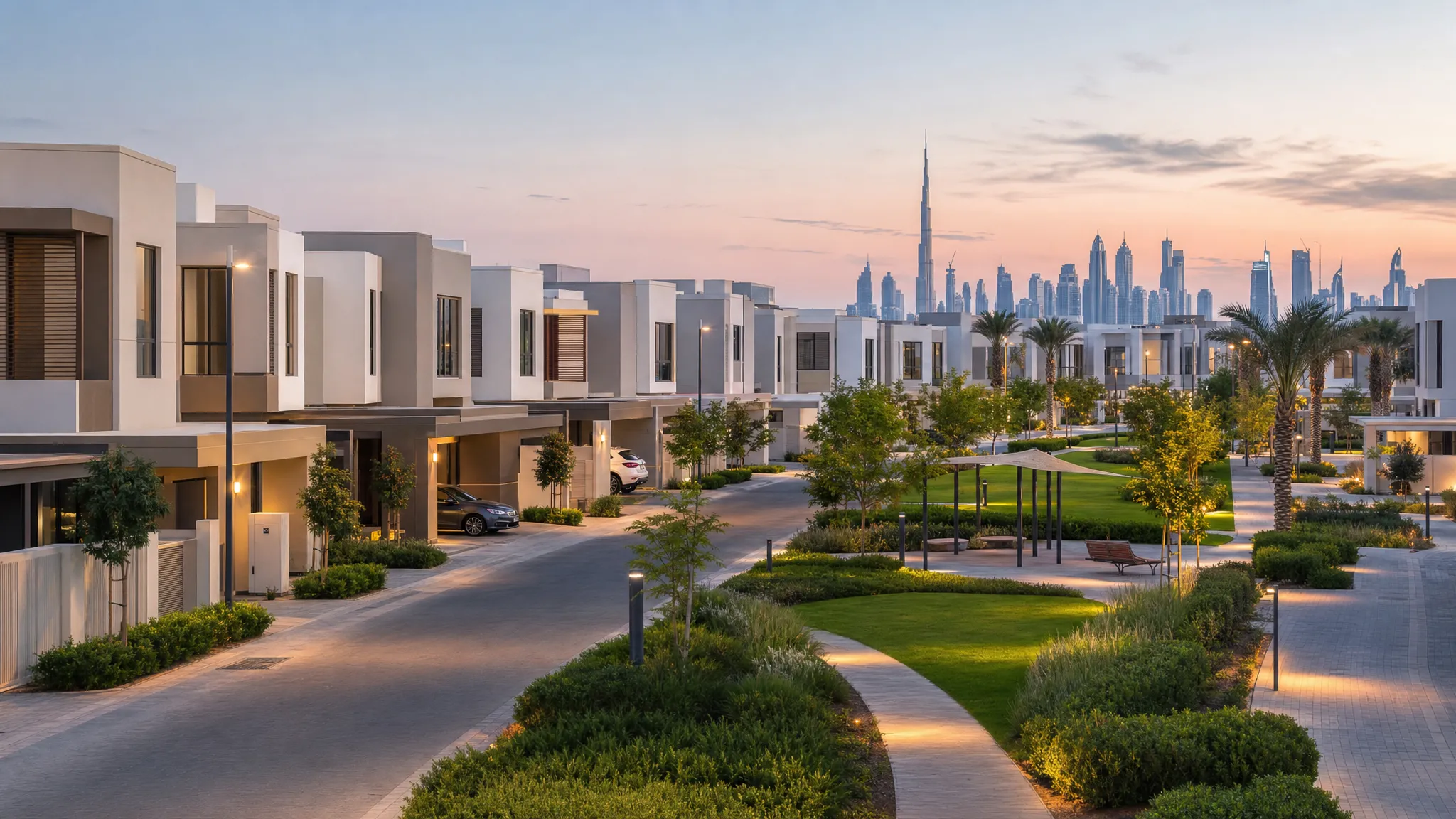
Dubai houses for sale are attracting a wider mix of buyers in 2026, from families seeking more space to investors looking for communities where rental demand and resale liquidity can strengthen over time. The opportunity is not simply to buy in the most famous address. It is to identify areas where demand is still building, infrastructure is improving, and the lifestyle offer is becoming more complete.
In Dubai, the word houses usually means villas, townhouses, and larger family homes rather than standalone suburban houses in the North American sense. These properties behave differently from apartments. Supply is more limited in many established neighborhoods, end-users tend to hold them longer, and community quality can have a major effect on both rental income and resale demand.
Below is a practical guide to the Dubai areas where house demand is gaining momentum, the signals to watch, and how to compare listings before you make a serious offer.
Why demand for houses in Dubai keeps expanding
Dubai has spent years building a market that appeals to both residents and international buyers. The city combines tax efficiency, global connectivity, quality schools, lifestyle infrastructure, and a growing supply of master-planned communities. For families, that often translates into a preference for villas and townhouses with private outdoor space, parking, community facilities, and easier access to schools.
The long-term urban story also matters. The Dubai 2040 Urban Master Plan emphasizes population growth, quality of life, green spaces, and better connectivity between urban centers. That framework supports demand in communities that are not only attractive today, but also well positioned for future services, transport upgrades, and population density.
For investors, houses can offer a different risk profile from apartments. They may require higher upfront capital and more maintenance, but strong family communities often benefit from stable tenant demand. In some neighborhoods, a limited supply of completed villas can create competition among buyers and renters, particularly when the community has schools, retail, parks, and easy highway access.
If you are still comparing residential segments, the broader 2026 guide to the best areas to buy property in Dubai can help you place house communities in context alongside apartments and luxury districts.
What makes an area a growing-demand location?
A growing-demand area is not always the place with the highest current prices. In fact, the best opportunities often appear where the market is still absorbing new supply, but the fundamentals are improving. For Dubai houses for sale, those fundamentals are usually linked to connectivity, livability, and the strength of the developer or master community.
Look for signals such as:
- New roads, metro links, bridges, or shorter travel times to business districts
- School, nursery, clinic, mosque, park, and retail openings within or near the community
- Rising occupancy and visible move-in activity rather than empty handover clusters
- Consistent transaction volume on the Dubai Land Department real estate data platform
- A clear end-user profile, such as families, airport professionals, executives, or long-term expatriates
- Limited villa or townhouse supply compared with nearby apartment-heavy districts
The key is to separate marketing noise from measurable demand. A new community may look attractive in brochures, but real demand becomes clearer when people move in, roads become easier, schools open, and resale transactions show depth.
High-demand and rising-demand areas for houses in Dubai
The areas below are not identical. Some are already mature and liquid, while others are earlier-stage communities with longer-term upside. Your best choice depends on budget, holding period, commute, family needs, and appetite for off-plan or newly handed-over property.
| Area | House types commonly available | Why demand is growing | Best suited for | Key due diligence point |
|---|---|---|---|---|
| Dubai South and Emaar South | Townhouses and villas | Airport growth, Expo City proximity, long-term master planning | Long-term investors and value-focused families | Check commute times and handover pipeline |
| The Valley and Dubai-Al Ain Road corridor | Townhouses and family villas | Relative affordability and new family communities | Buyers seeking newer homes with growth potential | Assess delivery timelines and nearby amenities |
| Villanova and wider Dubailand | Townhouses and villas | Established family demand and improving services | End-users and rental investors | Compare micro-locations within each cluster |
| Arabian Ranches 3 | Townhouses and villas | Brand strength, family appeal, and nearby established communities | Families wanting master-community living | Watch premiums for location and layout |
| Dubai Hills Estate | Villas and townhouses | Central location, mall, park, schools, and liquidity | Buyers prioritizing lifestyle and resale depth | Entry prices can be higher than emerging areas |
| Tilal Al Ghaf | Villas and townhouses | Lifestyle positioning, lagoon concept, and premium family demand | Upper-mid to luxury end-users | Compare service charges and community completion |
| Al Furjan and Jebel Ali Village corridor | Villas and townhouses | Metro access, road connectivity, and family housing demand | Commuters and long-term residents | Review age, condition, and renovation needs |
| MBR City and District One | Luxury villas and mansions | Centrality, prestige, and waterfront lifestyle | High-net-worth buyers and luxury investors | Confirm plot, view, privacy, and comparable sales |
| Damac Hills 2 | Villas and townhouses | Affordability and community amenities | Budget-conscious buyers and yield-focused investors | Factor in travel time and supply competition |
Dubai South and Emaar South
Dubai South is one of the clearest long-term demand stories in the city. Its appeal is tied to Al Maktoum International Airport, Expo City Dubai, logistics growth, and the continued expansion of the southern corridor. For buyers who are comfortable with a longer investment horizon, houses here can offer more space for the budget than many central communities.
Emaar South, in particular, benefits from the reputation of a major developer and a master-planned environment. Buyers often look here for townhouses and villas that feel newer, more organized, and better suited to family living than older stock in similarly priced areas.
The trade-off is timing. Demand is growing, but the area is still maturing. Before buying, test the daily commute to your workplace or likely tenant hubs. Also review future supply, because a large pipeline can affect short-term resale competition even when long-term fundamentals are positive.
The Valley and the Dubai-Al Ain Road corridor
The Valley has become attractive to buyers who want a branded, master-planned townhouse or villa community without paying central Dubai premiums. Its location along the Dubai-Al Ain Road gives it a clear commuter route, while the community concept is focused on family-friendly living.
The demand driver here is value plus lifestyle. Many residents who are priced out of established villa communities still want new layouts, parks, and a coherent neighborhood feel. That can support interest in well-priced homes, especially as phases hand over and amenities become visible.
The main risk is early-stage patience. Some buyers underestimate how much daily convenience matters. A property can be beautiful, but if schools, supermarkets, and healthcare are still limited nearby, tenant demand may take longer to mature. Look closely at completed phases rather than relying only on future promises.
Villanova and wider Dubailand
Dubailand has moved from an emerging outer district to a major family housing zone. Communities such as Villanova, Mudon, Serena, and nearby townhouse clusters have benefited from steady demand among families seeking larger homes, community parks, and access to major roads.
Villanova is a good example of why micro-location matters. Homes closer to entrances, parks, pools, and retail can feel very different from units deeper inside the community. Layout, plot position, parking, and proximity to construction zones all affect both living quality and future resale appeal.
For investors, Dubailand can be attractive because it sits between affordability and livability. It is not as central as Dubai Hills or MBR City, but it is no longer a speculative idea. The buyer pool is real, particularly for well-kept townhouses at sensible market prices.
Arabian Ranches 3
Arabian Ranches 3 benefits from the strength of the Arabian Ranches name, one of Dubai's most recognized family community brands. Buyers are drawn to the idea of living near an established villa ecosystem while still getting newer homes and modern layouts.
Demand here is supported by family-oriented amenities, access to leisure destinations, and familiarity among both residents and brokers. Many buyers who miss out on older Arabian Ranches or find larger legacy villas too expensive consider Arabian Ranches 3 as a more modern alternative.
However, brand strength often comes with premiums. When reviewing houses for sale, compare price per square foot, plot size, location inside the phase, and the completion status of surrounding amenities. A similar floor plan can command a different value depending on privacy, road noise, and distance to community facilities.
Dubai Hills Estate
Dubai Hills Estate is already one of Dubai's most liquid and desirable family districts, but demand continues to deepen because it combines centrality with a complete lifestyle offer. The area has a major mall, park, golf course, schools, healthcare access, and relatively quick routes to Downtown Dubai, Dubai Marina, and key business hubs.
For house buyers, Dubai Hills is less about discovering a low-entry opportunity and more about buying into a proven community with strong end-user demand. Villas and townhouses here can be expensive compared with emerging districts, but the trade-off is market depth and lifestyle certainty.
This type of area suits buyers who value liquidity. If you might resell within a few years, a mature and widely recognized community can reduce exit risk compared with an area where buyer demand is still developing.
Tilal Al Ghaf
Tilal Al Ghaf has gained attention as a lifestyle-led community with a lagoon, parks, and a strong family positioning. It appeals to buyers who want a premium townhouse or villa environment without necessarily moving into the ultra-prime waterfront market.
The demand story is built around experience. Families are increasingly willing to pay for walkability, leisure amenities, and a neighborhood that feels planned from the start. That makes the community attractive to end-users as well as investors targeting long-term family tenants.
As with any premium master community, the details matter. Compare service charges, plot orientation, finishing quality, and the maturity of nearby facilities. A house that looks similar on paper may perform differently if it has better privacy, views, or access to community amenities.
Al Furjan and the Jebel Ali Village corridor
Al Furjan has become more attractive as surrounding infrastructure and transport access have improved. Its position near Sheikh Zayed Road, the metro, Dubai Marina, JLT, Jebel Ali Free Zone, and Expo-linked corridors makes it practical for many working residents.
The area also offers a mix of older and newer houses, which can create opportunities for buyers willing to renovate or improve a property. In a maturing community, the best deals are often not the cheapest listings, but the homes where condition, layout, and location can be improved to match buyer expectations.
If you are considering this type of strategy, review renovation costs carefully and compare the finished value with similar upgraded homes. The guide on villas for sale in Dubai and renovation-led profit strategy goes deeper into how investors think about improvement potential.
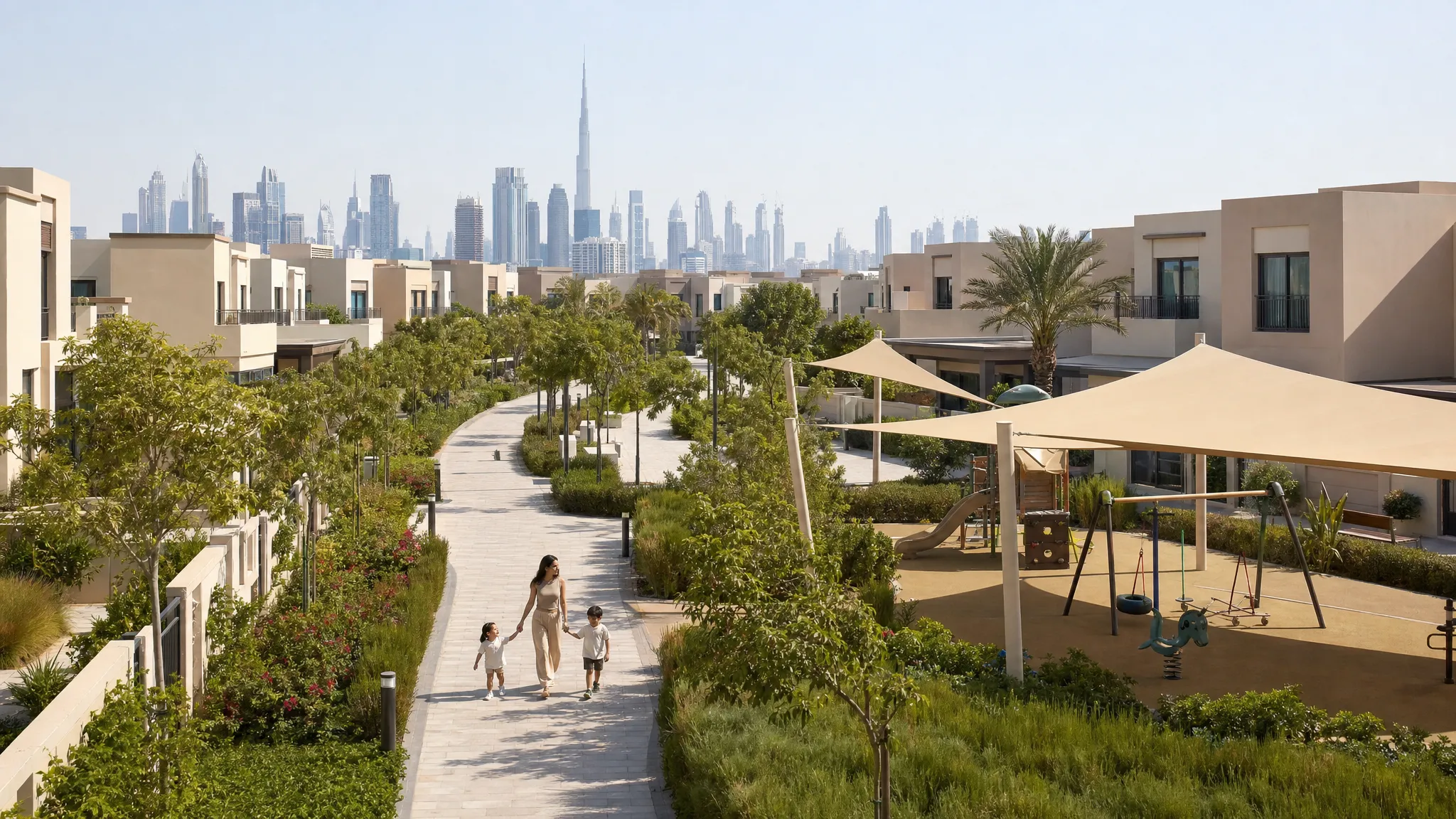
MBR City and District One
Mohammed Bin Rashid City, especially District One, serves a different buyer segment. This is a central, premium market where demand is driven by location, privacy, prestige, and access to luxury amenities. Villas here appeal to high-net-worth buyers who want proximity to Downtown Dubai and Business Bay while still living in a spacious residential environment.
For investors, the attraction is not purely rental yield. It is also scarcity, land value, and the depth of luxury demand in Dubai. Prime villas with strong views, privacy, large plots, and high-quality finishes can be resilient because they serve a buyer pool with fewer acceptable alternatives.
Due diligence should be more detailed at this level. Small differences in view, plot shape, landscaping, road exposure, and renovation quality can create large differences in value. Always compare recent transactions and active listings, not just asking prices.
Damac Hills 2
Damac Hills 2 remains relevant for buyers searching for more affordable houses in Dubai. It offers villas and townhouses at price points that can be more accessible than central or mature family communities, which keeps it on the radar for both residents and yield-focused investors.
The growth case depends on continued occupancy, amenities, and the willingness of residents to accept a longer commute in exchange for space and value. For families who work remotely or do not need daily access to central Dubai, that equation can make sense.
The main caution is supply and location. In value-led communities, buyers should be strict about price, condition, and tenant demand. A lower entry price is only useful if the property remains rentable, maintainable, and competitive when you decide to sell.
How to compare Dubai houses for sale before shortlisting
Once you identify an area, the next challenge is comparing individual listings. Two houses in the same community can have very different investment quality. A corner plot, single-row position, park backing, upgraded kitchen, or vacant status can change the value equation.
Before shortlisting, compare:
- Asking price against recent transactions, not just other active listings
- Built-up area, plot size, layout efficiency, and bedroom usability
- Service charges, maintenance history, and expected repair costs
- Distance to schools, entrances, parks, pools, retail, and main roads
- Vacancy status, tenancy contract terms, and notice requirements
- Developer reputation, handover quality, and community management
- Future supply in the same district or nearby competing communities
If you are new to the process, it is worth reviewing the step-by-step guide on how to buy a house in Dubai before you start negotiations. The legal and transaction process is straightforward compared with many global markets, but details such as deposits, No Objection Certificates, trustee office procedures, mortgage timelines, and transfer fees still matter.
End-user or investor, your priorities should differ
End-users should prioritize daily life first. A house that saves you 10 minutes on school runs, gives your children safe outdoor space, and reduces weekend driving may be worth more to you than a slightly cheaper property in a less convenient location. For residents, the right community fit can outweigh small differences in price per square foot.
Investors need a more numbers-led approach. Growing demand is valuable only if it supports rentability, resale liquidity, or long-term capital appreciation. A beautiful house in a thin rental market can sit vacant, while a simpler townhouse in a proven family area may produce steadier income.
A balanced investor checklist should include rental comparables, vacancy assumptions, service charges, maintenance reserves, and exit scenarios. Also consider whether your target tenant is a family, executive couple, airport professional, or luxury renter. Each group has different expectations.
Common mistakes buyers make in growing-demand areas
The first mistake is buying only because a district is talked about. Demand stories can be valid, but you still need to test the exact property. A poor layout or noisy plot in a popular area can underperform a better-positioned home in a less famous community.
The second mistake is ignoring handover waves. When many similar houses complete at the same time, rents and resale prices may face short-term pressure. This does not mean the area is weak, but it can affect your timing and negotiation strategy.
The third mistake is underestimating maintenance. Villas and townhouses have more moving parts than apartments, including landscaping, air conditioning systems, roofs, façades, pools in some cases, and larger interiors. Always budget for upkeep, especially if buying an older home or planning upgrades.
Finally, do not rely only on advertised yield. Verify rent with current market evidence, understand whether the property is vacant or tenanted, and check if the tenant is paying below market. A high yield on paper can disappear if the lease terms are restrictive or maintenance costs are underestimated.
Frequently Asked Questions
What are the best areas to find Dubai houses for sale with growing demand? Dubai South, Emaar South, The Valley, Villanova, Arabian Ranches 3, Dubai Hills Estate, Tilal Al Ghaf, Al Furjan, MBR City, and Damac Hills 2 are all worth watching. The right choice depends on budget, commute, lifestyle needs, and investment timeline.
Are villas or townhouses better for investment in Dubai? Townhouses often have lower entry prices and a wider tenant pool, while villas may offer more privacy, land value, and long-term scarcity. The better investment depends on the community, purchase price, maintenance costs, and exit demand.
Is it better to buy in a mature community or an emerging area? Mature communities usually offer stronger liquidity and lifestyle certainty, while emerging areas may offer more growth potential and lower entry prices. Conservative buyers often prefer mature areas, while long-term investors may consider emerging districts with clear infrastructure and occupancy growth.
How can I verify whether demand is really growing in an area? Check recent Dubai Land Department transactions, rental comparables, occupancy levels, school and retail openings, road improvements, and the number of similar listings competing for buyers or tenants. Demand should be visible in behavior, not only marketing claims.
Can foreign buyers purchase houses in Dubai? Yes, foreign buyers can purchase property in designated freehold areas in Dubai. Always confirm the property's ownership status, title details, fees, and transaction requirements with a qualified broker, conveyancer, or the relevant authority before proceeding.
Find the right house in a demand-led Dubai community
Growing demand can improve your chances of long-term success, but the best purchase still comes down to the specific home, location, price, and timing. A strong community cannot fully compensate for an overpaid or poorly positioned property.
Use Best Property to compare updated listings, review photos and details, filter by location and property type, and connect directly with agents or owners. Start with a clear shortlist of communities, verify the numbers, and focus on houses that match both today's lifestyle and tomorrow's resale demand.


Join The Discussion